Commentary on 23rd Sunday in Ordinary Time

“Live and let live” and “mind your own business” are two maxims that have become common in the world we live in today. Many people no longer want to be corrected, even when what they are doing is objectively wrong. Some even hide what they are doing precisely because they know it is wrong and do not want to be confronted.

And so, when we see someone making a mistake or doing something wrong, we may hesitate to say anything. We tell ourselves that it is better to keep the peace, avoid conflict, or simply mind our own business. But today’s readings and Gospel tell us otherwise.

In the first reading, God makes Ezekiel a watchman. His responsibility is to warn the wicked when they are going astray. If he warns them and they refuse to listen, Ezekiel has fulfilled his responsibility. He cannot force the person to change, but he must not remain silent. The message is clear: we are responsible for speaking the truth; we are not responsible for controlling another person’s response to it.

In the Gospel, Jesus gives His disciples a concrete way of dealing with someone who has done wrong. First, He says, go to the person privately and point out the fault. If the person does not listen, bring one or two others. If necessary, bring the matter to the community. Notice that Jesus does not tell us to gossip, publicly shame the person, or immediately condemn him. He tells us to correct him personally, patiently, and in a way that seeks his restoration.

Today, however, we often avoid correcting our brothers and sisters not only because we want to avoid conflict, but also because we have made empathy a reason to mind our own business. Empathy is good because it allows us to understand another person’s feelings. But empathy alone is not enough. If our only goal is to prevent someone from feeling bad, we may actually prevent that person from becoming better.

Love must be concerned not only with how a person feels now, but with who that person is becoming.

This brings us to the idea of human flourishing. Human flourishing is not simply getting what we want or avoiding what makes us uncomfortable. It is the development of the qualities that allow us to fulfill our nature as rational and free persons.

Consider a student who receives a poor grade. He can protect himself from discomfort by blaming the teacher, making excuses, or convincing himself that the grade does not matter. Or he can accept the uncomfortable truth that he did not prepare well, take responsibility, and decide to work harder.

The second response may be more uncomfortable, but it develops honesty, responsibility, perseverance, and self-discipline. He becomes more fully human because he learns to use his reason to recognize what is true and his freedom to choose what is good—even when doing so is difficult.

This is why fraternal correction can be an act of love. We correct not because we want to make someone feel bad, but because we want what is genuinely good for that person.

The second reading gives us the reason: “You shall love your neighbor as yourself.” And St. Paul tells us that love is the fulfillment of the law.

If we truly love our neighbor, then we cannot be indifferent to what harms him. To love is to care. To love is to connect. And sometimes, to love is to correct.

We must, however, remember that correction is not condemnation. Correction says, “What you are doing is wrong, and I care enough about you to tell you.” Condemnation says, “You are a bad person.” Christian correction seeks the person’s good, respects his freedom, and leaves room for conversion.

So perhaps the Christian response to “live and let live” is not simply to interfere in everyone’s lives. Rather, it is: Live and help others live well.

And instead of simply saying, “Mind your own business,” perhaps we should ask:

“What does love require me to do for the good of my neighbor?”

Because sometimes the most loving thing we can do is to remain silent.

But sometimes the most loving thing we can do is to have the courage to speak.

Invisible ordinary day

We are so accustomed to ordinary days that we fail to see how special they are.

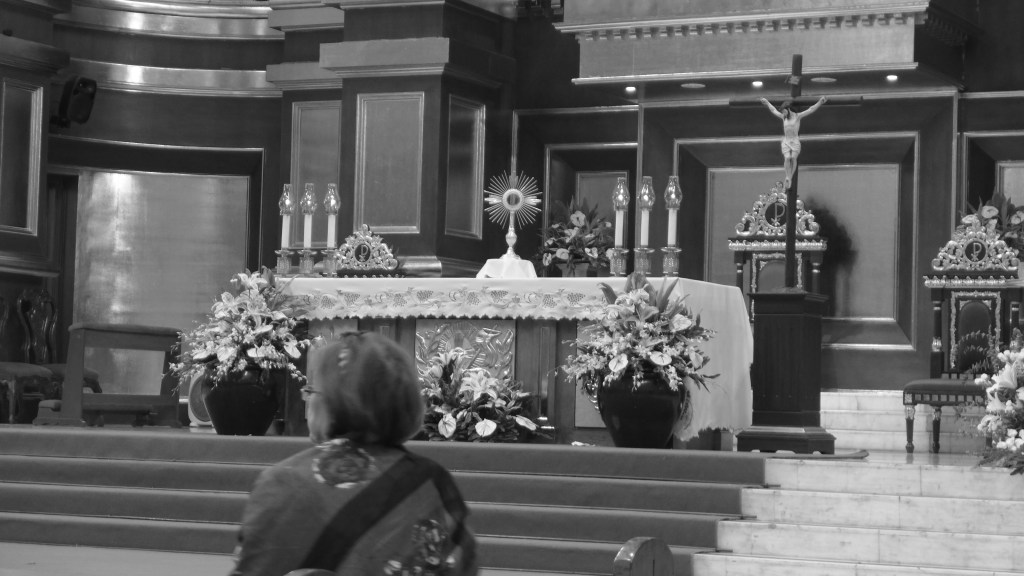
Friday felt meh. I woke up, had breakfast, went to work, talked with the boys, attended First Friday Mass, took Ingrid out to dinner at Apero, and met a large orange cat at the Corinthian Hills clubhouse.

Nothing extraordinary happened.

What struck me later was that this day would have been unimaginable to a younger version of myself. There was a time when I wanted meaningful work, financial stability, and someone to share dinner with. Somehow, after years of effort and a fair amount of good fortune, many of those hopes became ordinary.

That may be the problem. Once a blessing becomes familiar, we stop seeing it as a blessing and start treating it as a baseline.

Psalm 118:24 says, “This is the day the Lord has made; let us rejoice and be glad in it.” It does not say to rejoice on exciting days, successful days, or memorable days. It simply says, “this day.” This means, that in all circumstances, we need to be grateful.

Most days are not dramatic. They are made up of work, meals, conversations, errands, and routines. We keep waiting for something noteworthy to happen, while missing the fact that an uneventful day is often a sign that many things are already going right.

That Friday was not exciting.

It was simply a good day.

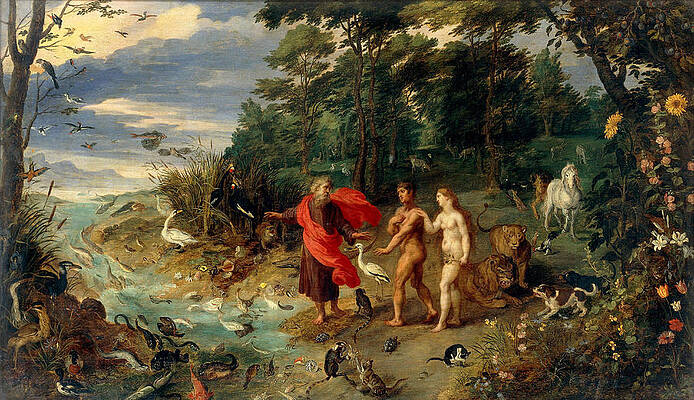
If God made Adam & Eve in His Image and likeness, why did they disobey?

I fell in and out of sleep during the online video session of Jeff Cavins’ Unlocking the Mystery of the Bible series. Today, we were covering Creation. I would write notes for a few minutes, then fall asleep, wake up again, write some more, and then drift off once more. The cycle continued until the group returned to plenary.

This was only our second class, which Ingrid and I signed up for, and we still have a few more Mondays to go. The first session was more of an introduction than a class, simply explaining what to expect from the series.

The session did not become truly engaging until the plenary discussion, where classmates answered some of the reflection questions. The questions were rarely answered directly. One person would respond, another would offer an opinion, and the conversation would branch into different topics.

One particularly good question—obviously not part of the official discussion guide—was this: If God made Adam and Eve in His image and likeness, why did they disobey? Following that logic, does that make God imperfect? The person who asked it was genuinely curious, as she made clear, and not merely being pilosopo.

Continue reading

Francesco Pio: the Saint and the son

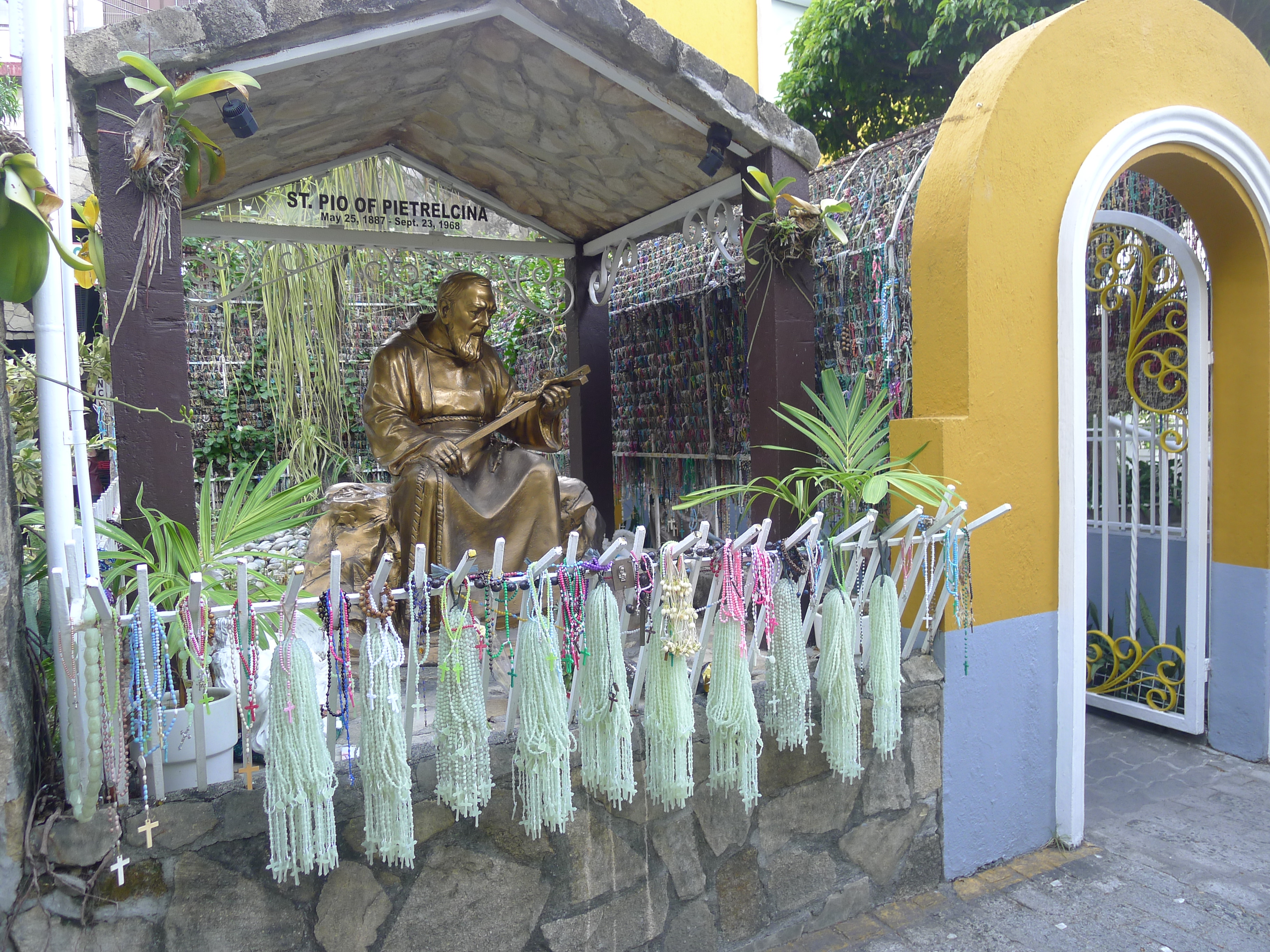
Today is the birthday of Padre Pio and I paid him a visit. We have a special devotion to him and so we named our son after him. I spent a few minutes to pray and receive the communion.

These days, I got to spend plenty of date time with another Francesco Pio, our eldest Jaime Francesco Pio. I had several meals with him, and even watched him climb. He is now 20 and as they get older, they live a more independent life, they spend more time with their friends and soon after graduation, their workmates.

Continue reading

What it means to be a practicing Catholic man in today and tomorrow’s world

Jacob Wrestling with the Angel by Gustave Doré

I am within two years of what people kindly call the golden years. That marker means something to me — not as a occasion for nostalgia, but as a vantage point. I have lived through enough of history to watch the world change, and to measure what that change has cost.

The last four decades have produced a revolution in communication unprecedented in human history. Information moves faster than thought. A message composed in London reaches Manila before the next heartbeat and spreads across a nation within minutes. We have never had this before, and we have not yet reckoned seriously with what it means.

The standard response has been to call technology neutral. The internet, social media, artificial intelligence — tools, nothing more. Their morality, we are told, lies entirely with the user. But philosopher Carissa Veliz has made a persuasive case against that comfort. Technology is not of God. It is man-made, which means it is designed with intention, shaped by interest, and loaded with the biases of its creators. More often than not, those biases run toward control. Toward dominance. Toward the capture of attention and the management of perception.

Continue reading