
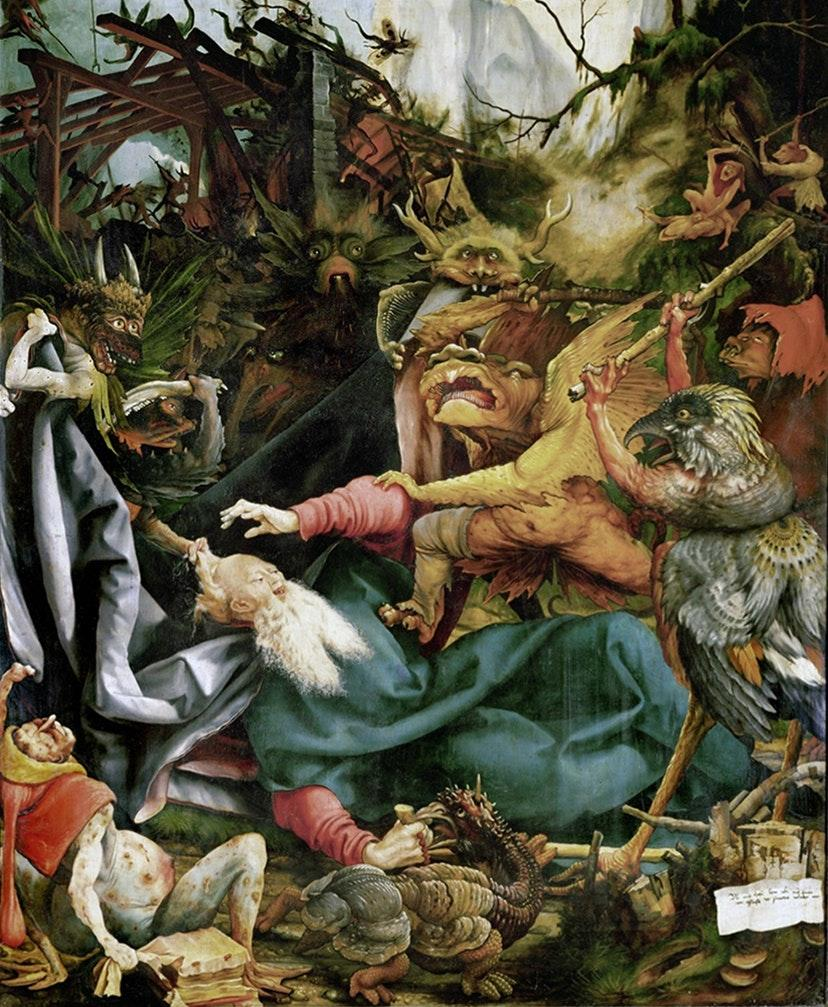
Temperance is Freedom

Raise your hands if you scroll on your social media before going to sleep? I do. Often I would catch myself scrolling for an hour to over an hour then I would feel bad for wasting my time that could have gone to reading or doing other chores.

Raise your hands if you have been to a buffet then ate more than your limit so you get your money’s worth. I do as well.

How about gossiping? Raise your hands if you promised yourself not to tell your friend’s secret yet you could not help yourself but tell other people.

I would ask the same thing for anger. Raise your hands if at one point, you were so made that you could not control your emotions anymore.

Why, what is wrong with over eating, doom scrolling, or gossiping about friends to other friends?

It is not a question whether your actions are good or bad but rather am I being enslaved by my emotions, or am I still in control of my actions?

I would like to introduce you to temperance. Temperance is the virtue that moderates our attraction to human wants or desires and helps us maintain a balanced use of created goods. Temperance doesn’t say, ‘desire is bad.’ It says, ‘desire is human but it must have its proper place.

Temptation doesn’t always begin with evil. It begins with something good that becomes excessive or disordered. Here are some examples.

Food is good. But eating because you are bored is different.

Rest is good. But avoiding responsibility because you want comfort is different.

Friendship is good. But needing everyone’s approval is different.

Technology is useful. But being unable to put your phone down is different. 

The devil doesn’t always have to make us desire evil. Sometimes he only has to make us desire a good thing in the wrong way, at the wrong time, or in the wrong amount.

Can you say no to something you really want? If the answer is no, then despite having the freedom to choose, you aren’t really free in that area. 

“If I can eat chocolate, that’s freedom.

If I can eat chocolate but can also say, ‘No, I don’t need it,’ that’s greater freedom.

But if I cannot say no, then chocolate has begun to exercise control over me.” 

So, temperance makes desire obey reason rather than making reason obey desire. 

Christian temperance isn’t simply about becoming disciplined people. It is about making room for something greater. 

Christ doesn’t ask us to become people who don’t enjoy life.

He asks us to become people who are free to love, because a heart constantly distracted by appetite, pleasure, approval, or entertainment has difficulty seeing what truly matters. 

Temperance is not saying no to desire because desire is bad. Temperance is learning to say yes to what is truly good.

Because the person who cannot say no to himself is not truly free.

And Christianity is not ultimately about having fewer desires. It is about having desires ordered toward something greater: toward truth, toward love, and ultimately toward God.
Can I be good without being religious?

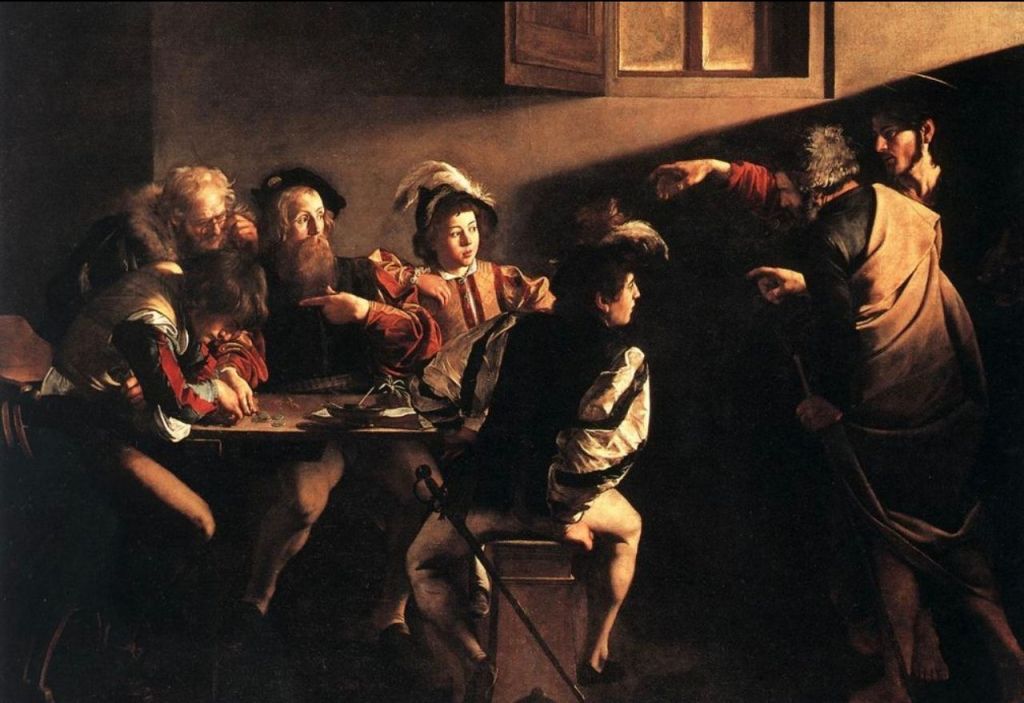
The calling of St. Matthew

I recently had a conversation with some teenagers, and two of them caught my attention. Both had approached me for help with their moral goals.

I asked the first one some probing questions. I learned that he is Protestant and that his father is the pastor of their church, but he does not regularly attend. For him, religion is something he would rather explore later in life. He finds loud expressions of praise performative, and he struggles with the idea that doing good is connected to going to heaven. He feels that if the motivation for doing good is the reward of the afterlife, then he is being forced to be good.

He also struggles with the idea that someone could live badly for most of his life and still go to heaven by saying sorry and genuinely repenting, even near the end of his life.

The second teenager goes to church but stays at the back. His struggle is somewhat different. He cannot reconcile the fact that both good and bad people can be found inside the Church. He has seen people who seem religious but use Jesus as an excuse for bad behavior. He does not particularly want to be religious, but he does want to be good.

These are not uncommon struggles among young people who are trying to make sense of faith: Religion isn’t for the young. Can’t I just be good? Can I go to heaven simply by saying sorry? Why are there bad people in church? Why do I need to attend Mass if I can have a personal relationship with Christ?

Both, in different ways, seem to be asking the same question:

Can I be good without being religious?

And beneath that question is another one: What makes goodness authentic?

I did not directly rebut their arguments. I wanted to avoid turning the conversation into a debate. Instead, I tried to listen and offer a few thoughts for them to consider.

For the first teenager, I shared something I heard at Mass the day before, words quoted from Fulton Sheen. Since he said he wanted to be good, I asked him what makes someone a good member of a club. He answered that a good member attends meetings and participates.

I told him that the same principle can apply to belonging to a church. If we claim to be a member of a community, participation is at least part of what membership means.

I also wanted to address his struggle with what might be called transactional Christianity, the idea that we simply do good in exchange for the reward of heaven. I asked him to examine his motives: Am I doing this because it is genuinely good, or am I doing it because I expect something in return?

There is a difference between doing something good because we love the good and doing it merely because it benefits us.

I suggested that he read C.S. Lewis’s Mere Christianity as part of his moral goal. Reading the book will not automatically make him religious or pious. But it will expose him to arguments about objective moral truth and the claims of Christianity, and perhaps give him a framework for examining the questions he is already asking.

For the second teenager, I used an analogy from school.

A school is made up of many students. Some have excellent grades and character; others do not. If someone wants to understand what the school stands for, however, we would probably look at the students who actually embody its ideals rather than those who merely carry its name.

The same can be said of the Church. It is made up of people at different stages of faith and moral development. Some follow its teachings authentically; others fail to live up to them. The existence of people who behave badly does not necessarily tell us what the Church teaches. In fact, the teachings of the Church provide the standard by which the behavior of its members can be judged—including the behavior of those who claim to follow Christ.

And ultimately, we are not in the Church simply because of the people in it. We are there because of Christ.

He also mentioned that religious people sometimes use Jesus as an excuse for their bad behavior. I wish I had more time to probe what he meant by that. Perhaps he was referring to people who use forgiveness or grace to excuse their actions. Perhaps he has experienced people who invoke Christianity while behaving badly. I don’t want to speculate. I simply found the observation worth exploring further.

I also told him something about attending Mass: we should not expect Mass to give us a particular feeling every time. We do not come to Mass merely as consumers asking, “What am I going to get out of this?”

We come bringing something of our own: our whole selves—our gratitude, failures, worries, relationships, hopes, work, struggles, and intentions and offer them to God.

For both of them, I emphasized one thing: if you want to be good, you have to know what it is to be truly good.

Goodness cannot simply mean “doing what feels right to me.” If we are serious about becoming good, we have to search for the truth about goodness. And that means seeking out people, authors, thinkers, and personalities who have wrestled with these questions and, more importantly, tried to live what they believed was good.

That is why I recommended C.S. Lewis’s Mere Christianity and mentioned G.K. Chesterton, writers who take seriously the questions of truth, morality, human nature, and what it means to live well.

Our conversation ended, but perhaps another had just begun.

If you want to be good, you first have to discover what goodness truly is. But once you recognize it, another question follows:

Am I willing to follow it?

What it means to be a practicing Catholic man in today and tomorrow’s world

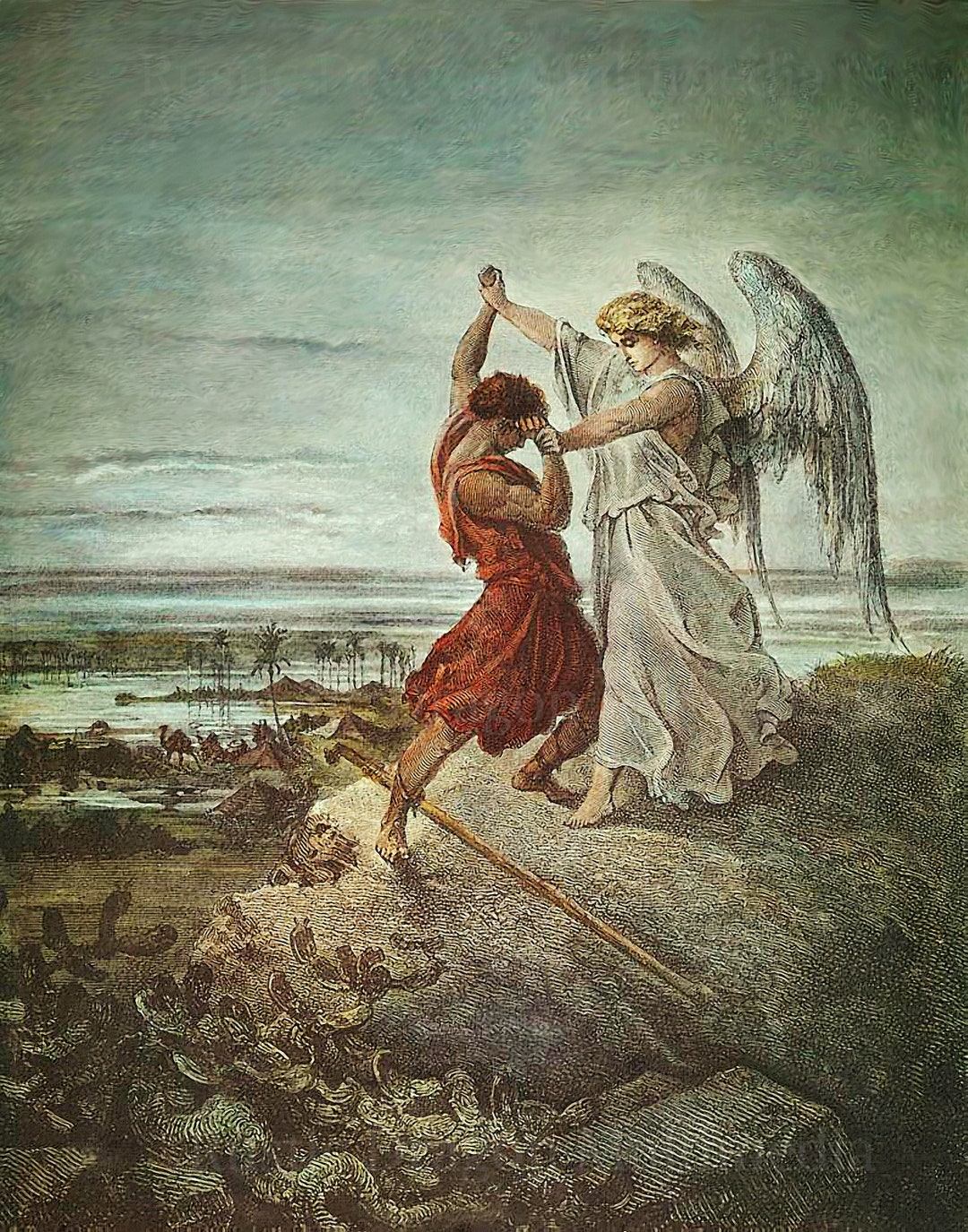
Jacob Wrestling with the Angel by Gustave Doré

I am within two years of what people kindly call the golden years. That marker means something to me — not as a occasion for nostalgia, but as a vantage point. I have lived through enough of history to watch the world change, and to measure what that change has cost.

The last four decades have produced a revolution in communication unprecedented in human history. Information moves faster than thought. A message composed in London reaches Manila before the next heartbeat and spreads across a nation within minutes. We have never had this before, and we have not yet reckoned seriously with what it means.

The standard response has been to call technology neutral. The internet, social media, artificial intelligence — tools, nothing more. Their morality, we are told, lies entirely with the user. But philosopher Carissa Veliz has made a persuasive case against that comfort. Technology is not of God. It is man-made, which means it is designed with intention, shaped by interest, and loaded with the biases of its creators. More often than not, those biases run toward control. Toward dominance. Toward the capture of attention and the management of perception.

Continue reading →