Commentary on 23rd Sunday in Ordinary Time

“Live and let live” and “mind your own business” are two maxims that have become common in the world we live in today. Many people no longer want to be corrected, even when what they are doing is objectively wrong. Some even hide what they are doing precisely because they know it is wrong and do not want to be confronted.

And so, when we see someone making a mistake or doing something wrong, we may hesitate to say anything. We tell ourselves that it is better to keep the peace, avoid conflict, or simply mind our own business. But today’s readings and Gospel tell us otherwise.

In the first reading, God makes Ezekiel a watchman. His responsibility is to warn the wicked when they are going astray. If he warns them and they refuse to listen, Ezekiel has fulfilled his responsibility. He cannot force the person to change, but he must not remain silent. The message is clear: we are responsible for speaking the truth; we are not responsible for controlling another person’s response to it.

In the Gospel, Jesus gives His disciples a concrete way of dealing with someone who has done wrong. First, He says, go to the person privately and point out the fault. If the person does not listen, bring one or two others. If necessary, bring the matter to the community. Notice that Jesus does not tell us to gossip, publicly shame the person, or immediately condemn him. He tells us to correct him personally, patiently, and in a way that seeks his restoration.

Today, however, we often avoid correcting our brothers and sisters not only because we want to avoid conflict, but also because we have made empathy a reason to mind our own business. Empathy is good because it allows us to understand another person’s feelings. But empathy alone is not enough. If our only goal is to prevent someone from feeling bad, we may actually prevent that person from becoming better.

Love must be concerned not only with how a person feels now, but with who that person is becoming.

This brings us to the idea of human flourishing. Human flourishing is not simply getting what we want or avoiding what makes us uncomfortable. It is the development of the qualities that allow us to fulfill our nature as rational and free persons.

Consider a student who receives a poor grade. He can protect himself from discomfort by blaming the teacher, making excuses, or convincing himself that the grade does not matter. Or he can accept the uncomfortable truth that he did not prepare well, take responsibility, and decide to work harder.

The second response may be more uncomfortable, but it develops honesty, responsibility, perseverance, and self-discipline. He becomes more fully human because he learns to use his reason to recognize what is true and his freedom to choose what is good—even when doing so is difficult.

This is why fraternal correction can be an act of love. We correct not because we want to make someone feel bad, but because we want what is genuinely good for that person.

The second reading gives us the reason: “You shall love your neighbor as yourself.” And St. Paul tells us that love is the fulfillment of the law.

If we truly love our neighbor, then we cannot be indifferent to what harms him. To love is to care. To love is to connect. And sometimes, to love is to correct.

We must, however, remember that correction is not condemnation. Correction says, “What you are doing is wrong, and I care enough about you to tell you.” Condemnation says, “You are a bad person.” Christian correction seeks the person’s good, respects his freedom, and leaves room for conversion.

So perhaps the Christian response to “live and let live” is not simply to interfere in everyone’s lives. Rather, it is: Live and help others live well.

And instead of simply saying, “Mind your own business,” perhaps we should ask:

“What does love require me to do for the good of my neighbor?”

Because sometimes the most loving thing we can do is to remain silent.

But sometimes the most loving thing we can do is to have the courage to speak.

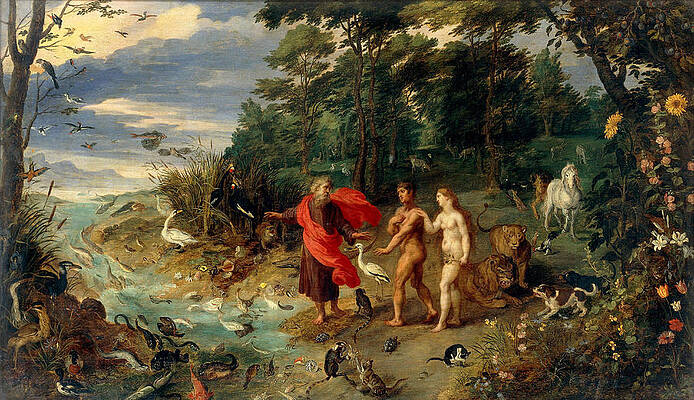
If God made Adam & Eve in His Image and likeness, why did they disobey?

I fell in and out of sleep during the online video session of Jeff Cavins’ Unlocking the Mystery of the Bible series. Today, we were covering Creation. I would write notes for a few minutes, then fall asleep, wake up again, write some more, and then drift off once more. The cycle continued until the group returned to plenary.

This was only our second class, which Ingrid and I signed up for, and we still have a few more Mondays to go. The first session was more of an introduction than a class, simply explaining what to expect from the series.

The session did not become truly engaging until the plenary discussion, where classmates answered some of the reflection questions. The questions were rarely answered directly. One person would respond, another would offer an opinion, and the conversation would branch into different topics.

One particularly good question—obviously not part of the official discussion guide—was this: If God made Adam and Eve in His image and likeness, why did they disobey? Following that logic, does that make God imperfect? The person who asked it was genuinely curious, as she made clear, and not merely being pilosopo.

Continue reading

What it means to be a practicing Catholic man in today and tomorrow’s world

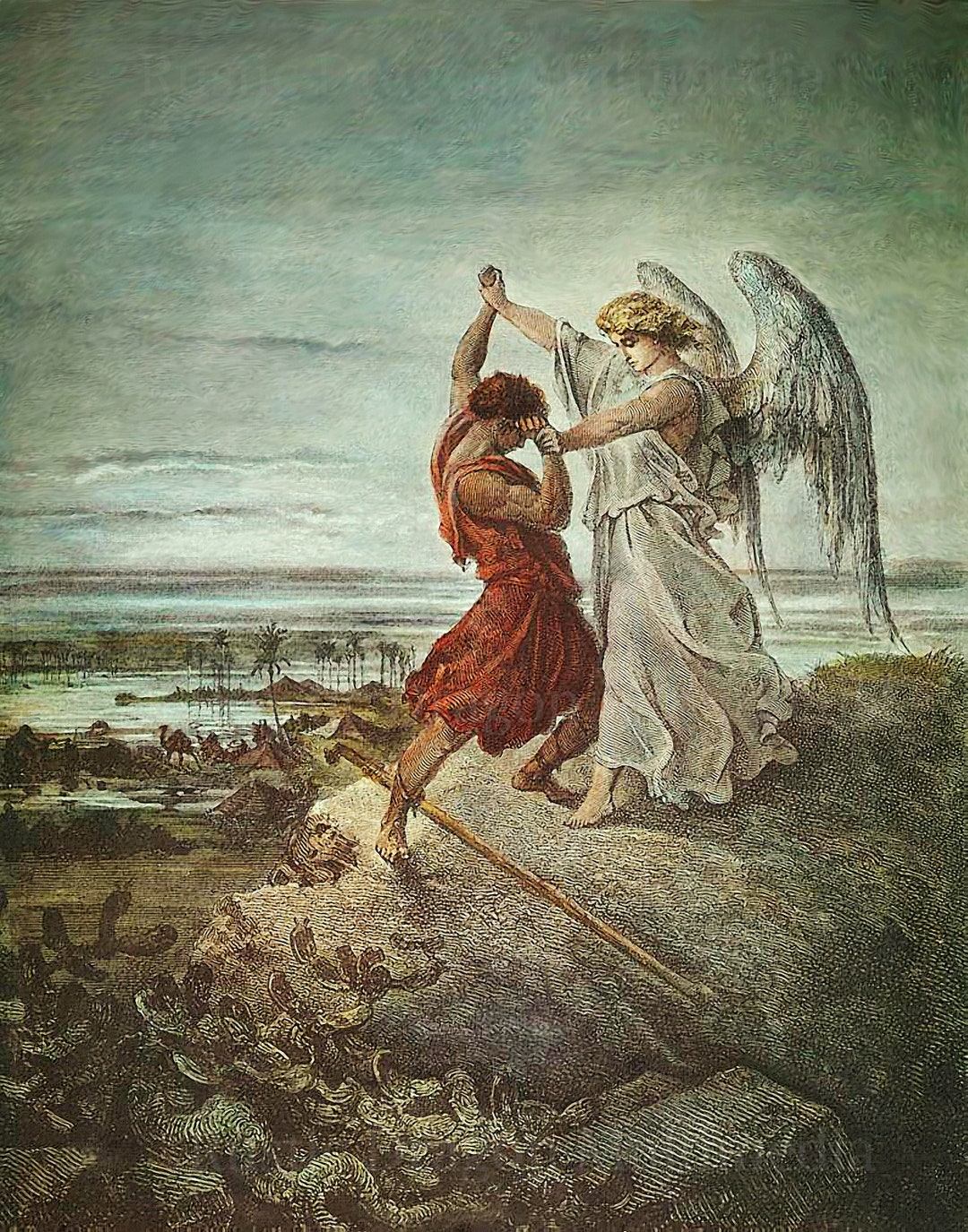
Jacob Wrestling with the Angel by Gustave Doré

I am within two years of what people kindly call the golden years. That marker means something to me — not as a occasion for nostalgia, but as a vantage point. I have lived through enough of history to watch the world change, and to measure what that change has cost.

The last four decades have produced a revolution in communication unprecedented in human history. Information moves faster than thought. A message composed in London reaches Manila before the next heartbeat and spreads across a nation within minutes. We have never had this before, and we have not yet reckoned seriously with what it means.

The standard response has been to call technology neutral. The internet, social media, artificial intelligence — tools, nothing more. Their morality, we are told, lies entirely with the user. But philosopher Carissa Veliz has made a persuasive case against that comfort. Technology is not of God. It is man-made, which means it is designed with intention, shaped by interest, and loaded with the biases of its creators. More often than not, those biases run toward control. Toward dominance. Toward the capture of attention and the management of perception.

Continue reading

The imperfect beauty of serving the church

In 2020, I came across the podcast of Bishop Robert Barron while searching for topics on philosophy. At the time, I had been going to church regularly, but like many Catholics, I did not deeply understand what my faith truly meant. I practiced Catholicism largely out of tradition and the habits I learned from my family, although I had also been active in church youth groups during my teenage years.

After listening to his podcast, I was struck by the clarity of his explanations and the depth of his intellect. It appealed to me in a way I did not expect and awakened a deeper curiosity about the faith. I began listening to his talks every night before going to sleep, reading books he recommended, and watching many of his videos. Slowly, my relationship with the faith became more intentional rather than merely habitual.

Continue reading

My day of viewing family from the lens of faith

The main theme of today’s gospel, Mark 4:35-41, is faith. It recounts Jesus and his disciples setting off across the lake in a boat, accompanied by other boats. As they sailed, a fierce storm arose, causing waves to fill the boat with water. Despite the chaos, Jesus was asleep in the stern. The disciples, fearing for their lives, woke him, questioning his concern for their safety. Jesus calmed the storm with a command, then questioned their fear and lack of faith, leaving them in awe of his power over nature.

I used to have lots of worries, causing much anxiety, and I believe many others experience this too. This is why the priest’s homily resonated with me. He said, “We worry more than we work.” To me, this means we must act, to keep on doing, forcing ourselves to do something rather than drown ourselves in anxiety. Somehow, my anxiety and worry dropped as I kept reminding myself of Einstein’s quote, “Life is like riding a bicycle. To keep your balance, you must keep moving,” and that Jesus will always sustain us.

After Mass, we checked out Bridgetown, but there was no place for a family lunch that we liked, so we followed Jaime’s suggestion and went to Parqal. The drive was quick, less than an hour. There are more visitors to the area now compared to last time we were there in February.

Gianetto was disappointing. During the pandemic, we used to order pizza from them. While the pizza was still good, their pasta Jaime ordered was average, with cut noodles. An Italian will surely make a scene if he received an order like that. The chicken Iuri ordered was tough. Even the complimentary bread, larger than croutons, was heated in the microwave. At 600 to 700 pesos per head, the price seemed overrated for the quality of food.

For dessert, we stopped by Dunkin’ because I was craving their coffee. The coffee was decent, but the ambiance was disappointing due to a K-Pop party on the second floor where fans were making a birthday greeting video for one of the members of Enhypen. The store was filled with loud cheers and shouts, and some customers seemed annoyed. However, it appeared to be good for business as turnover was much faster.

The day ended well because my Lumix LX5 battery and charger arrived today, bringing my 13-year-old camera back to life. It was the last nice compact camera I bought and used for contest entries. I plan to use it as an everyday carry and capture some moments. My last memories with it were in Intramuros and Binondo.

Today was a day centered around faith, family, and the camera, reminding us to view family through the lens of Catholic faith to nurture deeper connections, appreciate moments of joy and unity, and embrace the values that guide us in love, compassion, and faithfulness.