I examine ideas, challenge assumptions, and connect experience with principles to uncover insights that help people and organizations grow. #Business #Leadership #Human Formation
In 2020, I came across the podcast of Bishop Robert Barron while searching for topics on philosophy. At the time, I had been going to church regularly, but like many Catholics, I did not deeply understand what my faith truly meant. I practiced Catholicism largely out of tradition and the habits I learned from my family, although I had also been active in church youth groups during my teenage years.
After listening to his podcast, I was struck by the clarity of his explanations and the depth of his intellect. It appealed to me in a way I did not expect and awakened a deeper curiosity about the faith. I began listening to his talks every night before going to sleep, reading books he recommended, and watching many of his videos. Slowly, my relationship with the faith became more intentional rather than merely habitual.
Let me take you back to one of the oldest questions in philosophy. Plato once told a story called The Ring of Gyges.
Gyges was a simple shepherd who one day discovered a ring that made him invisible. At first, he was astonished. Then he realized what this meant, no one could see him, no one could hold him accountable. So what did he do? He used the ring to do what he could never do in the open: he stole, lied, and even killed the king to take his throne.
Plato then asked: If you could get away with anything, would you still choose to do what’s right? That story is thousands of years old, yet its truth remains timeless.
Trust is the invisible currency that sustains every relationship, personal and professional. It is the foundation upon which teams are built, the essence of credible leadership, and the quiet force that transforms compliance into commitment.
But what exactly is trust? At its core, trust is the belief that someone will act with consistency, honesty, and goodwill, even when there is no immediate reward. It is the confidence that a person’s word, intention, and action are aligned.
Integrity, on the other hand, is the ground upon which trust stands. It means wholeness, being the same person in private and in public, when it benefits you and when it doesn’t. You cannot have trust without integrity because people do not trust perfection; they trust authenticity. When a leader’s inner life and outer actions are congruent, trust naturally follows.
Every leader, at some point, faces his own “Ring of Gyges” moment, the temptation to cut corners, to hide mistakes, to manipulate numbers, or to protect one’s image instead of one’s integrity.
Trust, therefore, begins with this inner question: Who are you when no one is watching?
That is where trust begins, not with policies, not with reputation, but with integrity.
And maybe this is where many of us misunderstand integrity. It isn’t about being flawless, it’s about being real. It is the humble, ongoing effort to keep our convictions, words, and actions in harmony, even when life feels unstable.
Frodo Baggins in The Lord of the Rings embodies this truth. One powerful moment comes at the foot of Mount Doom, when the weight of the Ring has nearly destroyed him. Exhausted and broken, Frodo tells Sam, “I can’t do this, Sam,” revealing the depth of his struggle and fear. Yet despite his weakness, he continues the climb, step by painful step, driven not by pride but by conviction. His integrity lies in that perseverance—in choosing to move forward even when his strength and hope are gone. He never hides his fear, never pretends to be invincible, and accepts Sam’s help when he can no longer walk. In that moment, Frodo shows that integrity is not about perfection or success; it is about remaining true to what is right, even when you are at your weakest.
Genuine integrity doesn’t pretend to be strong; it stays honest, even in weakness. Leaders are rarely tested by the mistakes of others, but by their own silent battles, to remain faithful, to choose authenticity over appearance, and truth over convenience.
That is why trust becomes a leader’s personal brand. It’s not built in a day or declared in a slogan. It’s built quietly, in those unseen choices when no one is watching. When leaders choose integrity in private, people sense it in public. That’s when trust becomes visible, when it becomes the very aura of leadership.
But when integrity is compromised, trust collapses. No title, no charisma, no corporate slogan can rebuild it once it’s gone.
And history has shown us this time and again. When leaders lose that moral alignment, when integrity breaks, the whole structure begins to crumble. Because organizations, no matter how big, are built on human trust.
We’ve seen this before, in companies that once seemed unstoppable, led by brilliant people who lost their way.
The Enron scandal of 2001 remains one of the most powerful reminders. Once celebrated as America’s most innovative company, Enron built its empire on deception, hiding massive debt and inflating profits through accounting tricks. When the truth surfaced, it collapsed overnight, wiping out pensions, investor wealth, and public trust.
Enron’s downfall wasn’t about numbers; it was about broken trust. Its leaders valued appearance over honesty, profit over principles.
A few years later, another story unfolded in Silicon Valley. Travis Kalanick, Uber’s co-founder, was young, brilliant, and relentless. He revolutionized transportation but led through aggression and fear. The company grew fast—but so did the stories of harassment, arrogance, and ethical disregard. In 2017, Kalanick was forced to resign.
Different industries, different eras, but the same moral fracture. Both Enron and Uber remind us: When integrity is traded for convenience, trust becomes the first casualty.
A FILIPINO LENS ON TRUST
If Enron and Uber show us what happens when trust is broken, our own Filipino experience reveals how trust is lived.
In the West, trust often rests on competence, on mastery, precision, and performance. Their heroes are the lone achievers: Batman, Ironman, Rambo, individuals who solve problems by sheer will, power and intellect.
But in the Philippines, trust is relational. It grows not just from performance but from presence. We trust people who are kapwa, those who share themselves with others, who say, “Magkakampihan tayo. We are in this together.”
This sense of kapwa, or shared self, runs deep in our culture. It means “I see myself in you, and you see yourself in me.” It’s not transactional; it’s human. Trust, for Filipinos, is built through connection, through empathy, care, and shared struggle.
That’s why our heroes are different. We are drawn to leaders like FPJ, not because of power, but because of relatability. His characters were men of quiet strength, whose integrity came from loyalty and compassion. He reflected the ordinary Filipino’s longing for justice, humility, and solidarity.
For many of us, trust is presence beyond performance. We give our loyalty not to those who impress us, but to those who stand with us. The leader who listens, who shows up, who stays, that’s the one we follow.
But kapwa also has its shadow side. Sometimes, we choose harmony over honesty. We avoid confrontation to preserve relationships. We forgive too easily to keep the peace. That’s where integrity must enter, to anchor pakikisama in truth.
True trust cannot stand on relationship alone. It must be supported by moral backbone. For trust to endure, relationship must be anchored in integrity, not just connection.
When we combine kapwa with integrity, we get the best of both worlds, connection with conscience, compassion with courage. This is the heart of authentic Filipino leadership: to care deeply, but to stand firmly on truth.
THREE LEADERSHIP ARCHETYPES
So, how do we as leaders embody this kind of trust?
Before we explore the archetypes, remember this:
Presence is neither a technique nor a show. It flows from self-knowledge.
It’s the natural overflow of who we are inside, our values, our truth, our integrity.
The more we know ourselves, the more authentic our leadership presence becomes.
This is where the three leadership archetypes come in—timeless models that show how trust is built. To appreciate them better, let me tell you three stories: from a businessman, a former school dean, and a priest.
Archetype 1: The Big Brother/Sister
Let me tell you a story about a friend of mine, CEO del Pilar of BICOL ISAROG bus company. He runs a tough operation, hundreds of employees, buses on the road 24/7, lives literally in their hands. And he is known to be strict. Very strict.
One time, in a management meeting, a few executives arrived late. Everyone thought he would let it pass, but no. He stood up, went to the front, and stopped the entire meeting. In a firm, steady voice, he said, “Kung hindi kayo marunong rumespeto ng oras, paano ninyo asahan na rerespetuhin kayo ng mga tao niyo? Professionalism begins here.”
The room fell silent. You could hear a pin drop. In that moment, nobody doubted his discipline. They knew he demanded excellence because he understood that in their line of work, being late could mean lives at stake. That was the strict side of a Big Brother.
But let me show you another side of him, the side most people don’t see. One of his employees was going through a painful marital crisis. His performance began to drop, and everyone expected the CEO to come down hard. Instead, my friend called him in and said, “I can see you’re carrying something heavy. Work can wait—but your family cannot. I want to help you.”
He didn’t scold him. He didn’t dock his pay. Instead, he personally sponsored marriage counseling sessions for this employee and his wife. He wanted them to heal—to find peace at home.
Imagine that, a CEO taking money from his own pocket to protect not just the company, but the heart of one of his people.
That’s when I realized what it means to be a Big Brother or Sister leader. It’s not about being soft or lowering standards. A Big Brother protects the house by being firm, yes, but also protects the people inside by showing compassion. Because in the Filipino heart, that’s when trust is born, when people know, “Yes, he will call me out when I’m wrong, but he will also stand by me when I’m weak.”
That’s the power of a Big Brother or Sister: they protect, guide, and give courage through their presence, not just in work, but even in life.
Archetype 2: The Teacher
When we talk about leadership, we often think of vision, strategy, results. But there is another archetype we don’t celebrate enough: The Teacher.
The Teacher shows us that leadership is not only about competence; it’s about passing on wisdom. It’s about shaping people not just for the tasks at hand, but for life itself.
Let me take you back to 2012. The rain was pouring hard, one of those Manila storms where the wipers feel useless. I was driving through the flood to DepEd Muntinlupa. Why? Because I needed data for my master’s program in Ateneo. But deep down, I wasn’t chasing numbers, I was chasing the approval of my mentor, Dr. Ed Morato.
Ed wasn’t just a professor. He had been the dean of AIM, chaired a social enterprise, and was a cancer survivor. He lived with resilience and purpose. People warned me he was strict, even feared. But I still chose him. And it became one of the best decisions of my life.
He would spend hours reading our papers, his notes sometimes longer than our essays. He would sit with us patiently, explaining until we truly understood. You’d come in confused and leave enlightened. But what impressed me most was that his teaching didn’t end in the classroom. He mentored his colleagues, staff, and friends. His life was his lesson.
I realized something:
I didn’t learn from Ed because he gave instructions. I learned because he lived as if his whole life was a book, open for us to read. And every page of that book said the same thing: Teaching is not about telling. It’s about forming relationships. It’s about believing in people enough to prepare them to stand on their own. That’s the kind of leadership the Teacher calls us to.
Leadership, at its best, is teaching, and teaching, at its best, is love in action.
Archetype 3: The Good Shepherd
If Enron and Uber show us what happens when trust is broken, MEND shows us what it looks like when trust is lived.
Founded by Fr. Dennis Cagantas, MEND—Music for the Environment and National Development—is a living example of leadership grounded in compassion and integrity. Inspired by Laudato Si’, MEND brings together music, art, and environmental stewardship to renew both people and the planet.
I met Fr. Dennis in my parish. He once spoke at our prayer meeting, and as I drove him home, he told me about MEND’s mission in Limasawa. What struck me most was his simplicity. He leads quietly, yet his influence runs deep. He doesn’t just organize events, he builds communities of hope.
MEND uplifts fisherfolk and farmers through co-creative projects like sustainable farming and art mentorship. From Metro Manila, MENDtors conduct online classes in violin, guitar, voice, dance, and art for students in Limasawa. After three months, they all meet for a face-to-face camp that culminates in music, friendship, and renewal.
This is not just a cultural program, it is shepherding in action.
It is leadership by accompaniment. It is trust built through presence. Because leadership is not about power, titles, or admiration from a distance. It is about proximity. It is about walking beside those you lead. It is the willingness to smell like sheep
That is the mark of the Good Shepherd: He leads not through fear or distance, but through love and faithfulness. He earns trust not by command, but by compassion.
Each archetype reflects a different way of living out kapwa, our shared humanity. And when woven together, they reveal something deeper:
Trust is not just a principle to admire. It can be your personal brand as a leader, quietly built through integrity, presence, and love in action.
THE ULTIMATE MODEL OF TRUST
Every time we struggle with mistrust, whether in ourselves or in others, we can look to the one who lived in the very heart of betrayal and yet chose fidelity. He showed us that trust is not a tactic or strategy; it is love that remains steadfast, even when wounded.
So let me ask: Who do you think is the most trusted person in history? A man who, even after more than two thousand years, continues to be followed, loved, and revered by millions, across nations, cultures, and generations?
It’s Jesus.
And what’s remarkable is that in Scripture, He was never called a CEO, a general, or even a “leader” in the way we use the term today. Instead, He was described with titles that speak of relationship, presence, and care.
He was called a Big Brother. He was called a Teacher. He was called the Good Shepherd.
Notice what these images share. None of them point to authority, power, or status. They all point to trust. To service. To love expressed through constancy.
The Big Brother walks beside you, defends you, and shows you the way. The Teacher doesn’t just instruct—he invests in your growth. The Shepherd never abandons the flock, he protects, he guides, and he lays down his life for them.
That is why people trusted Jesus then, and why people still trust Him now. His leadership was not built on command but on compassion; not on position but on presence.
So if you want to build trust as a leader, don’t begin with your title, your role, or your credentials. Begin with service.
Serve like a brother. Teach like a mentor. Guide like a shepherd.
Because in the end, people don’t follow leaders they fear. They follow leaders they trust. And trust is never demanded, it is always earned.
Who am I, and what kind of presence am I being invited to become?
Credit goes to Fr. Dennis Cagantas for sharing his comments which were useful to this piece of article.
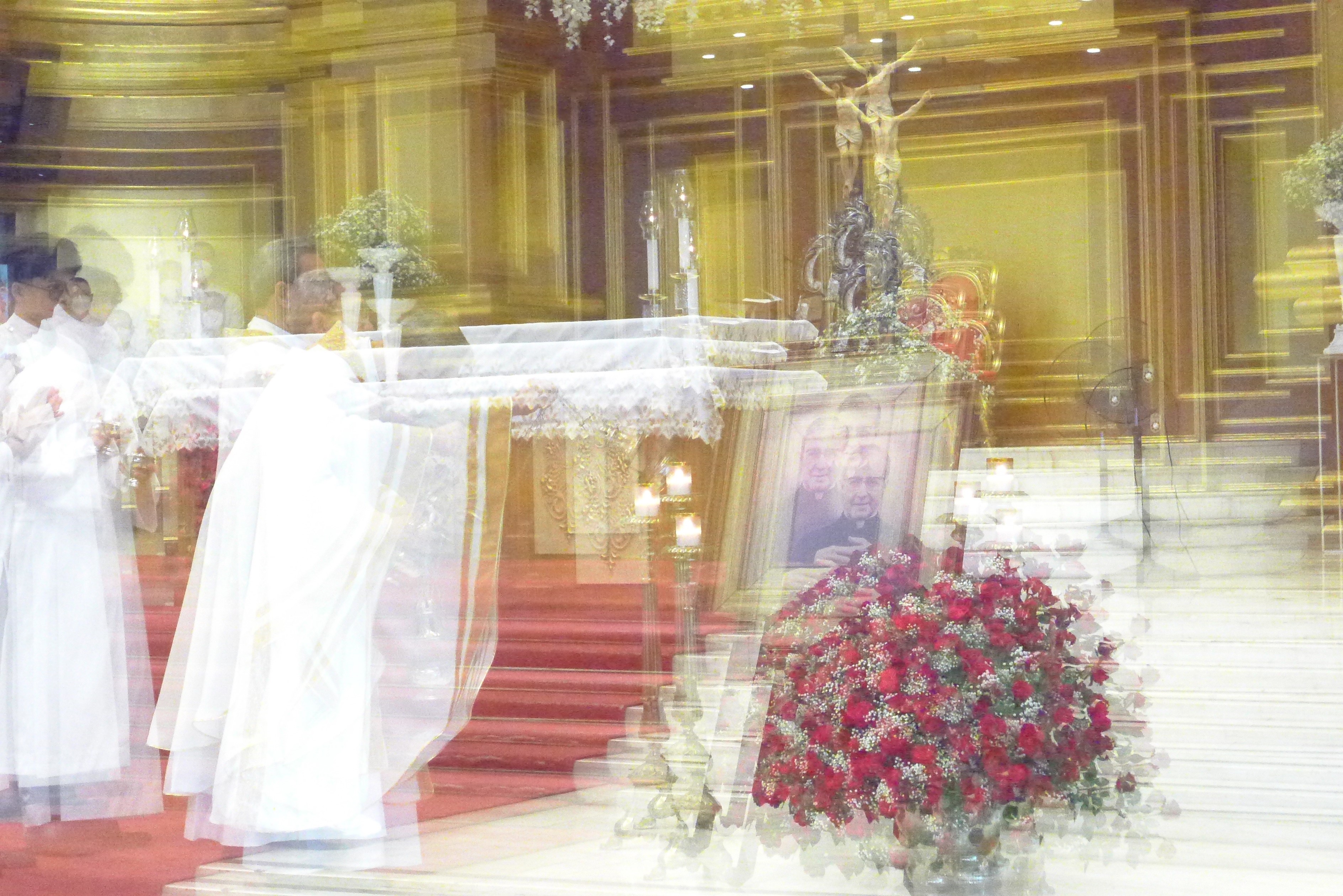
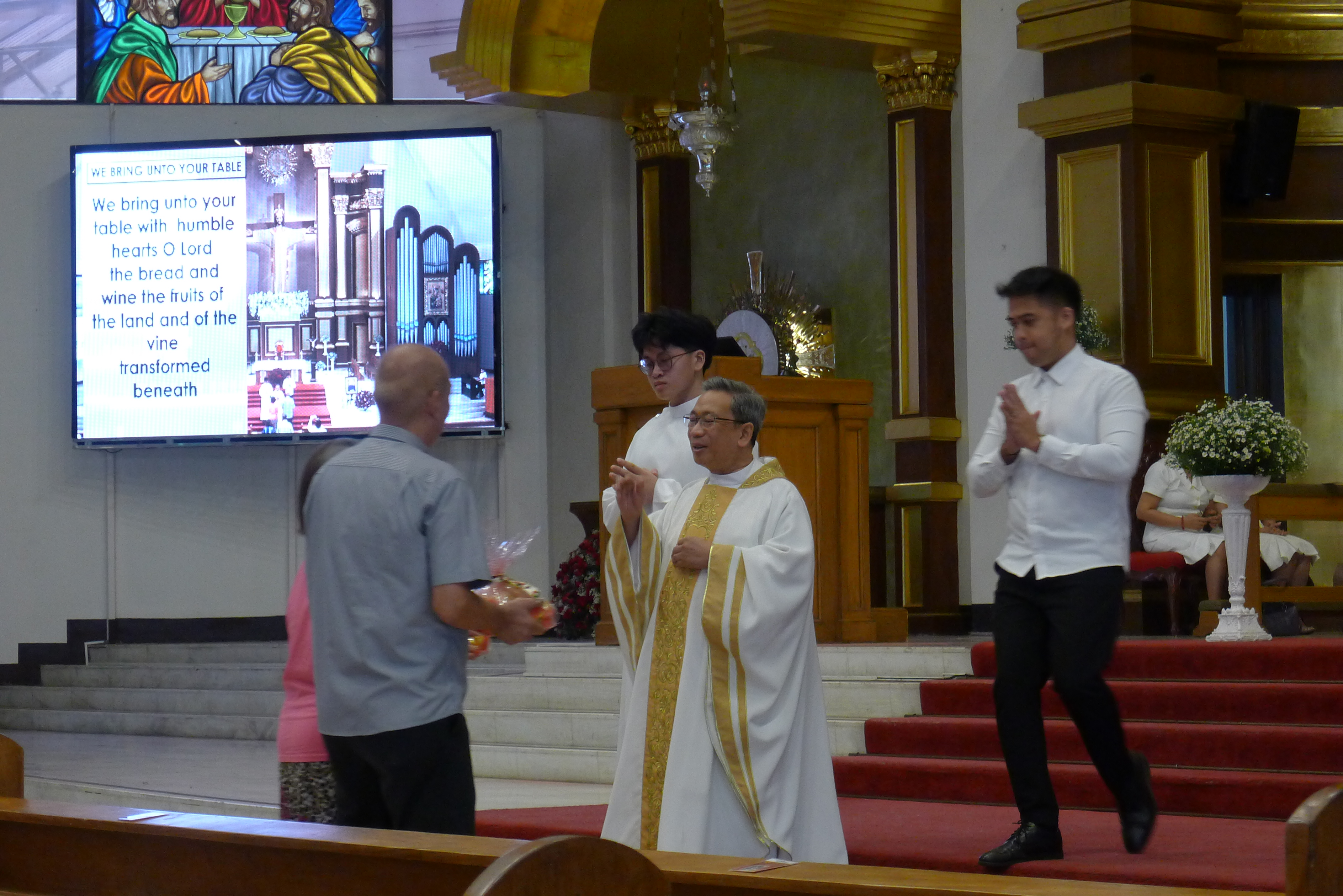
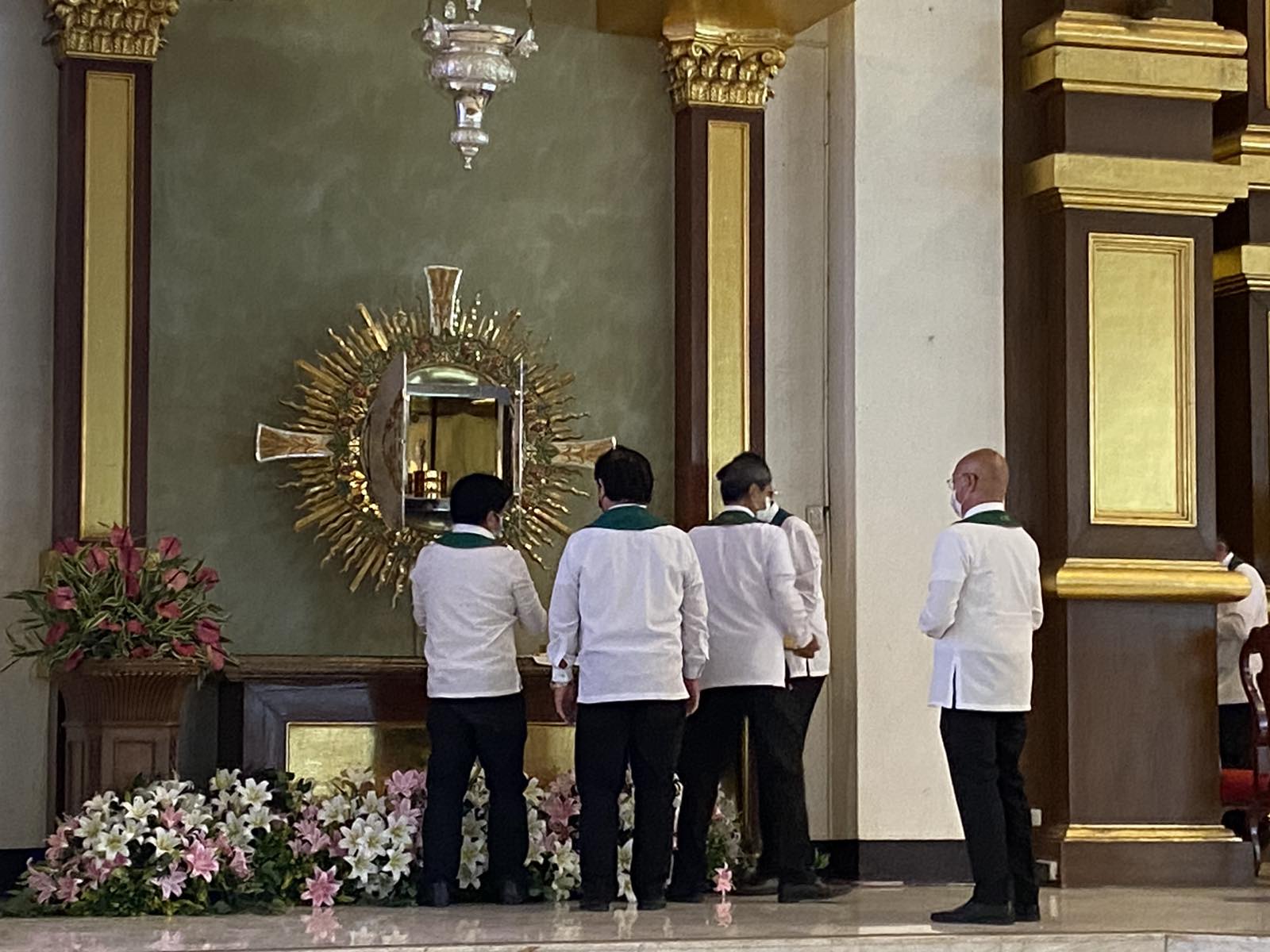
Today, Ingrid and I went to Mass to celebrate the feast day of St. Escriva. The priest, Father Bong, delivered a compelling homily. He connected today’s gospel to the philosophy of Opus Dei, which is the sanctification of work or making work holy.
My Journey with Opus Dei
I am familiar with Opus Dei because I graduated from the University of Asia and the Pacific, an Opus Dei school. There, I learned and understood how work, our tasks, and our jobs are to be viewed, but it was only ten years ago that I became active in joining Opus Dei prayer circles, where we meet once a month. Recently, I became a cooperator, and our task is to pray for the “work” of Opus Dei or share some financial blessings.
Transforming Work Through Opus Dei Philosophy
Trying to live the philosophy helped change my perspective toward my work. I used to always avoid seemingly unnecessary tasks and long processes, such as filing documents and thorough preparation, which require attention to detail. While I have not perfected the grace of doing these tasks, I am now more patient and virtuous when it comes to little tasks and “useless matters.”
From Opus Dei Facebook Page
The Long Journey to Sanctification of Work
The transformation towards the sanctification of work did not happen overnight. It was a long process of application, trial and error, and the constant reminder to offer every work as a service to others. This effort is never perfected. I realized that these works, big and small, can be a venue to show our love for others and be holy. Yes, holiness is what we aim for, and it is not a dirty word, nor is it about being self-righteous. Trying to be holy means admitting that we have struggles and need God to conquer our weaknesses.
Connecting Father Bong’s Homily to Luke 5:1-11
Father Bong’s homily and today’s gospel, Luke 5:1-11, best explain how we can make our work a way to show our love to others. The gospel is the story of the call of Simon the Fisherman. In Luke 5:1-11, Jesus is teaching by the Lake of Gennesaret when He sees two boats at the water’s edge. He gets into Simon Peter’s boat and teaches the crowd from there. After speaking, Jesus instructs Simon to let down his nets for a catch, resulting in an overwhelming haul of fish that fills two boats to the point of sinking. Amazed, Simon Peter falls at Jesus’ knees, expressing his unworthiness, but Jesus tells him not to be afraid and that he will now catch people instead of fish. Simon Peter, along with James and John, leaves everything behind to follow Jesus.
Jesus used the boat of Simon Peter as a platform to teach, the same way we can use our work and our jobs as a way to bring people closer to Christ. How? By doing it with care and by making sure that it is close to perfection.
Jesus asked Simon to cast the net to catch fish, but Simon said that they had been doing it the night before and failed to catch fish. However, when they followed Jesus’ instructions, they caught loads of fish. Father Bong said that when Jesus tells us to do something, have faith; it means that it is the right time. In other words, if it is God’s will, it’s on God’s bill so we need to learn to listen to God’s voice and have faith.
Finally, Jesus told Simon that moving forward, he would no longer just catch fish; he would now catch men. This is the same way Jesus calls us to use us for His glory. This one takes the acceptance of God’s will and not our will.
Final Thoughts
I will end this with a quote from St. Escriva: “You must realize now, more clearly than ever, that God is calling you to serve Him in and from the ordinary, secular, and civil activities of human life. He waits for us every day in the laboratory, in the operating theatre, in the army barracks, in the university chair, in the factory, in the workshop, in the fields, in the home, and in all the immense panorama of work.”
The main theme of today’s gospel, Mark 4:35-41, is faith. It recounts Jesus and his disciples setting off across the lake in a boat, accompanied by other boats. As they sailed, a fierce storm arose, causing waves to fill the boat with water. Despite the chaos, Jesus was asleep in the stern. The disciples, fearing for their lives, woke him, questioning his concern for their safety. Jesus calmed the storm with a command, then questioned their fear and lack of faith, leaving them in awe of his power over nature.
I used to have lots of worries, causing much anxiety, and I believe many others experience this too. This is why the priest’s homily resonated with me. He said, “We worry more than we work.” To me, this means we must act, to keep on doing, forcing ourselves to do something rather than drown ourselves in anxiety. Somehow, my anxiety and worry dropped as I kept reminding myself of Einstein’s quote, “Life is like riding a bicycle. To keep your balance, you must keep moving,” and that Jesus will always sustain us.
After Mass, we checked out Bridgetown, but there was no place for a family lunch that we liked, so we followed Jaime’s suggestion and went to Parqal. The drive was quick, less than an hour. There are more visitors to the area now compared to last time we were there in February.
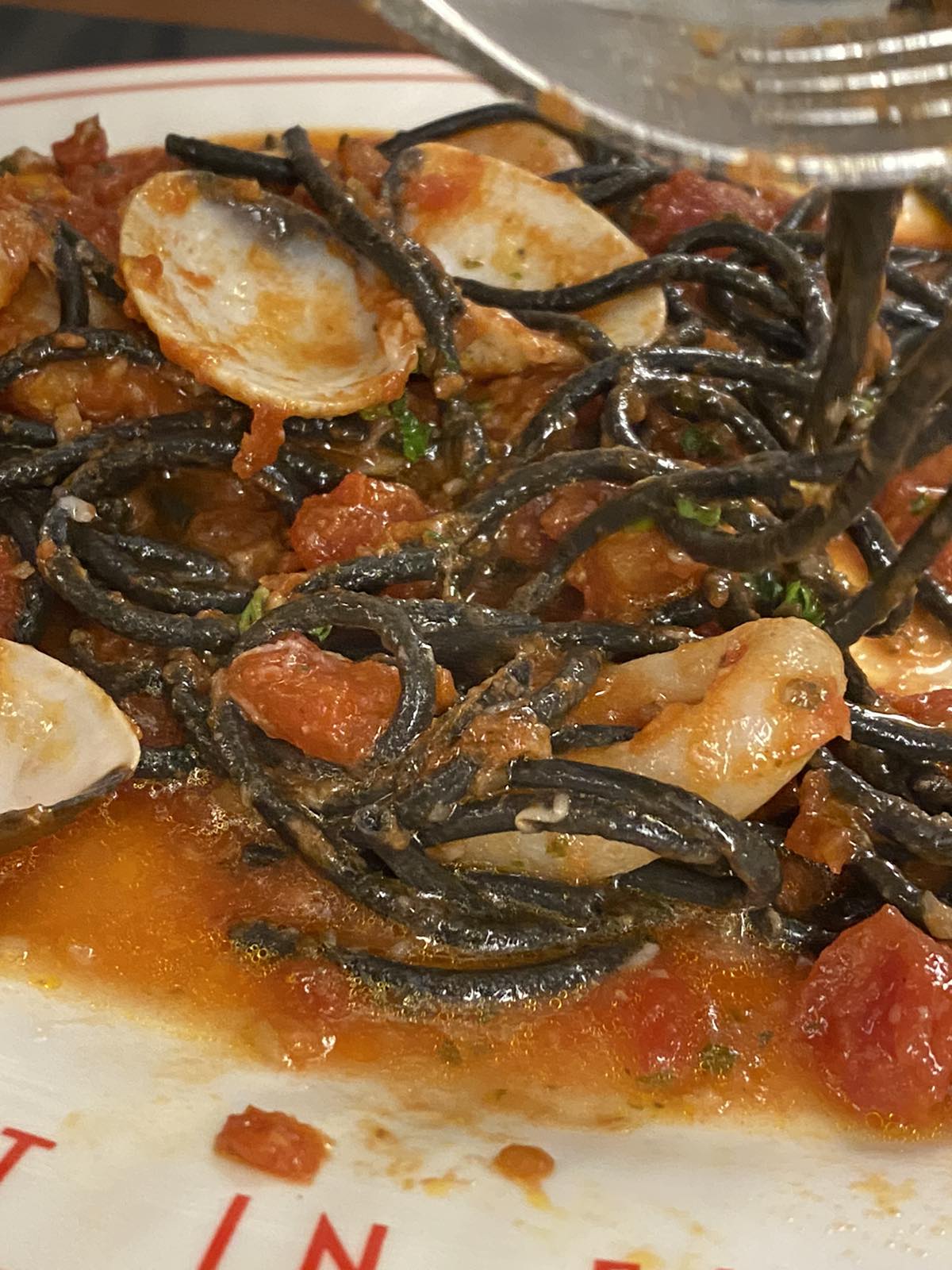
Gianetto was disappointing. During the pandemic, we used to order pizza from them. While the pizza was still good, their pasta Jaime ordered was average, with cut noodles. An Italian will surely make a scene if he received an order like that. The chicken Iuri ordered was tough. Even the complimentary bread, larger than croutons, was heated in the microwave. At 600 to 700 pesos per head, the price seemed overrated for the quality of food.
For dessert, we stopped by Dunkin’ because I was craving their coffee. The coffee was decent, but the ambiance was disappointing due to a K-Pop party on the second floor where fans were making a birthday greeting video for one of the members of Enhypen. The store was filled with loud cheers and shouts, and some customers seemed annoyed. However, it appeared to be good for business as turnover was much faster.
The day ended well because my Lumix LX5 battery and charger arrived today, bringing my 13-year-old camera back to life. It was the last nice compact camera I bought and used for contest entries. I plan to use it as an everyday carry and capture some moments. My last memories with it were in Intramuros and Binondo.
Today was a day centered around faith, family, and the camera, reminding us to view family through the lens of Catholic faith to nurture deeper connections, appreciate moments of joy and unity, and embrace the values that guide us in love, compassion, and faithfulness.
The fate of a small business depends on the foundation it was built upon. The most important factor during the start up phase is the owner; for he lays his vision as the foundation, and his values serve as the cement that binds the corporate culture. However, having good vision and values do not ensure the success of a venture. Both are only concepts and will remain as concepts unless it is being acted upon. Continue reading →