I examine ideas, challenge assumptions, and connect experience with principles to uncover insights that help people and organizations grow. #Business #Leadership #Human Formation
I fell in and out of sleep during the online video session of Jeff Cavins’ Unlocking the Mystery of the Bible series. Today, we were covering Creation. I would write notes for a few minutes, then fall asleep, wake up again, write some more, and then drift off once more. The cycle continued until the group returned to plenary.
This was only our second class, which Ingrid and I signed up for, and we still have a few more Mondays to go. The first session was more of an introduction than a class, simply explaining what to expect from the series.
The session did not become truly engaging until the plenary discussion, where classmates answered some of the reflection questions. The questions were rarely answered directly. One person would respond, another would offer an opinion, and the conversation would branch into different topics.
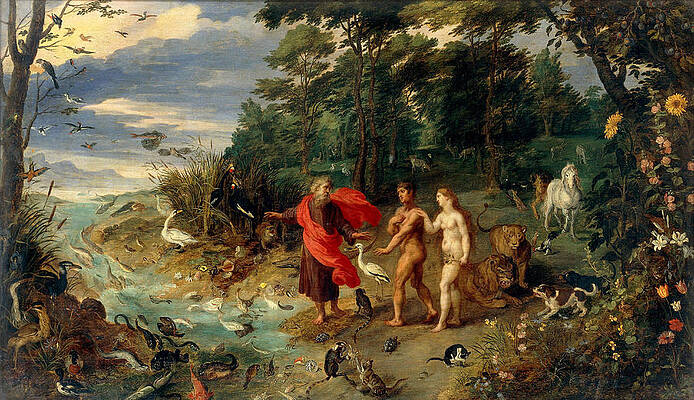
One particularly good question—obviously not part of the official discussion guide—was this: If God made Adam and Eve in His image and likeness, why did they disobey? Following that logic, does that make God imperfect? The person who asked it was genuinely curious, as she made clear, and not merely being pilosopo.
Iuri had just returned from a month-long training camp overseas. The next day, he played against someone he had never beaten before — a player who can smell annoyance and use lobs, awkward pace, and irritation to exacerbate the annoyance. That is tennis, it is not cheating.
The match was tight. It went to a tiebreak.
On all four match points, the ball bounced badly in favor of his opponent. Four times. Iuri lost the tiebreak not because he lacked the strokes, but because frustration got to him first.
Competitive tennis is a mental game. At that level, everyone can play. Matches are often decided by how quickly a player recovers from a bad point. One bad bounce can hijack the mind. Players begin rushing. Errors multiply. By then the player has dug their own hole.
That is what makes tennis difficult. Not only the rallies, but the accumulation of emotion over the points. Professionals play matches lasting two, sometimes five hours. By then, the legs are tired, but so is the mind.
After losing the tiebreak came a short tantrum like an 8 year old child whos candy was snatched.
When he had settled down, I told him I never expected him to win every match after camp. Tennis is not boxing where opponents can be chosen carefully. In tennis, losses are unavoidable. I also told him that if he pressures himself, he will only get frustrated more.
Training teaches technique. Application teaches reality.
The camp improved his serve and forehand and all other techniques. You could see it in the match. He stayed in points longer. He competed better. But the mental side of the game cannot be downloaded in a month overseas. That only comes from experience — from accepting the misfortunes of the game like bad bounces, difficult opponents, heat, nerves, and losses that stay with you for a while.
The court does not adjust itself for one player. The bad bounce that hurts you today may save you tomorrow.
Mental toughness doesn’t not only come from physical strength, and from speed of mental recovery but also from accepting that not everything can go your way, that there are circumstances beyond your control. Only then you can focus back on your strategy. No, it is not denying the existence of emotions but knowing that it has to take on the sideline.
If only maturity could be accelerated for young athletes. But growth has its own pace. First comes knowing. Then applying. Then learning.
He remained quiet after the loss, but I noticed something had changed. Before, a defeat like this would ruin his whole day. This time, it only lasted an hour.
We had lunch in Goodah after.
By then, everything was already good-ah.
That afternoon he played again, he was tired but pushed himself. The day after, he played again and pushed himself despite being tired and carrying the mental effect of loss from yesterday
Today is the birthday of Padre Pio and I paid him a visit. We have a special devotion to him and so we named our son after him. I spent a few minutes to pray and receive the communion.
These days, I got to spend plenty of date time with another Francesco Pio, our eldest Jaime Francesco Pio. I had several meals with him, and even watched him climb. He is now 20 and as they get older, they live a more independent life, they spend more time with their friends and soon after graduation, their workmates.
I am within two years of what people kindly call the golden years. That marker means something to me — not as a occasion for nostalgia, but as a vantage point. I have lived through enough of history to watch the world change, and to measure what that change has cost.
The last four decades have produced a revolution in communication unprecedented in human history. Information moves faster than thought. A message composed in London reaches Manila before the next heartbeat and spreads across a nation within minutes. We have never had this before, and we have not yet reckoned seriously with what it means.
The standard response has been to call technology neutral. The internet, social media, artificial intelligence — tools, nothing more. Their morality, we are told, lies entirely with the user. But philosopher Carissa Veliz has made a persuasive case against that comfort. Technology is not of God. It is man-made, which means it is designed with intention, shaped by interest, and loaded with the biases of its creators. More often than not, those biases run toward control. Toward dominance. Toward the capture of attention and the management of perception.
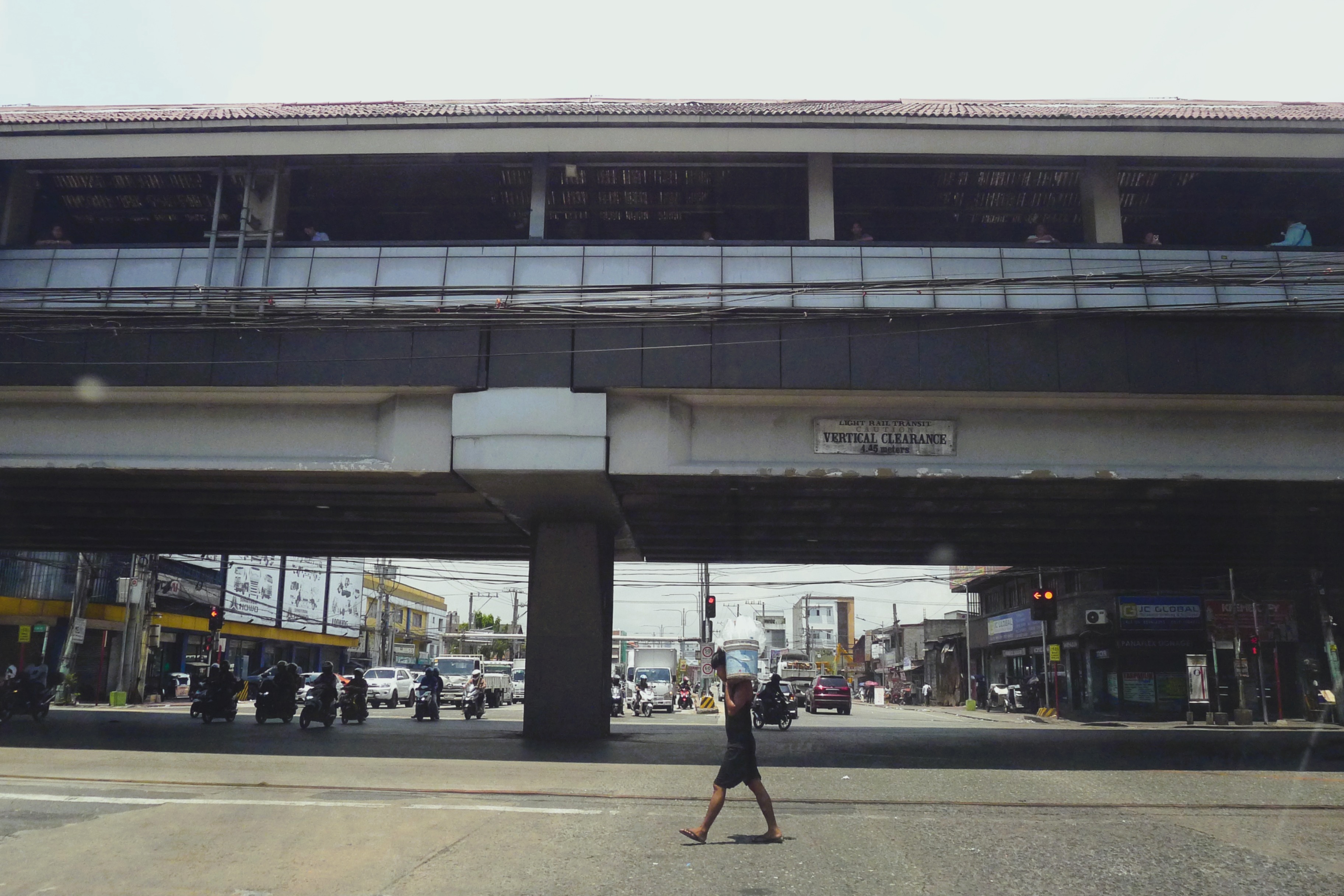
Two weeks ago I resurrected my old Panasonic Lumix LX5 and have been carrying it everywhere since. Most of my shooting has been from inside the car, in traffic, catching whatever the city throws at the window. I was inspired by David Bradford’s drive-by photographs, work I first came across in the mid-2000s that quietly stayed with me all these years.
I shoot by instinct. My eyes go to color, to a graphic moment, to light that cuts hard across a face or a wall, to whatever feels like it is on the edge of becoming a story. I am not always sure what I am after. Sometimes it is beauty. Sometimes it is just light. Sometimes it is a moment that feels right in a way I cannot fully explain.
But somewhere along the way I started asking myself: are these images actually beautiful? And the moment I asked that, I realized I had already lost something. Because the question itself pulls you out of seeing and into performing. You stop shooting what arrests you and start shooting what you think will arrest someone else.
The problem is that beauty has become a crowded place. The digital revolution did not just make cameras accessible, it flooded the world with images. Landscapes, sunsets, perfect golden light — photographs that once stopped you cold now scroll past without a second glance. We have seen everything too many times. The magic is still there somewhere but we have watched the trick performed so often we can no longer feel it.
And it is not just beauty that has been crowded out. The visual language of photography itself — the reflection in a puddle, the stark juxtaposition, the decisive moment frozen mid-stride — these gestures belong to everyone now. Today, everyone can be a Fan Ho, Bresson, or Ansel Adams. When you raise your camera to catch a reflection in a rain-soaked street, you have to honestly ask yourself: is this my eye, or have I simply absorbed what a good photograph is supposed to look like?
That question used to not matter as much. When only a few people were making photographs, an image like that felt discovered. Now it feels inherited.
So what is left? I think what is left is intention. There is a difference between going out to collect likes and going out to communicate — to use an image to say something true about your experience of the world, the specific texture of what it feels like to move through a city, to sit in traffic, to notice what everyone else is too busy to see. That is not something an algorithm can replicate. It is not something abundance can erase. It is yours, if you are honest enough to chase it and patient enough to wait for it.