
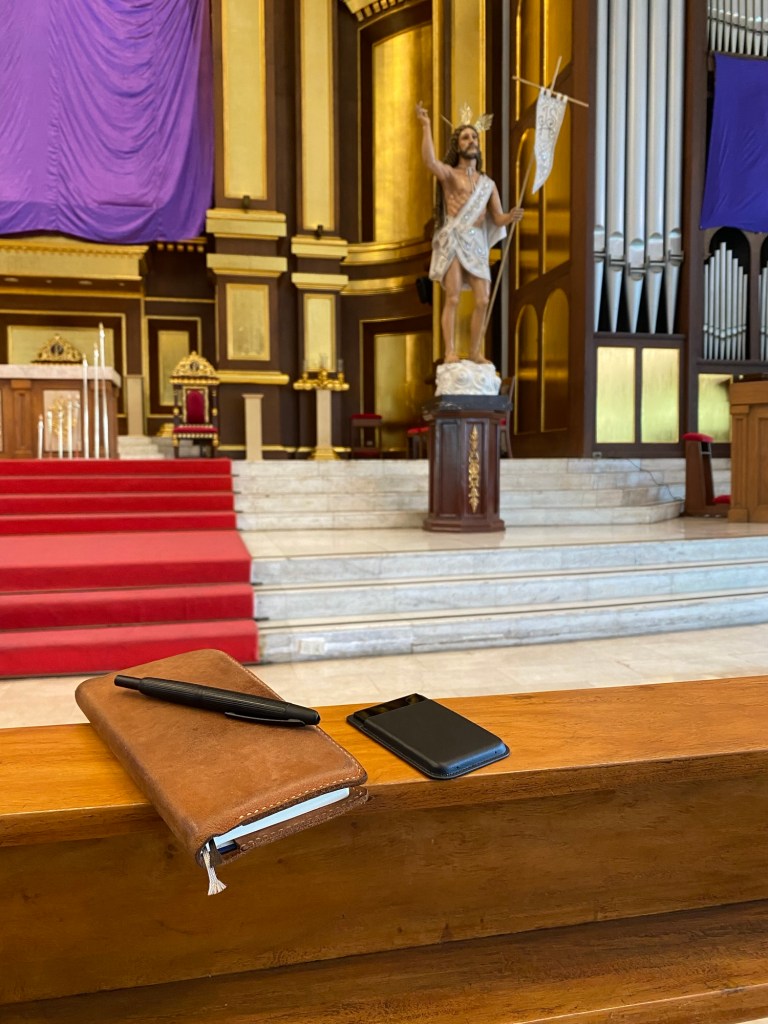
The darkness and silence between the crucifixion and the resurrection were filled with confusion and uncertainty for the disciples. That darkness was blinding, and the silence was deafening—not just in intensity, but in the loss of clarity and meaning. They could no longer make sense of what had happened.
In life, we experience similar moments. There are situations we simply cannot understand—realities that disturb us and challenge our sense of what is right or reasonable. Like the story shared by Fr. Cancino: an 86-year-old mother searching for her drug-addicted son, eventually finding him in a jeepney parking area. When the son refused to go home, the mother chose instead to stay with him, even sleeping there by his side.
Faced with this, we naturally form different opinions. Some may see it as enabling. Others may see it as heroic love. The situation resists easy judgment. It places us in a kind of darkness—where clarity escapes us and certainty is out of reach.
The same can be said of more difficult and uncomfortable realities: a whitewasher—someone who hides another’s faults by presenting a falsely positive image, making them appear better than they truly are. It becomes even more perplexing when this distortion comes from within the family itself, when a relative tells these untruths to their own loved ones. Here too, we are confronted with situations that resist easy explanation or resolution, where love itself can seem distorted and unclear.
And it is precisely in this kind of darkness and silence—where God seems absent and understanding fails—that faith invites us to a deeper stance. Not immediate answers, but trust. Not clarity, but presence.
Holy Saturday teaches us this: even when we cannot see or explain what is happening, God is not absent. He is at work in ways hidden from us. The silence is not empty, and the darkness is not without meaning. It may not yet be revealed—but it is not without purpose.

