The 3 Gentlemen’s Podcasts for Intellectual Growth and Relaxation

Photo by cottonbro studio on Pexels.com

I love listening to podcasts before going to sleep. It is a habit I developed during the lockdown, which was also when I started my own podcast called Business Class, where I talked about business and entrepreneurship. I listen to podcasts mainly to get information and to help me fall asleep. Podcasts are my alternative to watching YouTube videos and reading books.

Getting myself hooked on listening to podcasts was an accident. I was trying to learn about philosophy during the pandemic to use as part of my patter in my conjuring hobby. I started reading more books on philosophy and even enrolled in online courses to get better in the topic. Then one time, around 9 PM, I was already tired from reading but still eager to learn. The idea of listening to podcasts popped into my head. I searched “philosophy” on my podcast app and started scrolling to check which was the most interesting to me. Then I accidentally found an episode that looked interesting and started listening. Since then, I got hooked. This was in 2020.

Listening to a podcast is like tuning into your AM radio, except that you can pause and continue at another time. Compared to videos, podcasts require more focus and concentration, which I think makes them superior to TV or video as a tool for improving one’s listening and learning skills.

The podcasts I listen to most are those related to liberal arts and the Catholic religion. I think it’s the result of the training I got from my university.

My top podcast choice is Word on Fire, a podcast by Bishop Barron that has been on air for several years. They had an interesting start-up phase, with Bishop Barron creating long-format content despite the conventional wisdom that content needs to be short because of people’s limited attention spans. However, Bishop Barron did not want to oversimplify or dumb down faith, so he continued with his erudite and intelligent content. Today, he has millions of subscribers, and I am one of them.

My favorite podcast episodes are those that discuss philosophy, especially his series called “Ideas Have Consequences” and “Understanding the Present Moment.” In this series, he talks about different philosophers like Marx, Russell, and Nietzsche, and how their ideas have affected our society and people today.

The next podcast I listen to mostly is called The Art of Manliness. It covers topics such as style, fitness, parenting, and humanities, with episodes that are relevant to the modern gentleman. I’ve bookmarked several episodes, including “7 Journaling Techniques that Can Change Your Life,” which discusses how daily writing can provide solutions to problems, create clarity of thought, and ease anxiety. Another notable episode is “Tiny Habits that Change Everything.” In this episode, Dr. BJ Fogg suggests breaking down habits into smaller chunks to avoid being overwhelmed by impossible goals. I appreciated the discussion on the relationship between habits and motivation and the importance of celebrating small successes.

Finally, there’s a local podcast, The Jay Aruga Show, the first conservative podcast in the Philippines. I discovered it during the pandemic. This podcast reminds me of The Ben Shapiro Show and Trent Horn’s podcast for its anti-woke content. I enjoy listening to his episodes because Jay tackles challenging topics like gender ideology, religion, and other issues often ignored by mainstream media. I also listen to his debates on different podcasts where he discusses the SOGIE Bill.

As a bonus, I am adding the podcast of Dr. Jordan Peterson. Dr. Peterson is a controversial figure because of the video where he has a heated argument with some woke student activists that became viral. An episode of his podcast lasts beyond an hour and sometimes reaches almost three hours. This is the type of podcast that you cannot finish in a day. His podcasts are more of a dialogue between him and his guests on different topics ranging from psychology to religion. If you are into deep and meaningful conversations, I suggest you listen to his podcast.

If you want to build a habit of listening to podcasts, I suggest you choose a time that works best for you or simply commit to a specific time of day. In my case, it is before going to sleep. Other good times to listen to a podcast are during commutes or office break time. You can also try catching yourself when you mostly do your doom scrolling, and I suggest you use that time.

By listening to these types of podcasts, gentlemen can expose themselves to relevant social issues, religion, and humanities. Immersing themselves in liberal arts and culture has an impact on a man’s perspective, which can positively influence the people around him by fostering deeper empathy, critical thinking, and a broader understanding of societal and ethical issues. This enriched perspective often leads to more meaningful discussions, stronger values, and a shared appreciation for diverse perspectives within his circle.

These podcasts not only entertain but also educate, making them an invaluable part of my routine.

Celebrating the Feast Day of St. Escriva: Insights from Father Bong’s Homily

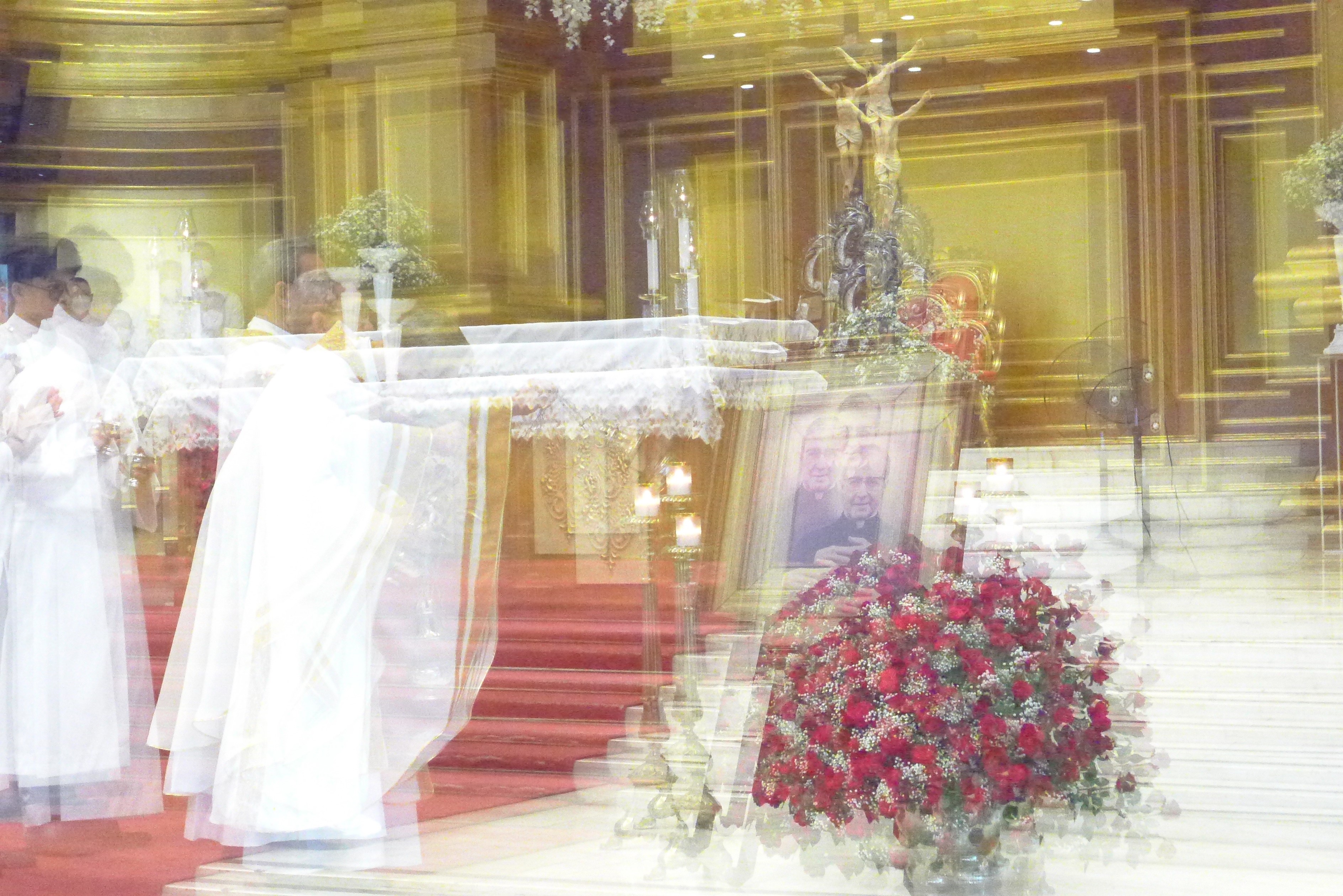
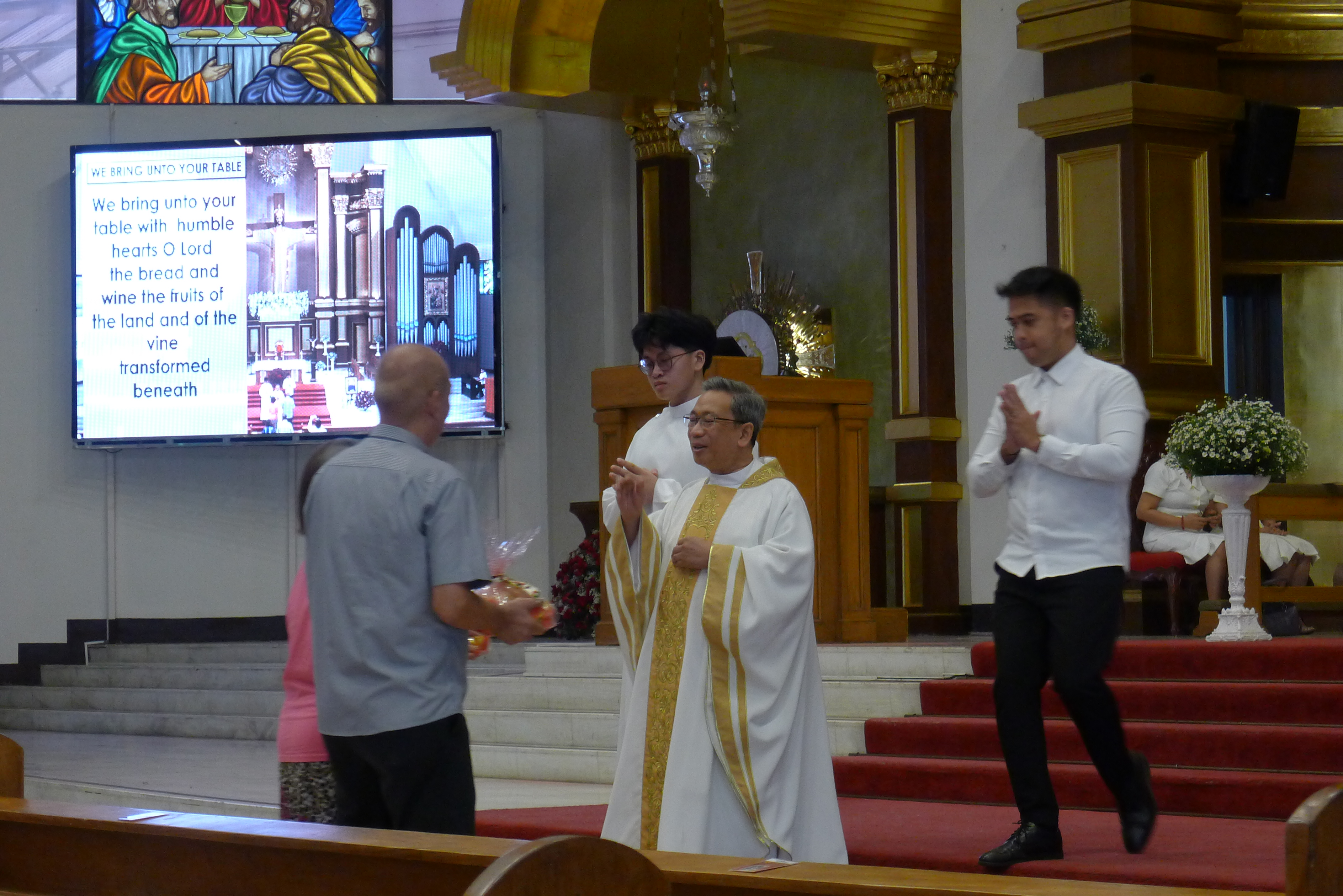
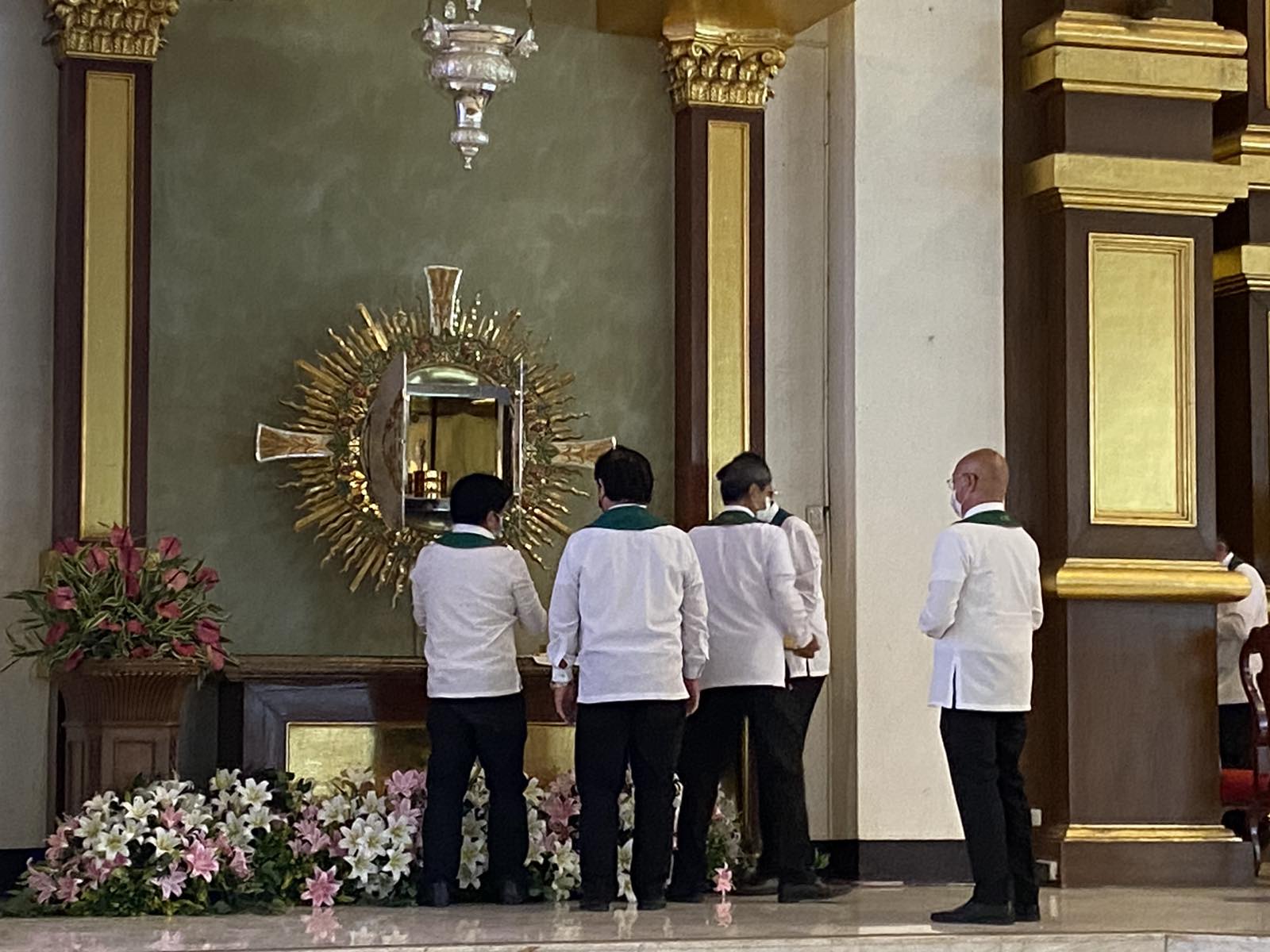
Today, Ingrid and I went to Mass to celebrate the feast day of St. Escriva. The priest, Father Bong, delivered a compelling homily. He connected today’s gospel to the philosophy of Opus Dei, which is the sanctification of work or making work holy.

My Journey with Opus Dei

I am familiar with Opus Dei because I graduated from the University of Asia and the Pacific, an Opus Dei school. There, I learned and understood how work, our tasks, and our jobs are to be viewed, but it was only ten years ago that I became active in joining Opus Dei prayer circles, where we meet once a month. Recently, I became a cooperator, and our task is to pray for the “work” of Opus Dei or share some financial blessings.

Transforming Work Through Opus Dei Philosophy

Trying to live the philosophy helped change my perspective toward my work. I used to always avoid seemingly unnecessary tasks and long processes, such as filing documents and thorough preparation, which require attention to detail. While I have not perfected the grace of doing these tasks, I am now more patient and virtuous when it comes to little tasks and “useless matters.”

From Opus Dei Facebook Page

The Long Journey to Sanctification of Work

The transformation towards the sanctification of work did not happen overnight. It was a long process of application, trial and error, and the constant reminder to offer every work as a service to others. This effort is never perfected. I realized that these works, big and small, can be a venue to show our love for others and be holy. Yes, holiness is what we aim for, and it is not a dirty word, nor is it about being self-righteous. Trying to be holy means admitting that we have struggles and need God to conquer our weaknesses.

Connecting Father Bong’s Homily to Luke 5:1-11

Father Bong’s homily and today’s gospel, Luke 5:1-11, best explain how we can make our work a way to show our love to others. The gospel is the story of the call of Simon the Fisherman. In Luke 5:1-11, Jesus is teaching by the Lake of Gennesaret when He sees two boats at the water’s edge. He gets into Simon Peter’s boat and teaches the crowd from there. After speaking, Jesus instructs Simon to let down his nets for a catch, resulting in an overwhelming haul of fish that fills two boats to the point of sinking. Amazed, Simon Peter falls at Jesus’ knees, expressing his unworthiness, but Jesus tells him not to be afraid and that he will now catch people instead of fish. Simon Peter, along with James and John, leaves everything behind to follow Jesus.

Move to time stamp 29:30 to see homily: Homily

Key Points from Father Bong’s Homily

  1. Jesus used the boat of Simon Peter as a platform to teach, the same way we can use our work and our jobs as a way to bring people closer to Christ. How? By doing it with care and by making sure that it is close to perfection.
  2. Jesus asked Simon to cast the net to catch fish, but Simon said that they had been doing it the night before and failed to catch fish. However, when they followed Jesus’ instructions, they caught loads of fish. Father Bong said that when Jesus tells us to do something, have faith; it means that it is the right time. In other words, if it is God’s will, it’s on God’s bill so we need to learn to listen to God’s voice and have faith.
  3. Finally, Jesus told Simon that moving forward, he would no longer just catch fish; he would now catch men. This is the same way Jesus calls us to use us for His glory. This one takes the acceptance of God’s will and not our will.

Final Thoughts

I will end this with a quote from St. Escriva: “You must realize now, more clearly than ever, that God is calling you to serve Him in and from the ordinary, secular, and civil activities of human life. He waits for us every day in the laboratory, in the operating theatre, in the army barracks, in the university chair, in the factory, in the workshop, in the fields, in the home, and in all the immense panorama of work.”

Happy Feast Day!

3 childhood chips from the 80s that are no longer available

I still clearly remember some of the junk food brands I ate as a kid back in the 80s. There are three in particular that I miss: Wonderboy, Chickadees, and Barbeque Curls. All three are no longer available on the market.

Wonderboy were thin garlic chips that could give you garlic breath for hours. The pack contained, I think, two or three round chips. I clearly remember eating two to three packs for my afternoon snack, the crunch they made when you bit into them, and the garlic taste that lingered in your mouth.

Chickadees were another favorite. I’m not entirely sure if they were round in shape and yellow in color, but what I loved most about them were the freebies that came with each pack. There was the little plastic dome that would pop up with a satisfying click, and the tiny grasshopper toy that hopped when you pushed its butt. Opening a new pack of Chickadees felt like unwrapping a little surprise each time, with the toys adding an extra layer of excitement to snack time.

Barbeque Curls were the sibling of Chiz Curls, but with a smoky barbeque flavor that was simply irresistible. Each curl was perfectly seasoned, and I can still taste the sweet, tangy barbeque coating that made them so addictive. They were the kind of snack that you could never have just one of – before you knew it, the whole pack would be gone, leaving your fingers covered in that delicious seasoning.

Eating the snacks was not just the fun part. It was also choosing from the many snacks my two pesos could buy from the sari-sari store. It was not just a battle among the three, but you also had Clover Bits, Starkist, Pee Wee, and even sweets like Tira-Tira, Bazooka, Tarzan, and Big Boy.

I wonder if it is as simple for kids today to buy chips as it was back in the 80s, with all the health concerns, environmental considerations, and activism involved in brands today. While they won’t have the same simplicity, it saves them from health concerns in the future, at least from the health aspect.

I can’t help but feel nostalgic thinking about these snacks. They were just snacks then, but they are a part of my childhood today. Maybe not just mine, but also yours. Each bite was a taste of joy, a moment of carefree simplicity.

My day of viewing family from the lens of faith

The main theme of today’s gospel, Mark 4:35-41, is faith. It recounts Jesus and his disciples setting off across the lake in a boat, accompanied by other boats. As they sailed, a fierce storm arose, causing waves to fill the boat with water. Despite the chaos, Jesus was asleep in the stern. The disciples, fearing for their lives, woke him, questioning his concern for their safety. Jesus calmed the storm with a command, then questioned their fear and lack of faith, leaving them in awe of his power over nature.

I used to have lots of worries, causing much anxiety, and I believe many others experience this too. This is why the priest’s homily resonated with me. He said, “We worry more than we work.” To me, this means we must act, to keep on doing, forcing ourselves to do something rather than drown ourselves in anxiety. Somehow, my anxiety and worry dropped as I kept reminding myself of Einstein’s quote, “Life is like riding a bicycle. To keep your balance, you must keep moving,” and that Jesus will always sustain us.

After Mass, we checked out Bridgetown, but there was no place for a family lunch that we liked, so we followed Jaime’s suggestion and went to Parqal. The drive was quick, less than an hour. There are more visitors to the area now compared to last time we were there in February.

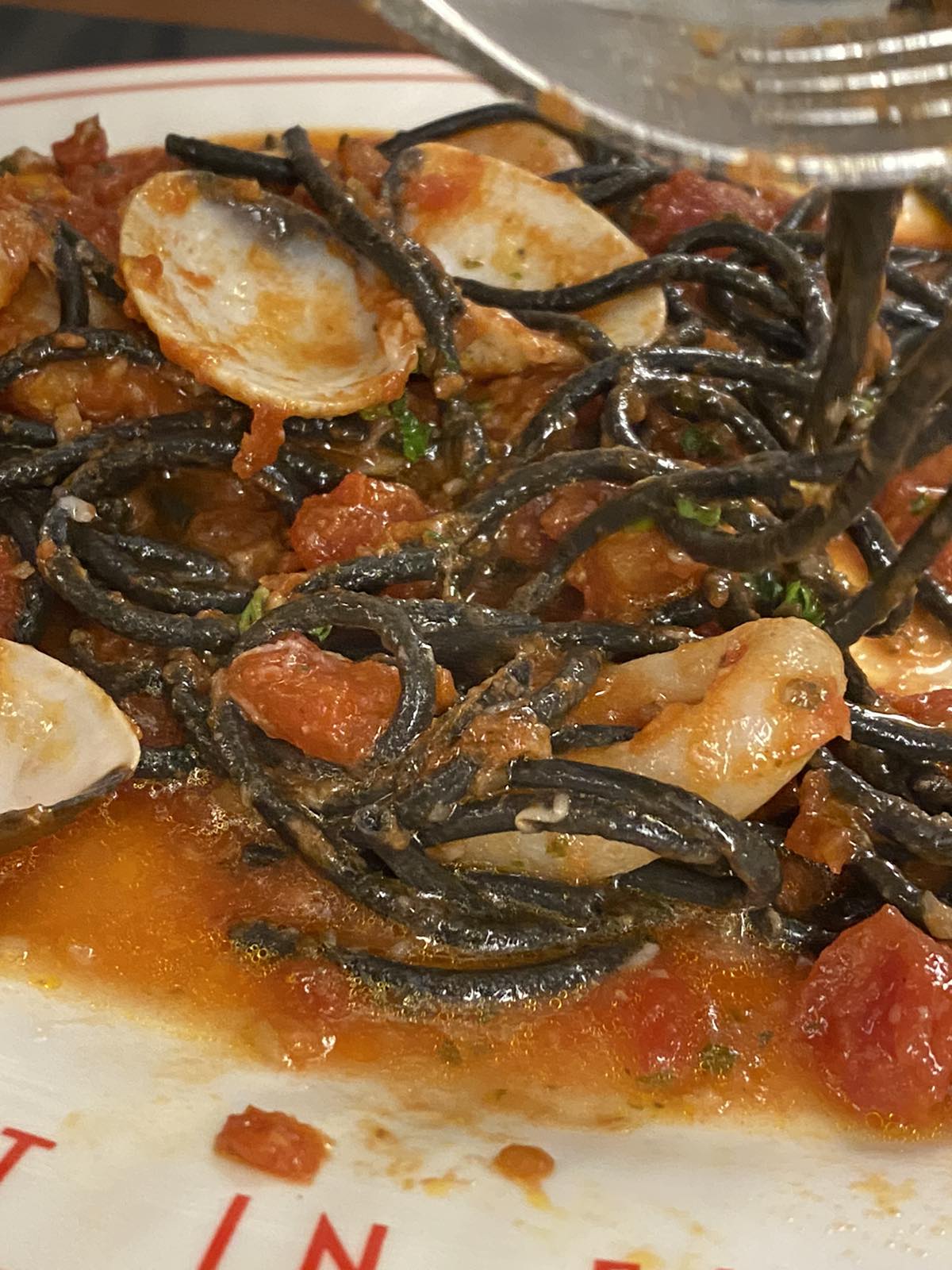
Gianetto was disappointing. During the pandemic, we used to order pizza from them. While the pizza was still good, their pasta Jaime ordered was average, with cut noodles. An Italian will surely make a scene if he received an order like that. The chicken Iuri ordered was tough. Even the complimentary bread, larger than croutons, was heated in the microwave. At 600 to 700 pesos per head, the price seemed overrated for the quality of food.

For dessert, we stopped by Dunkin’ because I was craving their coffee. The coffee was decent, but the ambiance was disappointing due to a K-Pop party on the second floor where fans were making a birthday greeting video for one of the members of Enhypen. The store was filled with loud cheers and shouts, and some customers seemed annoyed. However, it appeared to be good for business as turnover was much faster.

The day ended well because my Lumix LX5 battery and charger arrived today, bringing my 13-year-old camera back to life. It was the last nice compact camera I bought and used for contest entries. I plan to use it as an everyday carry and capture some moments. My last memories with it were in Intramuros and Binondo.

Today was a day centered around faith, family, and the camera, reminding us to view family through the lens of Catholic faith to nurture deeper connections, appreciate moments of joy and unity, and embrace the values that guide us in love, compassion, and faithfulness.


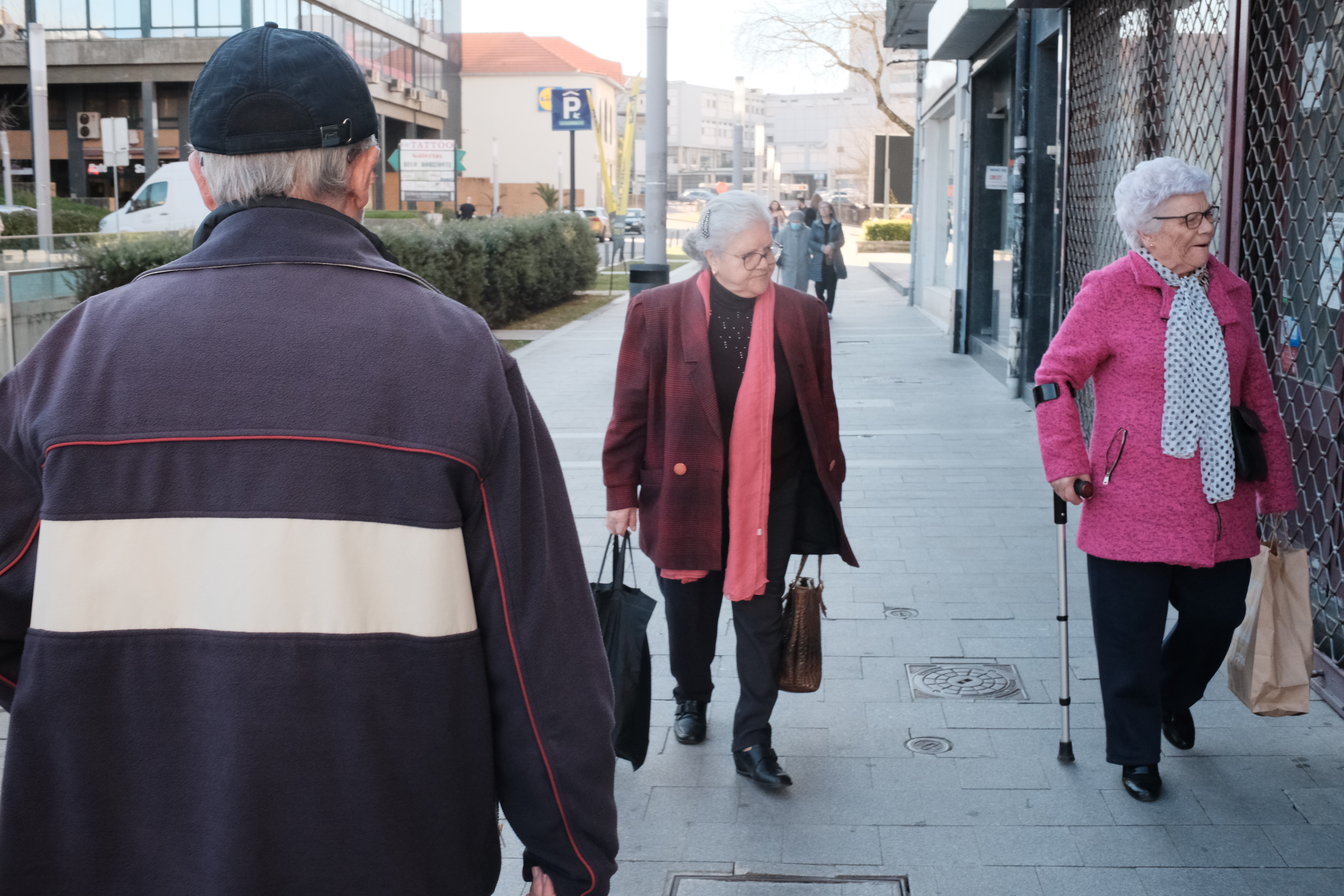
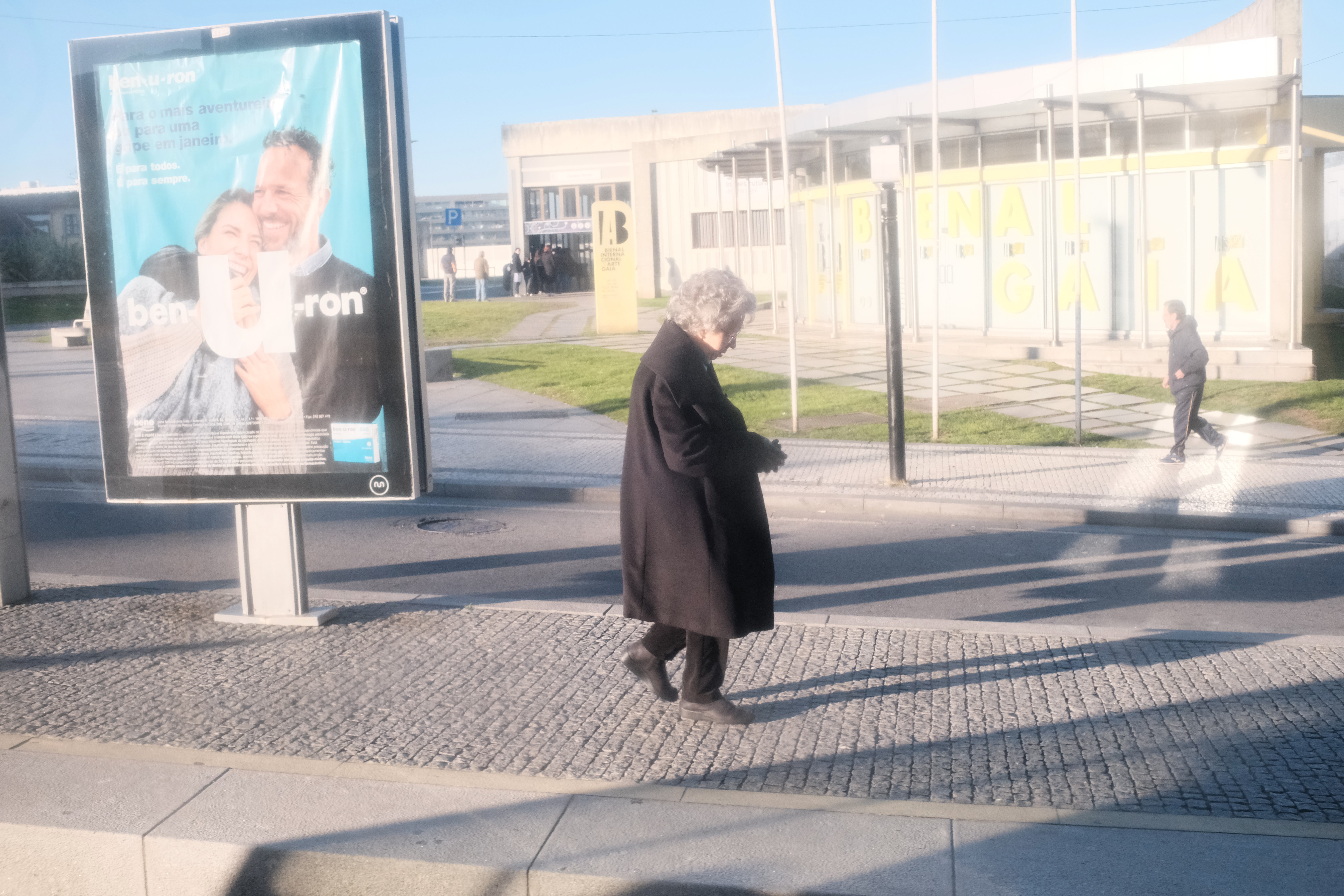
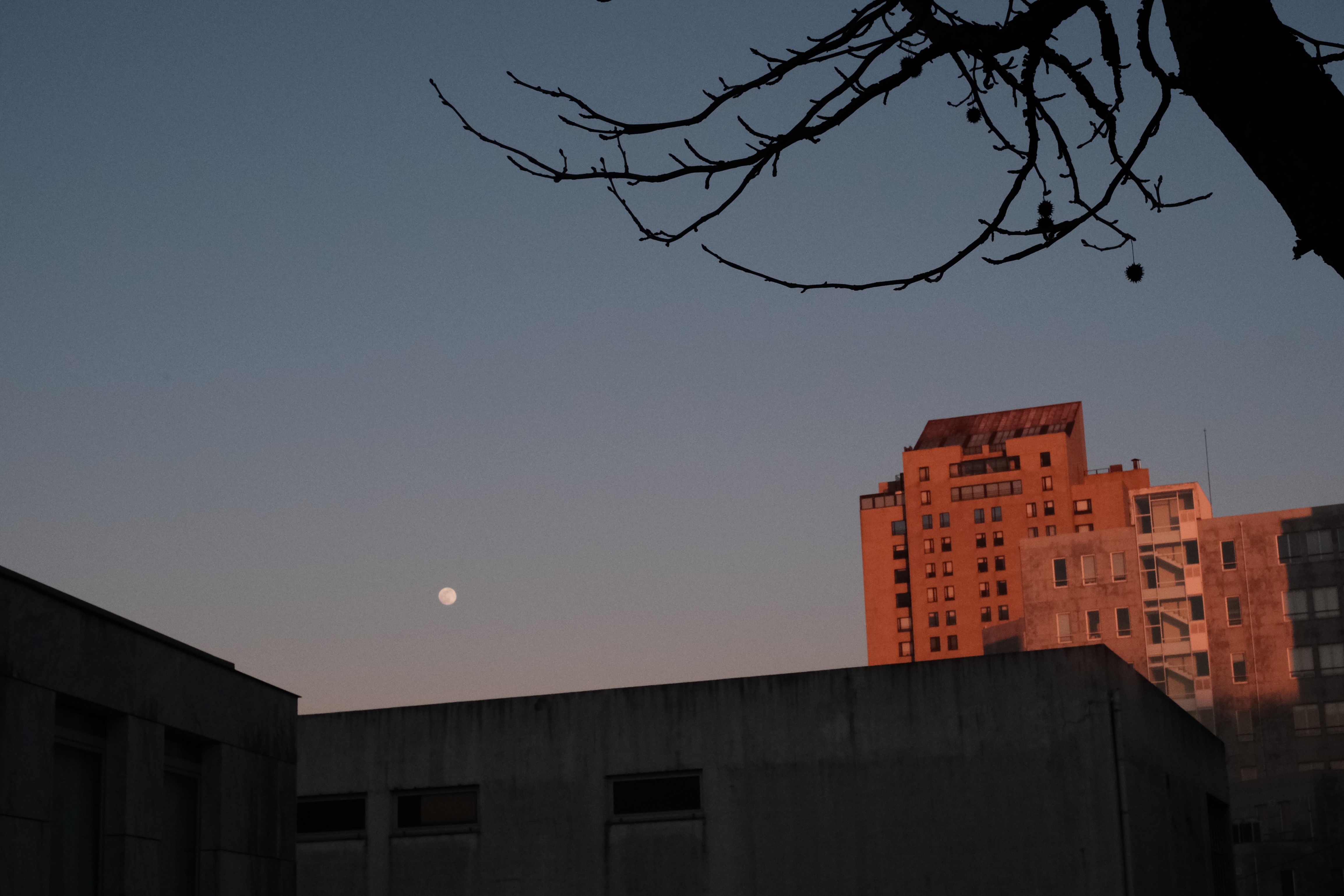
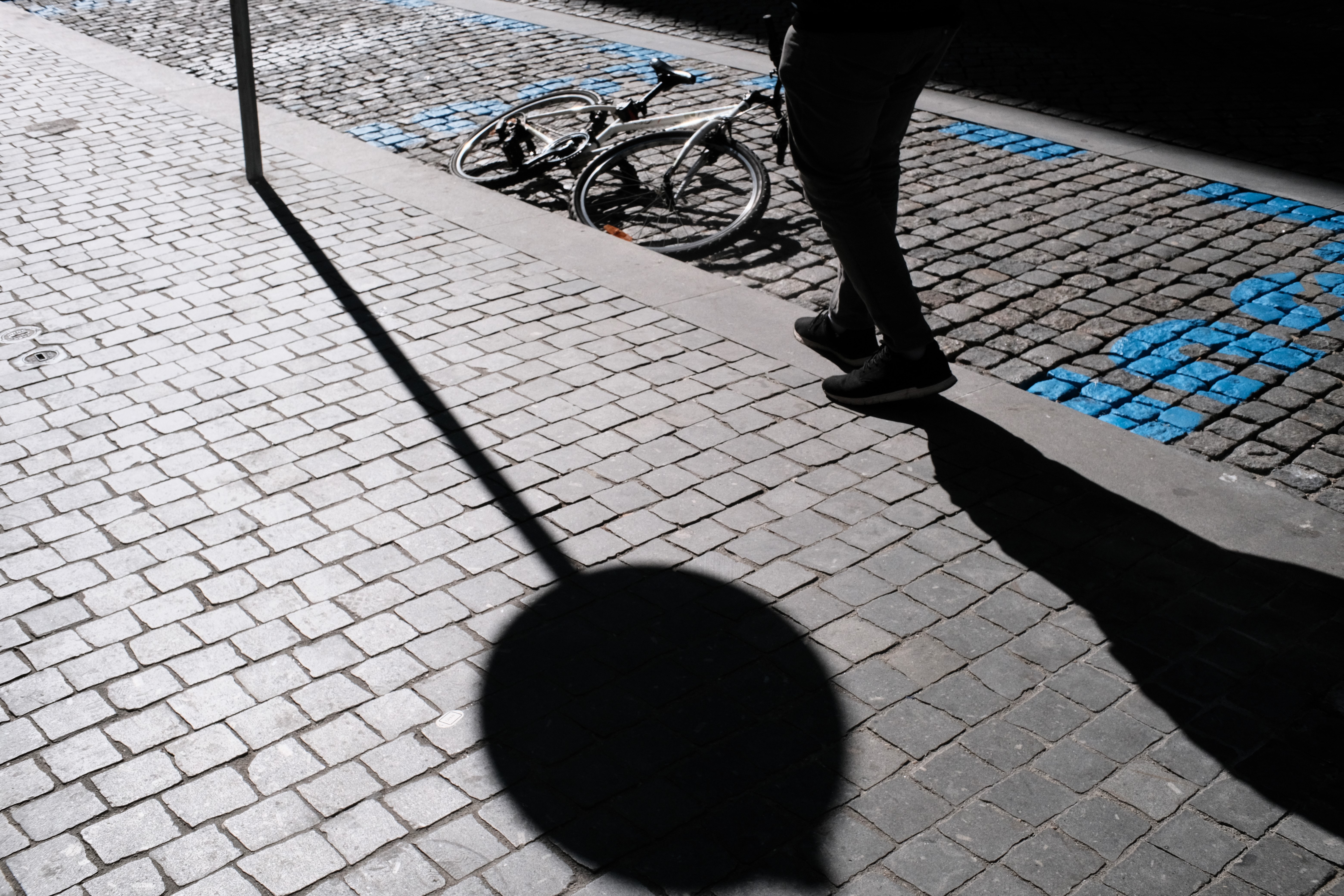
Million Miles Entry #5 Unveiling the City of Porto: Street Photography Escapade and Insights

Silhouette of tourists trying to find their way around. A typical site in Porto

Last February 2023, I was in Porto with two of my college friends. It was an unplanned trip for 12 days that resulted in plenty of beautiful photos and memories. My friend, Mac, who has a unit in Porto, asked me and another friend, CJ, to accompany him. Mac and I first entered Rome, stayed for several days in a unit near Piazza Navona, then flew to Madrid to meet up with CJ before heading to Lisbon, Portugal by plane, and then traveled to Porto by land. If I had more time, I would have taken every transfer either by train or by bus. This would have allowed me to experience the cities better.

Knowing that I would be in a place with rich history, vibrant culture and well-preserved medieval structures, I decided to get myself a good street camera. I wanted something light and discreet. A compact point-and-shoot would not do, and a DSLR is too bulky. After my research, I finally decided to go with a Fujifilm because of its sensor size, handiness and interchangeable lens capability. I carried with me a Fuji XE4 with a TTArtisan lens 25mm which is around 38mm full frame equivalent. I wanted to bring a manual lens to stay faithful to the tradition of street photography culture. At least for a few days, I wanted to feel like Bresson and Eisenstadt. Just to share with you, my settings were as follows: aperture f/11, shutter speed 1/250, Auto ISO (max 3200), and manual focus which I kept within the focusing range of the aperture so that I could just shoot away. I also had three extra batteries and two 128GB memory cards. I stored them in my Domke Camera Bag.

Enjoying Sao Bento Station

There is something about street photography that I like. It is the abstraction, gut feel, spontaneity, and being “in the moment.” It reminds me of jazz improvisation, where the musician plays not just with notes and beats, but also with rules, which he breaks, resulting in magnificent music.

Click one of the photos below.

One of the challenges I face when doing street photography again, after a while of not doing it, is the fear of getting apprehended or scolded for pointing my camera at people in public, especially in a foreign country. However, if I let my fear take over, I would not have any decent photos to bring home. So, I took courage and decided not to hide and just raise my camera, point it at a stranger, and shoot. Another technique that helped me is to pretend that I was taking a video instead of a photo. This is something I learned by watching tips on YouTube. I would raise my camera and start panning, pretending to be doing a video, and then capture the right moment. No one ever complained because they probably got confused by hearing the shutter sound when all the while they thought I was taking a video.

Having around five days in Porto, I was able to walk around and scout the places I wanted to go back to. I did not do much research on where to do my street photography but instead just let my feet take me wherever. I thought of joining walking tours but then decided that doing street photography by myself would be more fun. There is the freedom to do whatever I want, wherever I want, and whenever I want.

I would wake up early in the morning, at 6 or 7 am, while CJ and Mac were still asleep, either book a car or walk. One day, I went to the Douro riverbank on the Gaia side overlooking Porto to take photos of the area and capture the magic of the early morning sun on its subjects. The place was still empty, the wind was blowing cold, and establishments were all closed and would not open until late morning. It was the perfect time to feel and understand the place and observe how light carves its subjects to create the perfect painting. Then suddenly, I felt the call of nature. I struggled between wanting to stay to wait for the perfect moment or leaving to answer the call. The latter won the battle. I called a taxi and rushed back to our flat.

Click photos to see.

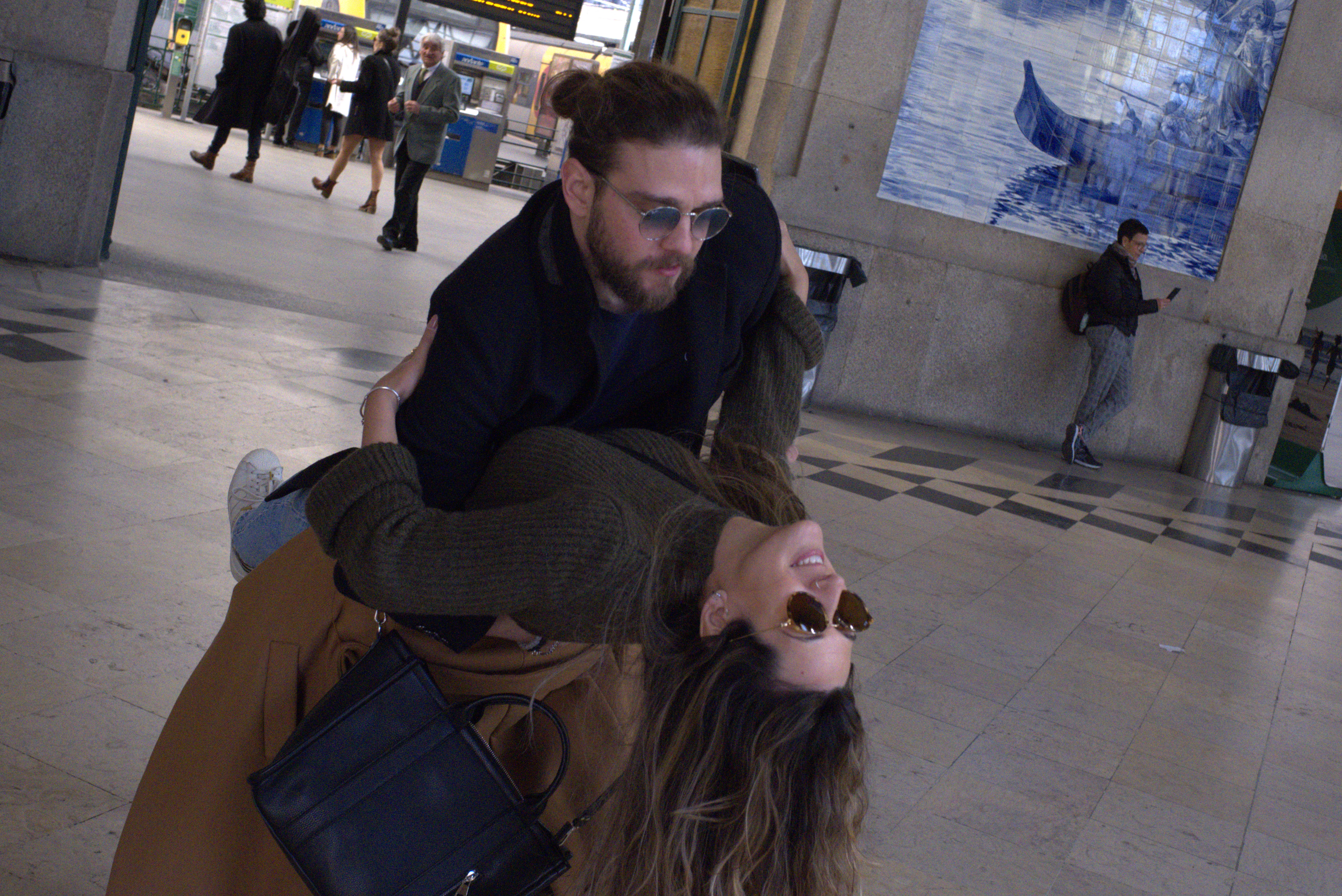
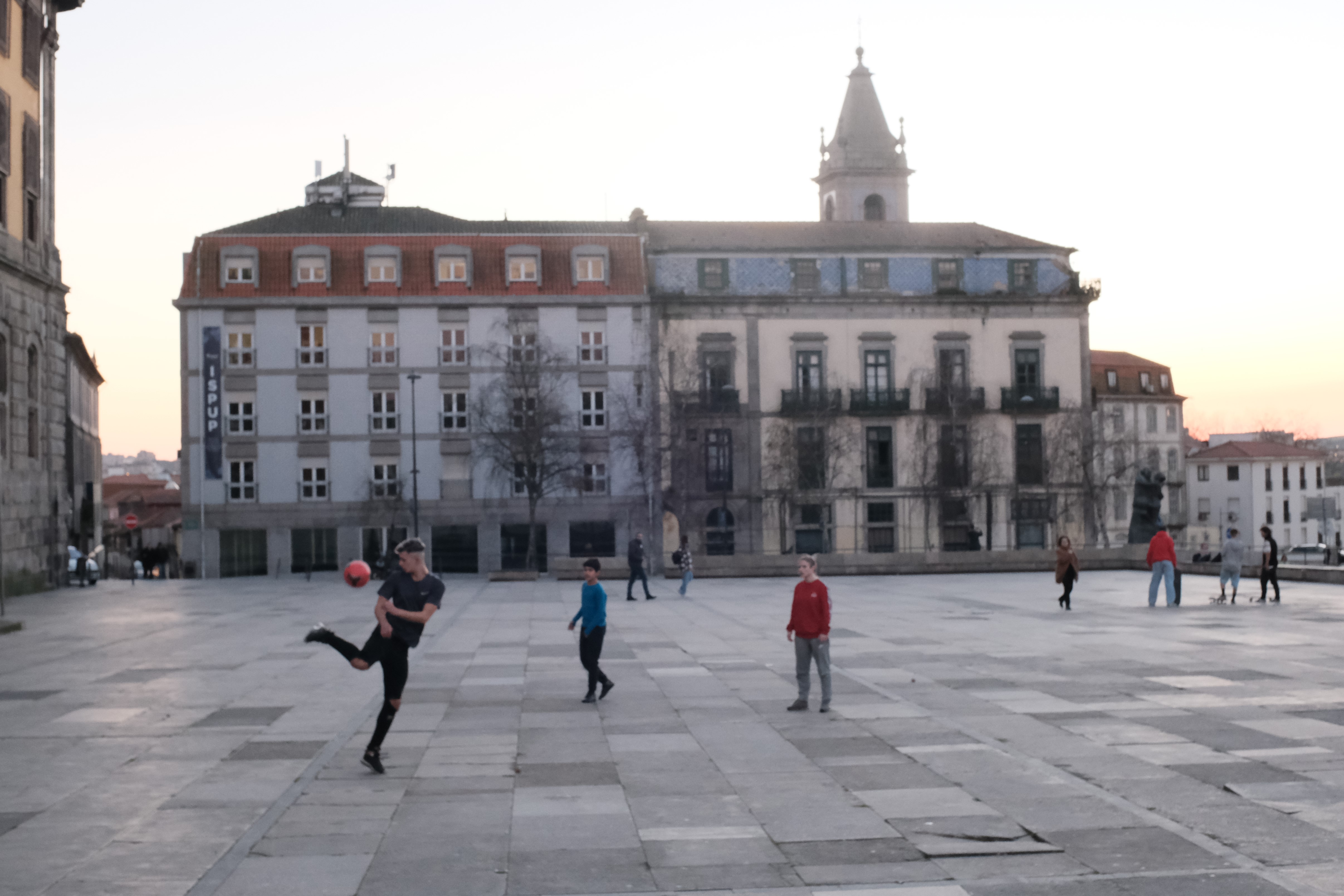
The place I suggest as your starting point would be the Church of Saint Ildefonso, a Baroque-style church with a tiled facade. The week I was there, stalls were selling leather items and there were plenty of interesting subjects around the plaza, good for warming up the gear and imagination. Then head down towards São Bento train station, which is one of the inspirations for J.K. Rowling. Do not miss going inside the station for some action. Luckily, when I was there, I found a couple dancing and saying their goodbyes. I stood near them and took photos without hesitation. After the station, cross the street and follow the road of Rua das Flores where you will see houses clad with Azulejos, people dining, artists selling their art, until you reach the bottom of Ribeira where you will see the Douro River, Ponte de Luís Bridge, and the colorful houses which used to be warehouses and now repurposed as restaurants.

You will not run out of subjects. There are crowds of people especially in Santa Catarina street, historical establishments are worth your memory space, individuals in action, and a variety of details in the environment. You will not miss them as long as you keep your eyes open and intentionally look for subjects.

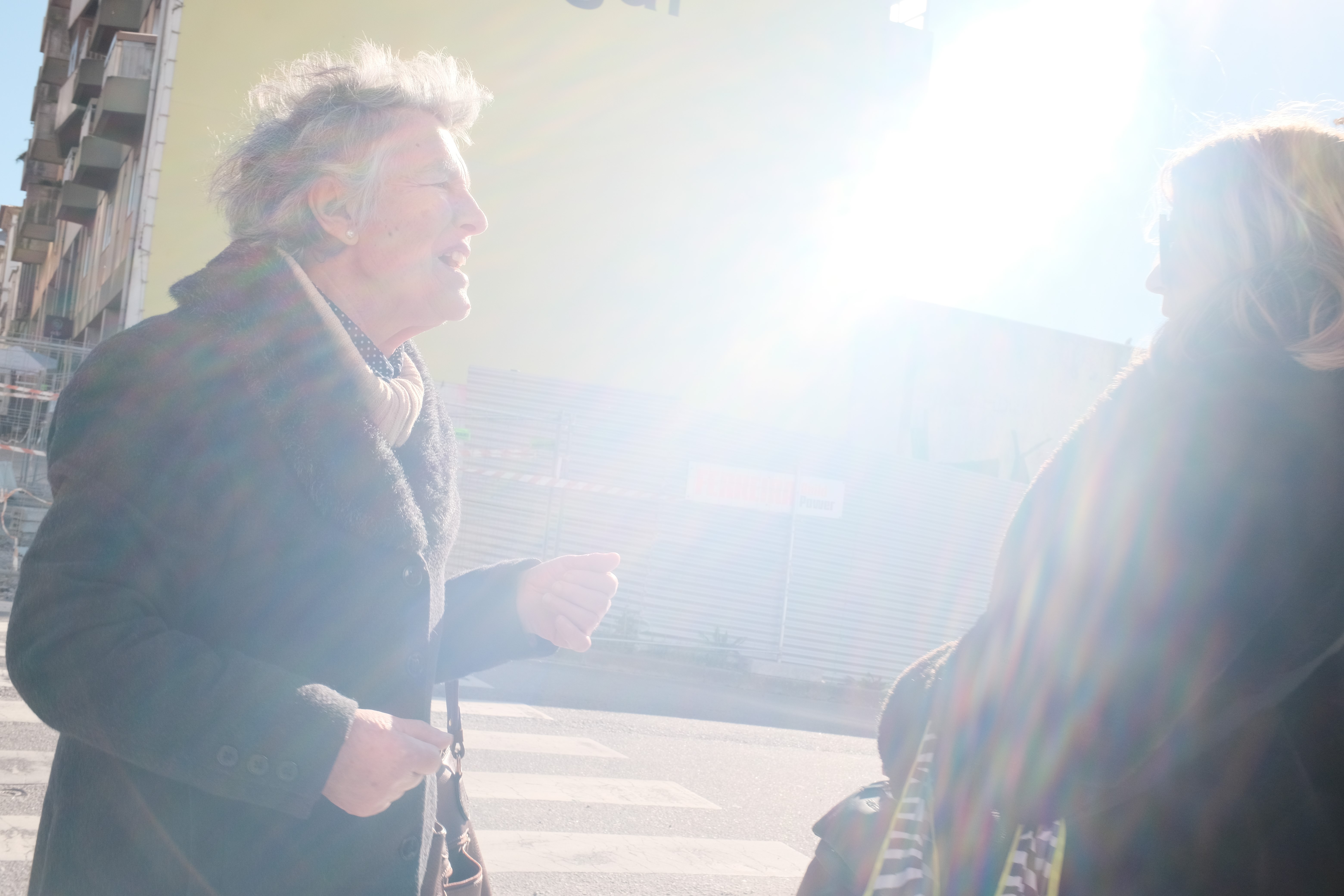
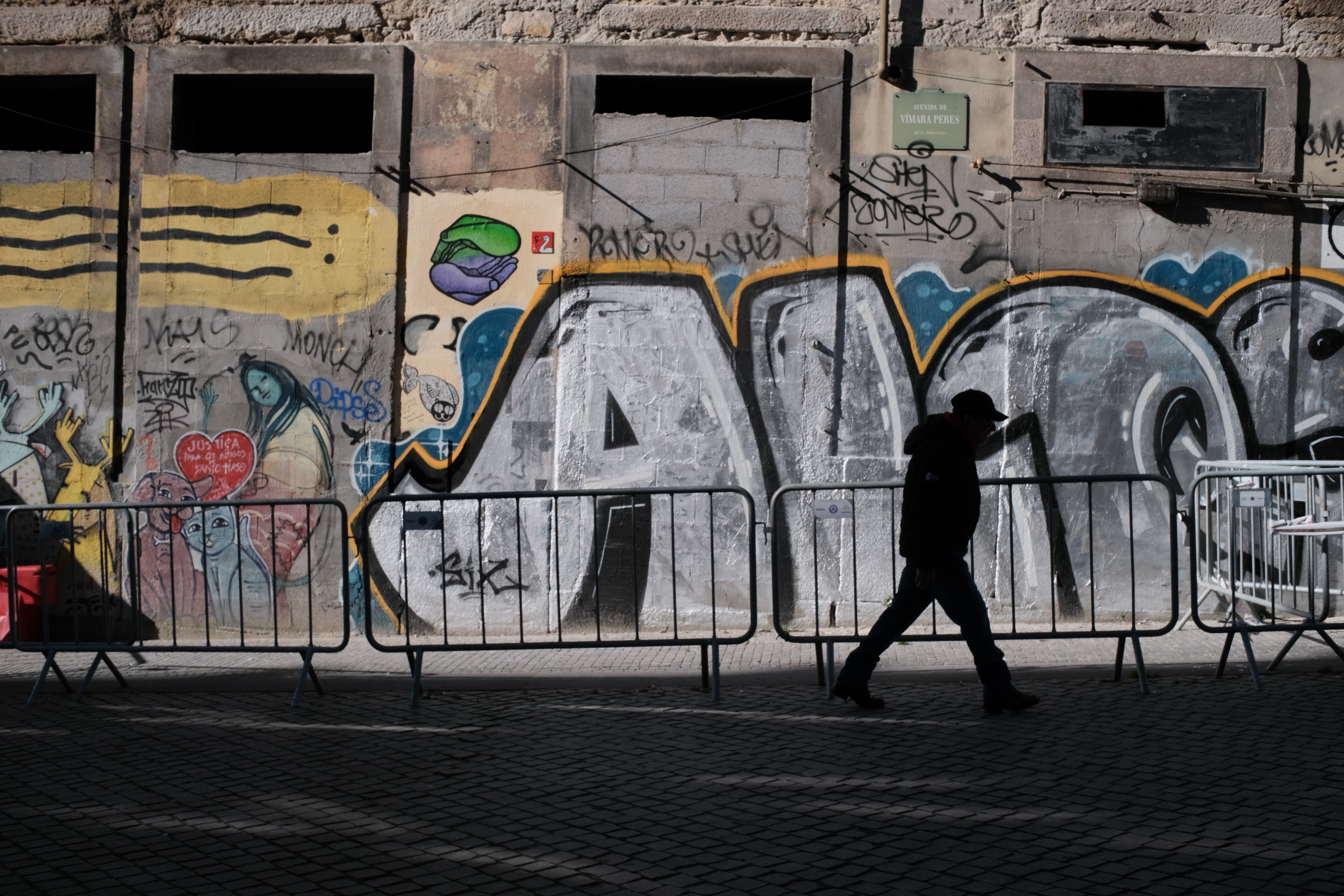
The best time to do street photography is when the sun is high when there is great contrast between light and shadow as it creates drama and tension in the photo. And in crowded places too, modern people juxtaposed against medieval structures. I stay for a while, stick around, observe the people, their activities, their faces, their mannerisms, the environment, the light, the birds, and the cars and try to find what interests me the most.

An instance I will never forget is when I got lost in a ghetto one afternoon. It was a short alley, not more than 800 meters, but the dwellers were looking at me. I was not sure if it was a menacing look or if I just looked different and they were curious about me. I walked normally but consciously and alertly. I did not shoot much and just walked straight until I got to a big road and saw the Museu do Vitral.

I was happy with the images I brought home. I finished almost two 128GB memory cards in RAW files. But I found myself facing another challenge: choosing which photos should go on my social media. I just based it on what I felt like sharing at the moment on my @jefflimcua IG account, any random place, and a random moment.

The trip to Porto with friends was a memorable one, albeit tiring. It gave me so much time to immerse myself in street photography, see a new place, and realize that our most artistic moments come when we are most relaxed, or what they call “flow,” and courage.