I examine ideas, challenge assumptions, and connect experience with principles to uncover insights that help people and organizations grow. #Business #Leadership #Human Formation
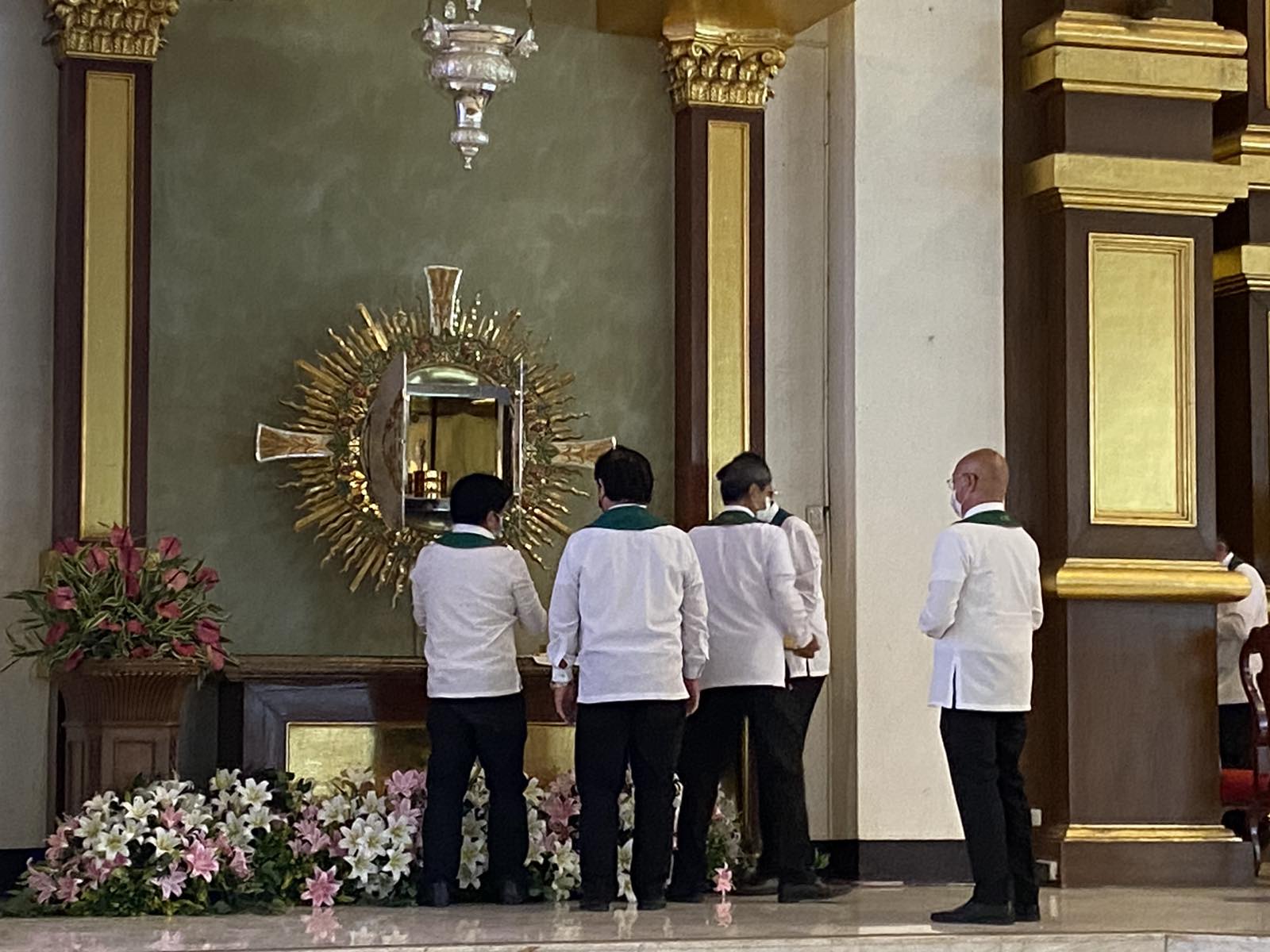
The main theme of today’s gospel, Mark 4:35-41, is faith. It recounts Jesus and his disciples setting off across the lake in a boat, accompanied by other boats. As they sailed, a fierce storm arose, causing waves to fill the boat with water. Despite the chaos, Jesus was asleep in the stern. The disciples, fearing for their lives, woke him, questioning his concern for their safety. Jesus calmed the storm with a command, then questioned their fear and lack of faith, leaving them in awe of his power over nature.
I used to have lots of worries, causing much anxiety, and I believe many others experience this too. This is why the priest’s homily resonated with me. He said, “We worry more than we work.” To me, this means we must act, to keep on doing, forcing ourselves to do something rather than drown ourselves in anxiety. Somehow, my anxiety and worry dropped as I kept reminding myself of Einstein’s quote, “Life is like riding a bicycle. To keep your balance, you must keep moving,” and that Jesus will always sustain us.
After Mass, we checked out Bridgetown, but there was no place for a family lunch that we liked, so we followed Jaime’s suggestion and went to Parqal. The drive was quick, less than an hour. There are more visitors to the area now compared to last time we were there in February.
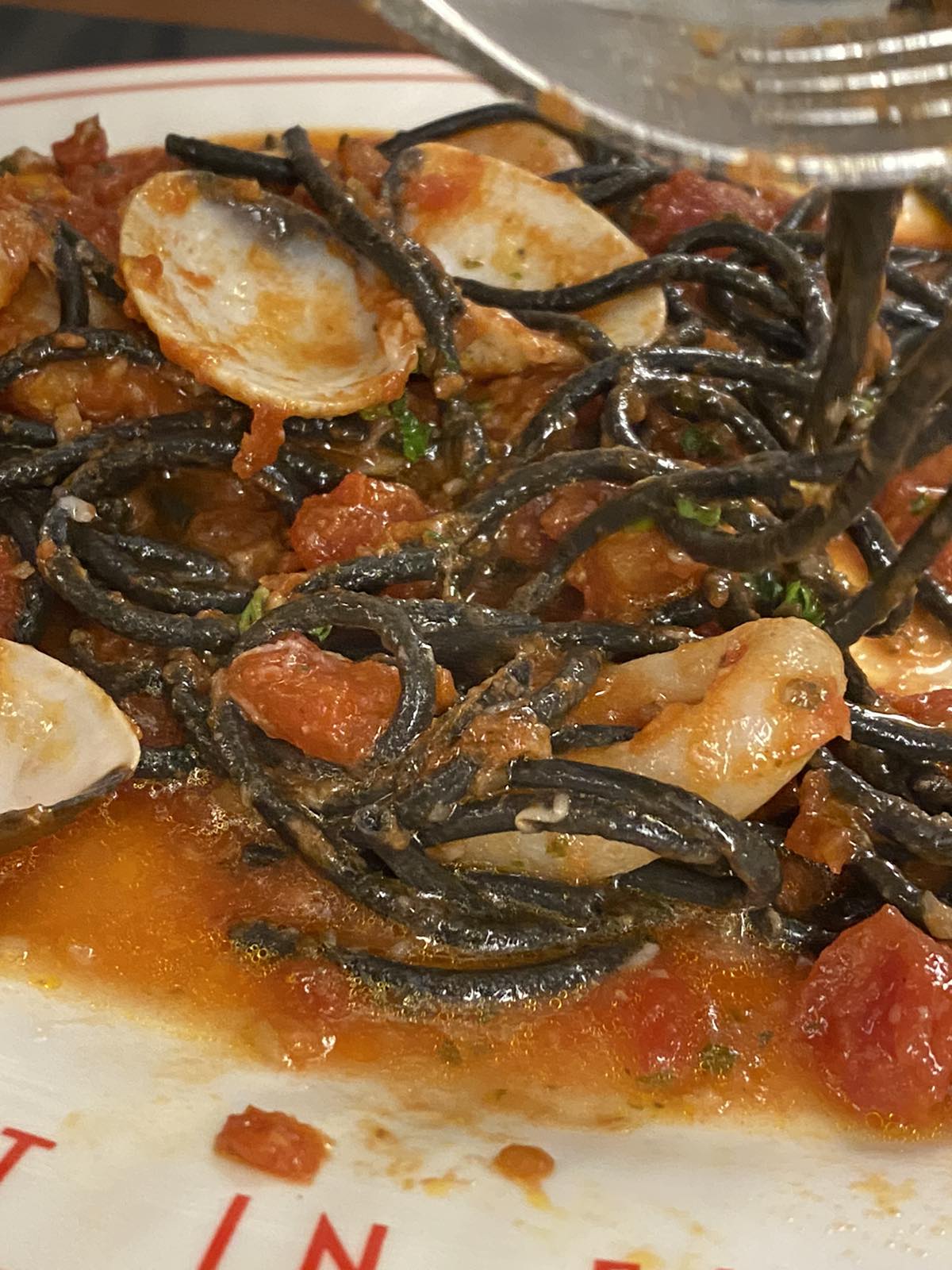
Gianetto was disappointing. During the pandemic, we used to order pizza from them. While the pizza was still good, their pasta Jaime ordered was average, with cut noodles. An Italian will surely make a scene if he received an order like that. The chicken Iuri ordered was tough. Even the complimentary bread, larger than croutons, was heated in the microwave. At 600 to 700 pesos per head, the price seemed overrated for the quality of food.
For dessert, we stopped by Dunkin’ because I was craving their coffee. The coffee was decent, but the ambiance was disappointing due to a K-Pop party on the second floor where fans were making a birthday greeting video for one of the members of Enhypen. The store was filled with loud cheers and shouts, and some customers seemed annoyed. However, it appeared to be good for business as turnover was much faster.
The day ended well because my Lumix LX5 battery and charger arrived today, bringing my 13-year-old camera back to life. It was the last nice compact camera I bought and used for contest entries. I plan to use it as an everyday carry and capture some moments. My last memories with it were in Intramuros and Binondo.
Today was a day centered around faith, family, and the camera, reminding us to view family through the lens of Catholic faith to nurture deeper connections, appreciate moments of joy and unity, and embrace the values that guide us in love, compassion, and faithfulness.
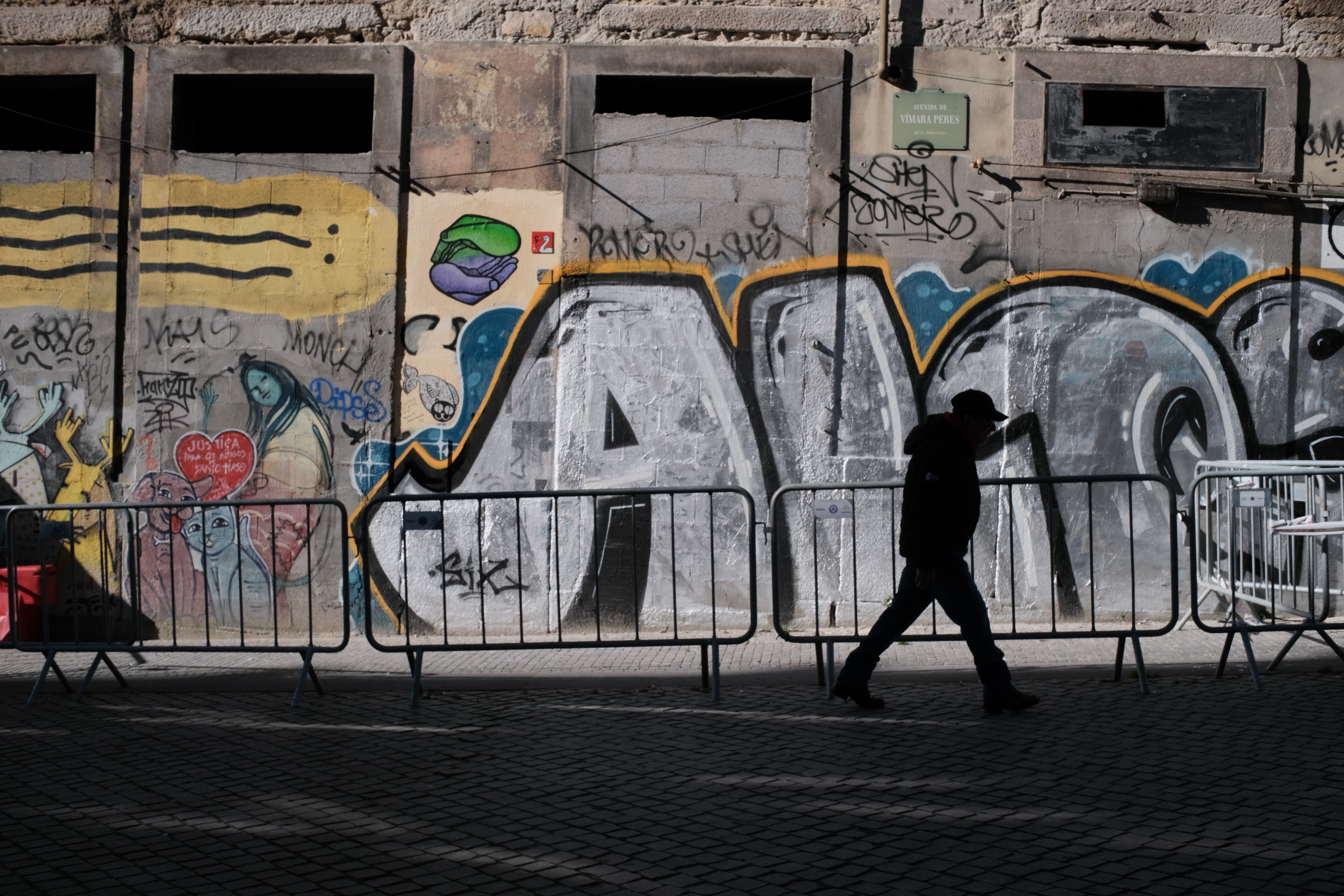
Silhouette of tourists trying to find their way around. A typical site in Porto
Last February 2023, I was in Porto with two of my college friends. It was an unplanned trip for 12 days that resulted in plenty of beautiful photos and memories. My friend, Mac, who has a unit in Porto, asked me and another friend, CJ, to accompany him. Mac and I first entered Rome, stayed for several days in a unit near Piazza Navona, then flew to Madrid to meet up with CJ before heading to Lisbon, Portugal by plane, and then traveled to Porto by land. If I had more time, I would have taken every transfer either by train or by bus. This would have allowed me to experience the cities better.
Knowing that I would be in a place with rich history, vibrant culture and well-preserved medieval structures, I decided to get myself a good street camera. I wanted something light and discreet. A compact point-and-shoot would not do, and a DSLR is too bulky. After my research, I finally decided to go with a Fujifilm because of its sensor size, handiness and interchangeable lens capability. I carried with me a Fuji XE4 with a TTArtisan lens 25mm which is around 38mm full frame equivalent. I wanted to bring a manual lens to stay faithful to the tradition of street photography culture. At least for a few days, I wanted to feel like Bresson and Eisenstadt. Just to share with you, my settings were as follows: aperture f/11, shutter speed 1/250, Auto ISO (max 3200), and manual focus which I kept within the focusing range of the aperture so that I could just shoot away. I also had three extra batteries and two 128GB memory cards. I stored them in my Domke Camera Bag.
Enjoying Sao Bento Station
There is something about street photography that I like. It is the abstraction, gut feel, spontaneity, and being “in the moment.” It reminds me of jazz improvisation, where the musician plays not just with notes and beats, but also with rules, which he breaks, resulting in magnificent music.
Click one of the photos below.
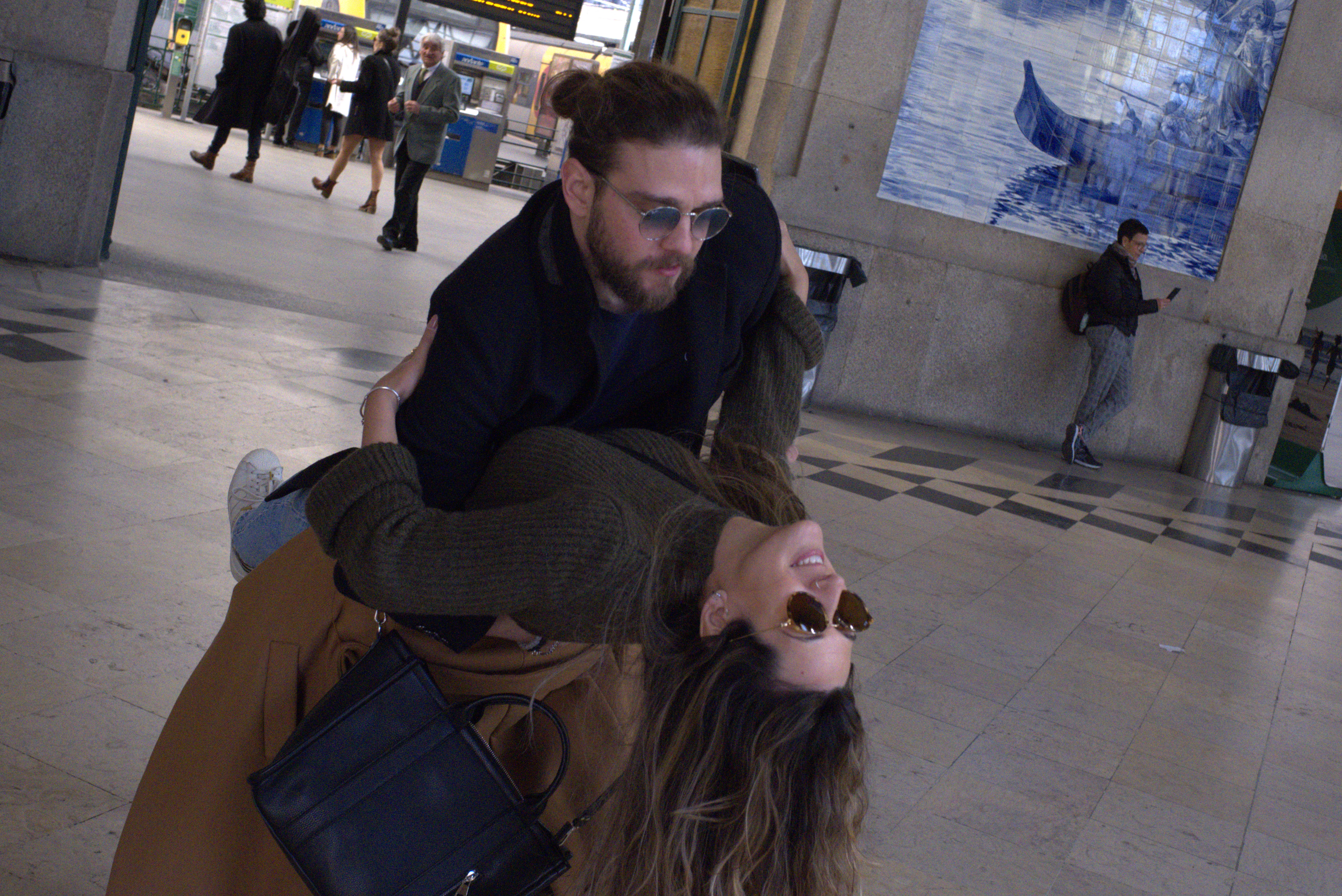
Another tourist observing PortoI found them dancing in Sao Bento. They are so much in loveIgreja San Ildefonso. One of my photos which is more of landscape than Street
One of the challenges I face when doing street photography again, after a while of not doing it, is the fear of getting apprehended or scolded for pointing my camera at people in public, especially in a foreign country. However, if I let my fear take over, I would not have any decent photos to bring home. So, I took courage and decided not to hide and just raise my camera, point it at a stranger, and shoot. Another technique that helped me is to pretend that I was taking a video instead of a photo. This is something I learned by watching tips on YouTube. I would raise my camera and start panning, pretending to be doing a video, and then capture the right moment. No one ever complained because they probably got confused by hearing the shutter sound when all the while they thought I was taking a video.
Having around five days in Porto, I was able to walk around and scout the places I wanted to go back to. I did not do much research on where to do my street photography but instead just let my feet take me wherever. I thought of joining walking tours but then decided that doing street photography by myself would be more fun. There is the freedom to do whatever I want, wherever I want, and whenever I want.
I would wake up early in the morning, at 6 or 7 am, while CJ and Mac were still asleep, either book a car or walk. One day, I went to the Douro riverbank on the Gaia side overlooking Porto to take photos of the area and capture the magic of the early morning sun on its subjects. The place was still empty, the wind was blowing cold, and establishments were all closed and would not open until late morning. It was the perfect time to feel and understand the place and observe how light carves its subjects to create the perfect painting. Then suddenly, I felt the call of nature. I struggled between wanting to stay to wait for the perfect moment or leaving to answer the call. The latter won the battle. I called a taxi and rushed back to our flat.
Click photos to see.
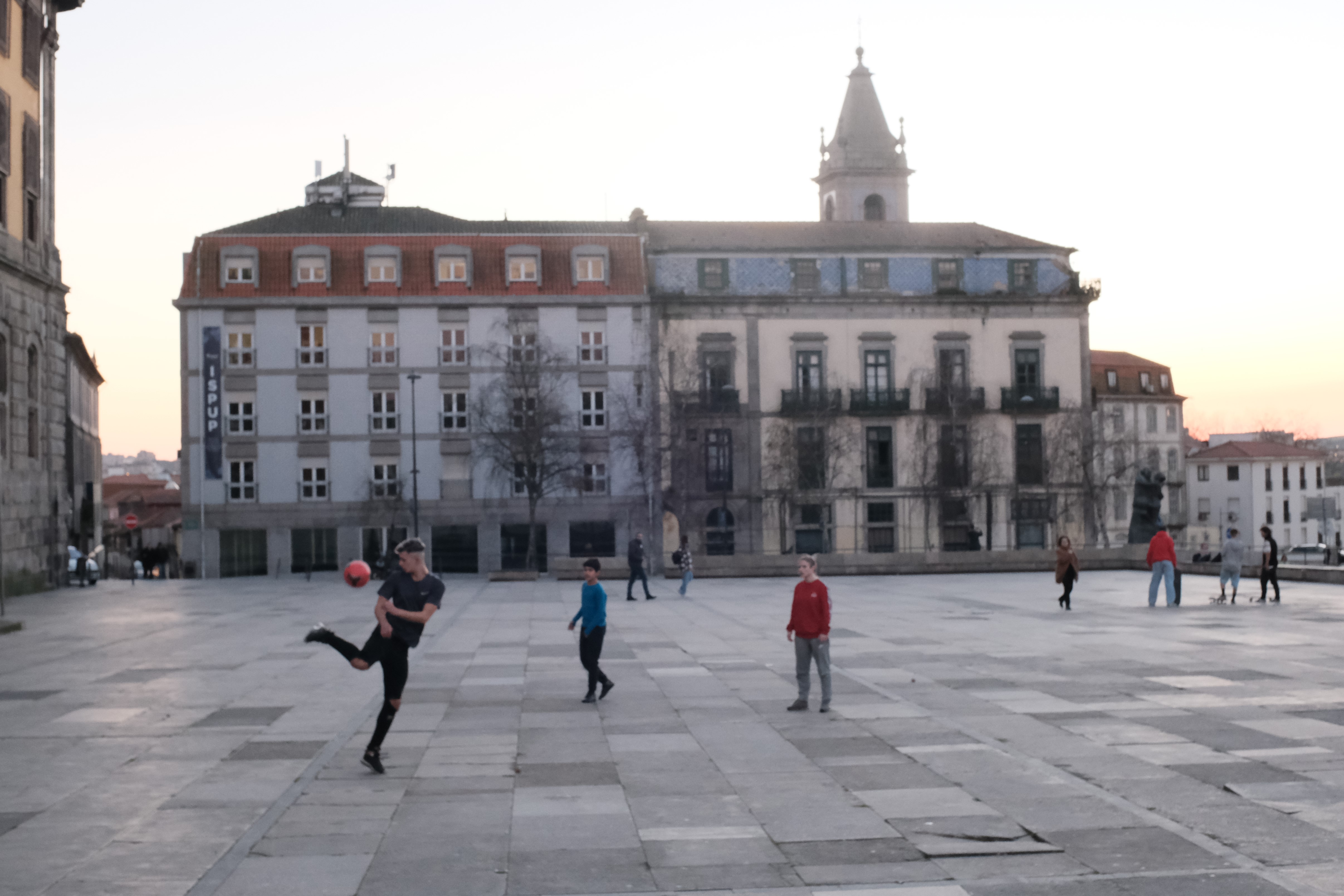
I went up close and clicked Football in sunset
The place I suggest as your starting point would be the Church of Saint Ildefonso, a Baroque-style church with a tiled facade. The week I was there, stalls were selling leather items and there were plenty of interesting subjects around the plaza, good for warming up the gear and imagination. Then head down towards São Bento train station, which is one of the inspirations for J.K. Rowling. Do not miss going inside the station for some action. Luckily, when I was there, I found a couple dancing and saying their goodbyes. I stood near them and took photos without hesitation. After the station, cross the street and follow the road of Rua das Flores where you will see houses clad with Azulejos, people dining, artists selling their art, until you reach the bottom of Ribeira where you will see the Douro River, Ponte de Luís Bridge, and the colorful houses which used to be warehouses and now repurposed as restaurants.
You will not run out of subjects. There are crowds of people especially in Santa Catarina street, historical establishments are worth your memory space, individuals in action, and a variety of details in the environment. You will not miss them as long as you keep your eyes open and intentionally look for subjects.
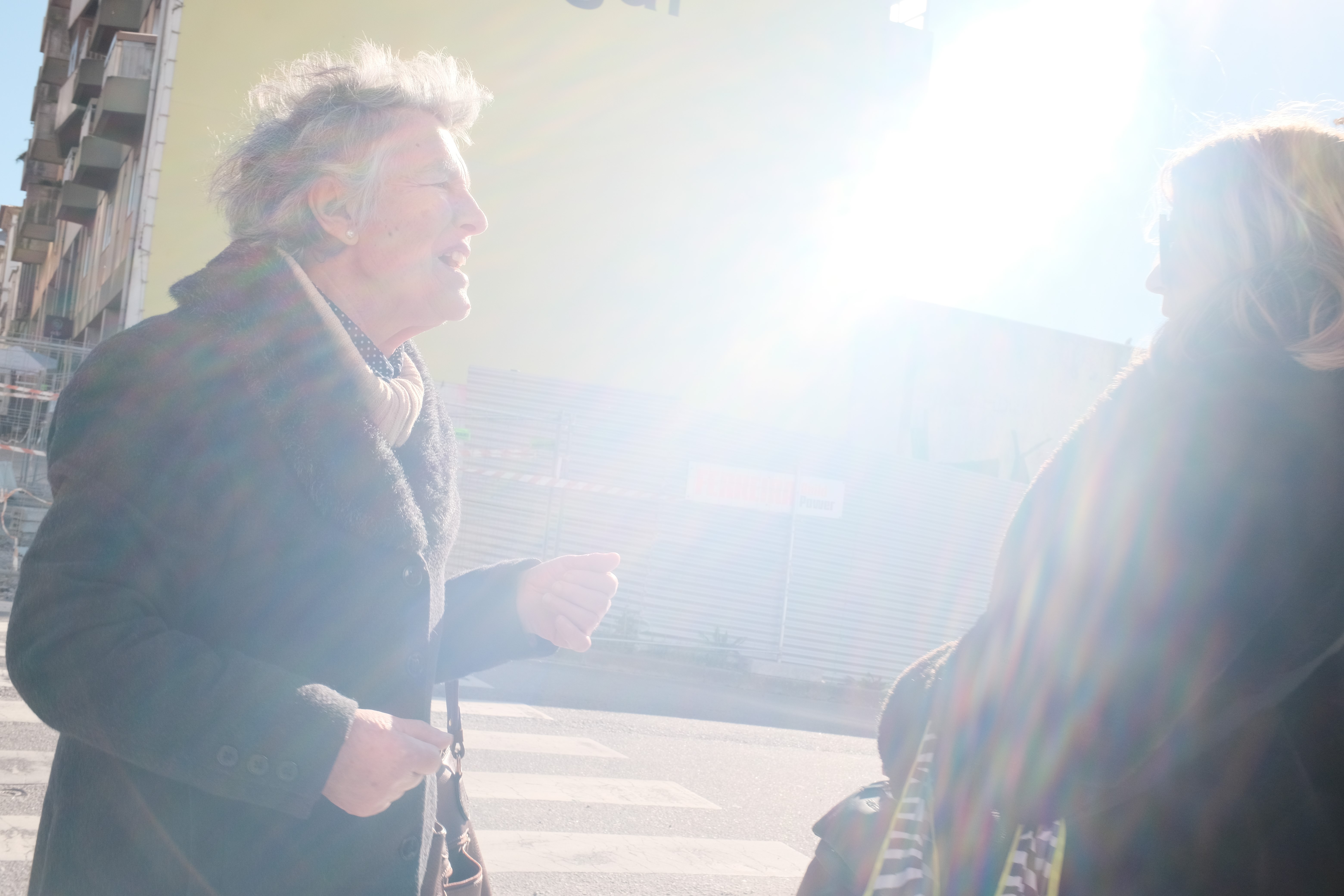
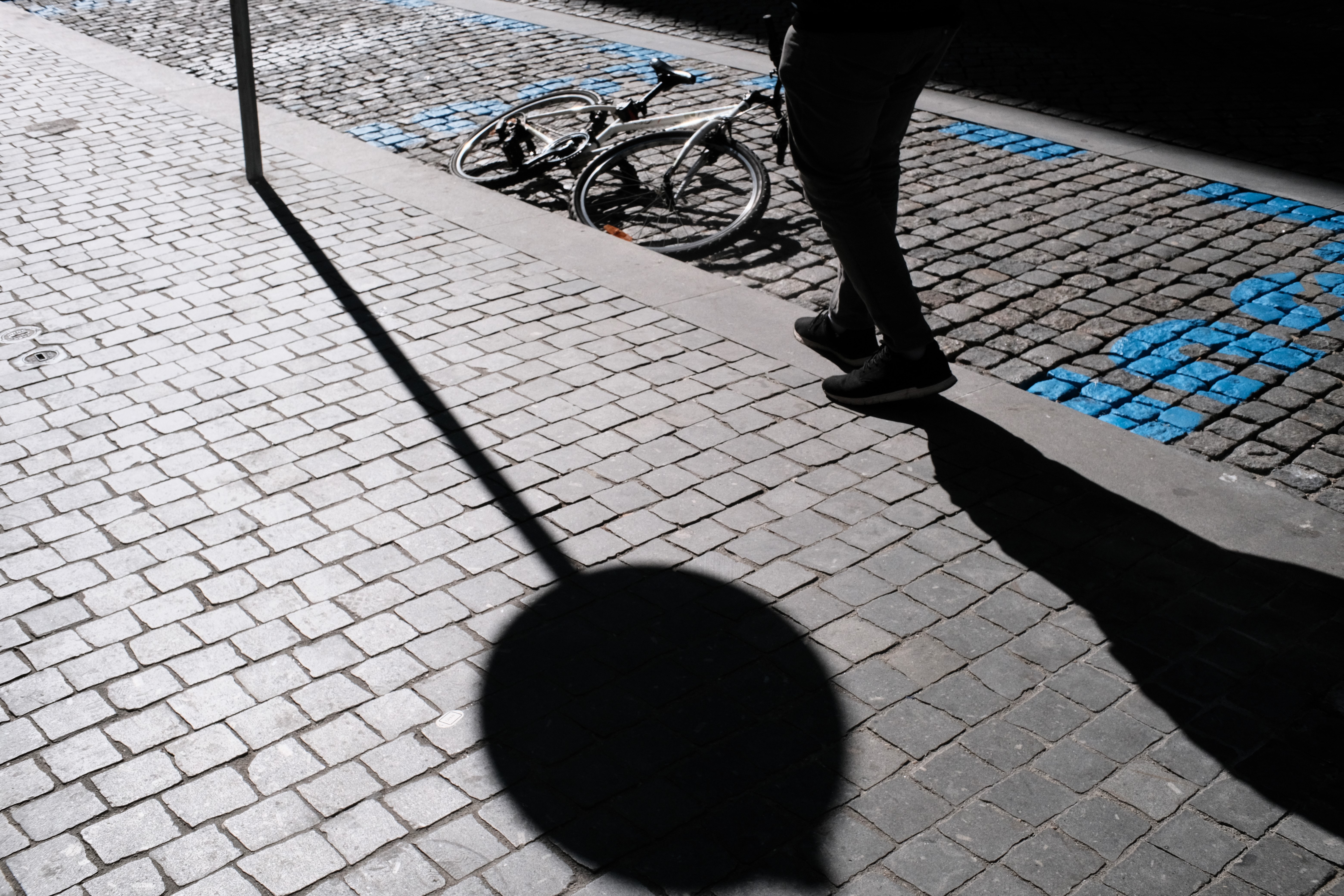
The best time to do street photography is when the sun is high when there is great contrast between light and shadow as it creates drama and tension in the photo. And in crowded places too, modern people juxtaposed against medieval structures. I stay for a while, stick around, observe the people, their activities, their faces, their mannerisms, the environment, the light, the birds, and the cars and try to find what interests me the most.
An instance I will never forget is when I got lost in a ghetto one afternoon. It was a short alley, not more than 800 meters, but the dwellers were looking at me. I was not sure if it was a menacing look or if I just looked different and they were curious about me. I walked normally but consciously and alertly. I did not shoot much and just walked straight until I got to a big road and saw the Museu do Vitral.
I was happy with the images I brought home. I finished almost two 128GB memory cards in RAW files. But I found myself facing another challenge: choosing which photos should go on my social media. I just based it on what I felt like sharing at the moment on my @jefflimcua IG account, any random place, and a random moment.
The trip to Porto with friends was a memorable one, albeit tiring. It gave me so much time to immerse myself in street photography, see a new place, and realize that our most artistic moments come when we are most relaxed, or what they call “flow,” and courage.
A day in the life of a parent athlete can be overwhelming. There are so many things happening that by the end of the day, there is little energy left.
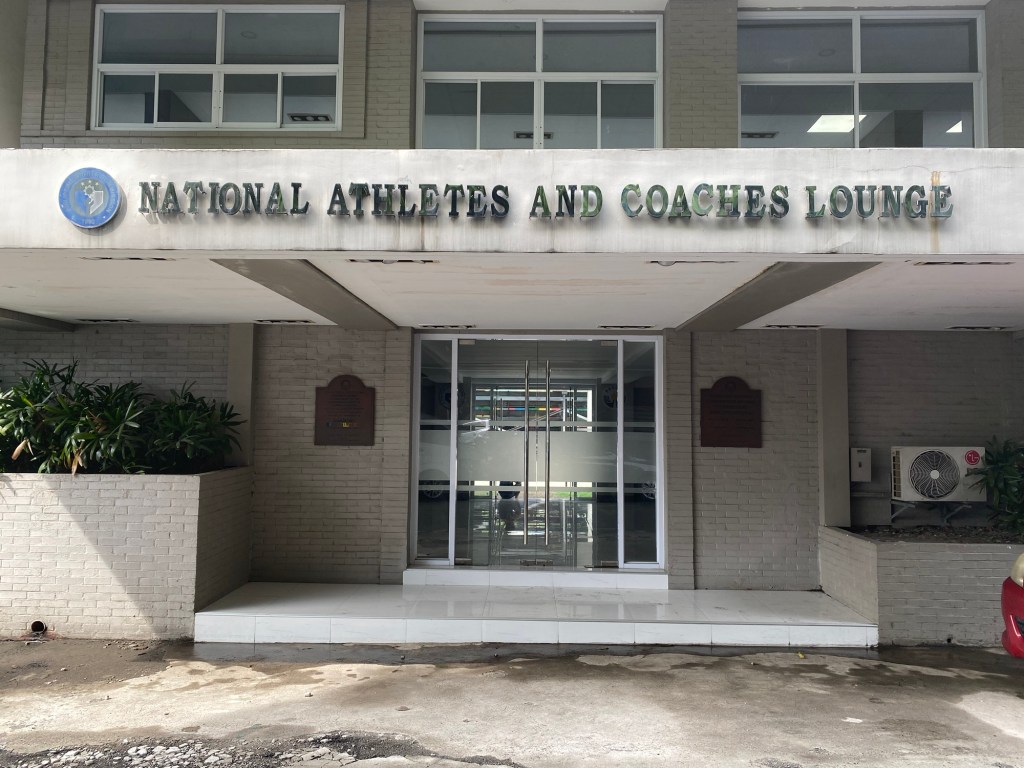
Our day started at 6:30 a.m., waking Iuri up for his 7 a.m. warm-up in the subdivision court, and Ingrid making breakfast. I did not realize it was a Muslim holiday, so traffic was light. I could have moved the warm-up a bit later, giving him some more time to sleep. On the way to Rizal Memorial, we traversed Buendia, currently named Gil Puyat Avenue, a major thoroughfare that connects Makati to Manila. Along the stretch are numerous imposing Brutalist buildings that give Buendia a vintage vibe, with jeepneys transporting commuters from one place to another.
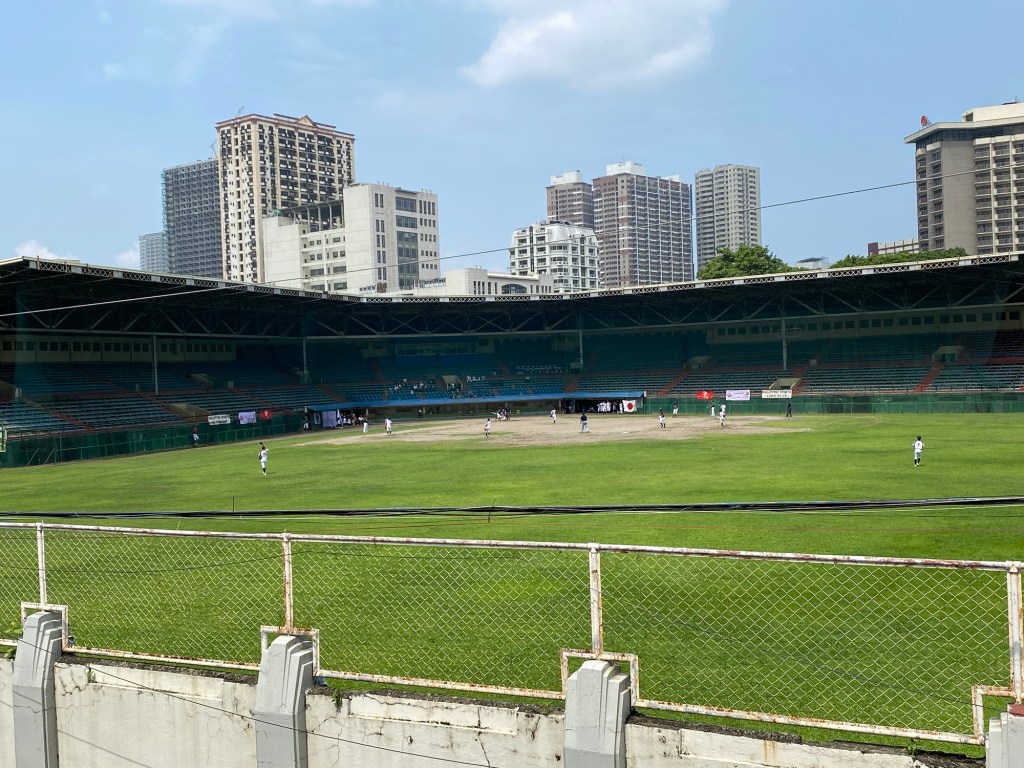
We arrived at Rizal Memorial Stadium at 8 a.m. for Iuri’s 10 a.m. match, but because of last night’s rain, the surface was still wet, so he got to play at 11 a.m. The delay was a blessing in disguise for me since I had a scheduled meeting from 9 am to 10 am even if it’s a holiday. If there was no delay, I would be rushing my meeting to make sure he is well prepared mentally, physically and spiritually since we pray before we start his matches.
11am came and it’s time for him to play. He played a thrilling three-setter against a more veteran opponent, the son of a tennis trainer at a well-known club in Quezon City. Iuri lost 6-0 in the first set, then won the second set 6-0. In the third set, the opponent took an early lead, gaining 6 points to 1, but Iuri fought back, finding himself at 8-9, match point for the opponent. On the last serve, the opponent confidently tossed the ball, bent his knees, and threw all his body weight forward, finishing the match with an ace.
Drying time Here comes the rain againI was on the second floor for Aircon. Best thing to do during a hot dayAjisen in Robinson’s MalateBaseball game can be seen from the top of the bleachers
If such a nerve-racking match had happened a year ago, Iuri would have been throwing tantrums and crying on the court. This time, he was composed, loving how he played, knowing that he, too, gave his all and zeroed a more veteran opponent. In fact, they met last year around the same time, and Iuri only scored 2 points.
After the match, they shook hands, had some small talk, and left the court. I was waiting for them at the bottom of the bleachers, smiling and congratulating both of them as soon as they got out of the gate. As a habit, which I learned from great tennis parents, win or lose, we go to the parents or guardians to either congratulate or console.
Believe it or not, there are parents who are sore losers and sore winners who do not congratulate the winners if they lose. Some even heckle their kid’s opponents while playing. One family was even given a warning for their behavior, and once at a school tournament, two parents had a fistfight in the parking lot. These are the types of players and parents many people avoid.
I forgot this buildingDBP BuildingPacific Star
Iuri’s next scheduled match was at 7 p.m. We had 7 hours to spare, so we decided to have lunch at Robinson’s Malate. It was a 10-minute drive, and on the way, I couldn’t help but notice the mix of old and new establishments, creating a strong tension between modern and timeless, which gives Malate its soul. The white males walking with their Filipina escorts, the Chinese in their highest fashion sense, the Indians, and all other nationalities gather in Malate, making the place a melting pot of Manila.
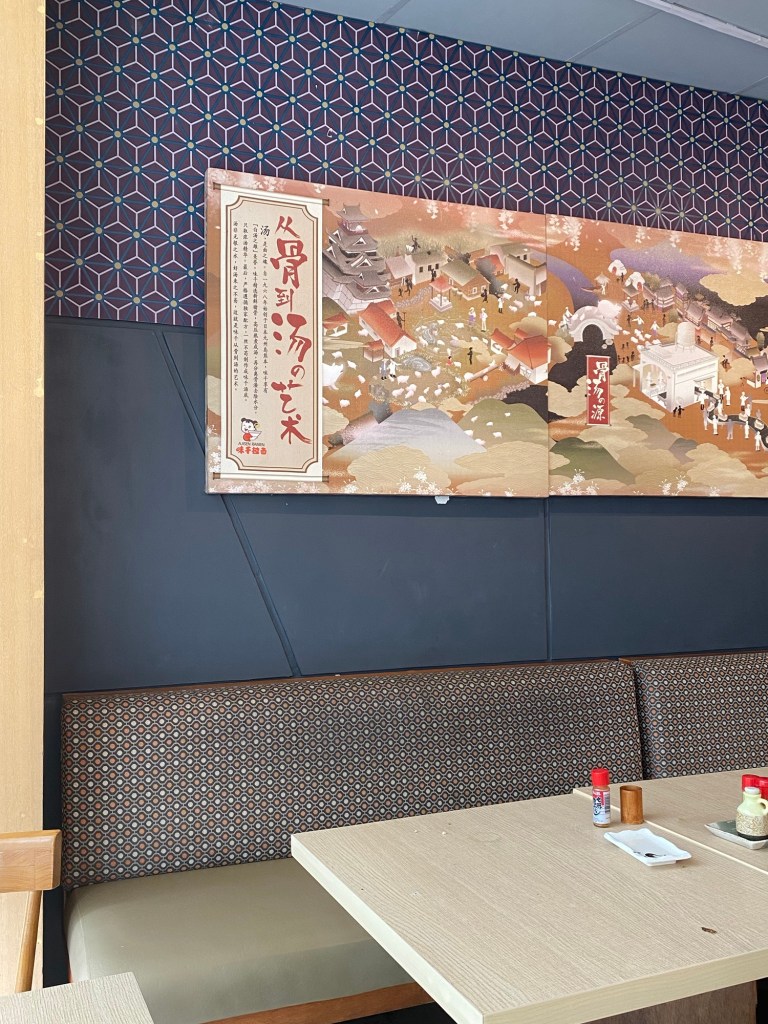
While still enjoying our food at Ajisen, rain started pouring, a sign of another delay and long wait. Having nothing to do in the mall, Iuri and I decided to go back to Rizal and nap in the car. It was 3 p.m. when the rain stopped, the sun came back out, and court takers started mopping the water away from the six hard courts, all world-class. The games resumed before 4:30 p.m., and now the games were delayed by 2 hours. From our scheduled 7 p.m. match, we were now at 9 or 10 p.m. Not long after several matches ended, the rain started pouring again at 7:30 p.m., causing a postponement of all games.
We returned the next day. Iuri missed school, but it was still orientation, so he did not miss anything. This time, he was in the under-18 division, playing against someone 3 years older than him, bulkier and more developed. Iuri lost, not because of his skills but because his mind was too noisy, and he has yet to learn how to direct his thoughts. The rallies lasted long, and the 2 sets took 50 minutes to finish. But a loss is a loss, so back to the drawing board.
He came out beaten but did not show it. He walked straight and poker-faced, but deep inside, I am sure tears were flowing. He did not talk; all I said was, “Good game.” We were both quiet in the car. I learned my lesson. It used to be that I would process the game right after, but it did not work as he was still confused about what he was feeling. Now, he can better process himself, think through what happened, and wait for him to ask me for my opinion. I told him to simply go back, continue to practice, and build his confidence more.
Iuri, like other athletes, has invested so much time in tennis, even putting it over playdates with friends. As a result, he won some games but also lost more matches. There is a lesson he knows: sometimes you win, sometimes you lose. Losing is hard, but before one learns how to win, they must know what it is like to lose so they know what to avoid and how to get themselves out of that situation.
At this age, it is not just the physical ability that is developing but the mental aspect too. I also reminded him how much improvement has happened in the last few months in terms of his ability. This constant reminder helps him build his confidence and also gives him evidence that his hard work is paying off.
As a parent of a junior athlete, it is fun to see your child perform inside the arena. I take pride in it, but there is a price to pay. Aside from the monetary aspect, time, relationships, and emotions are all involved, and all this in just a day.
Do you know what magicians do at magicians’ gatherings?
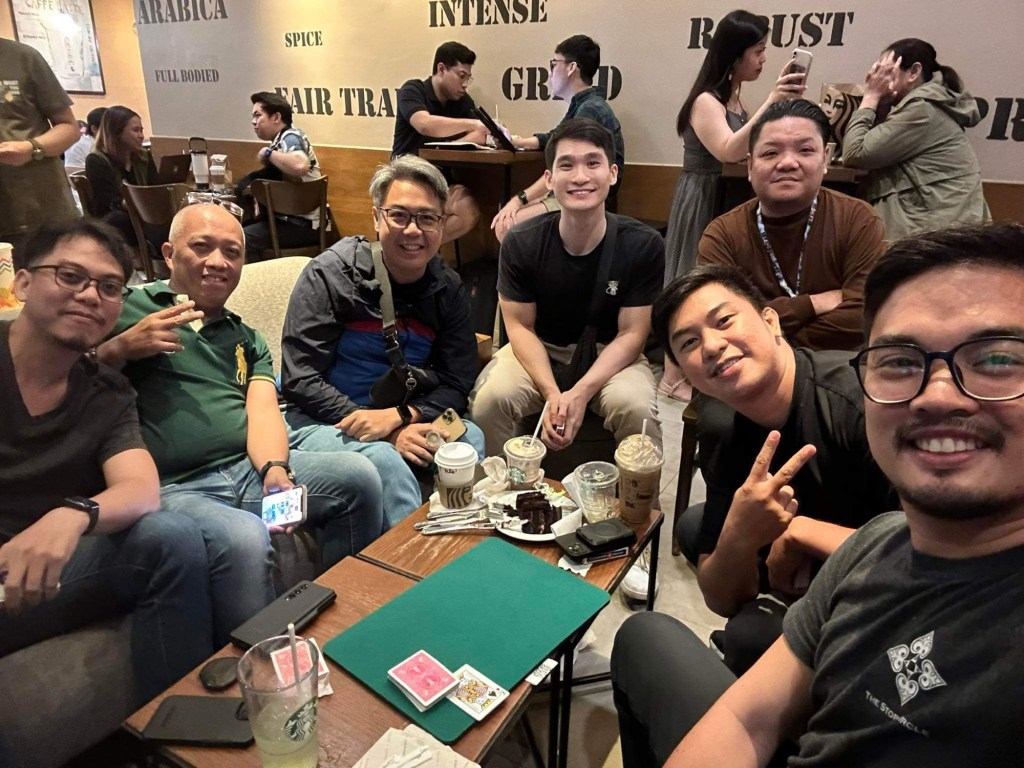
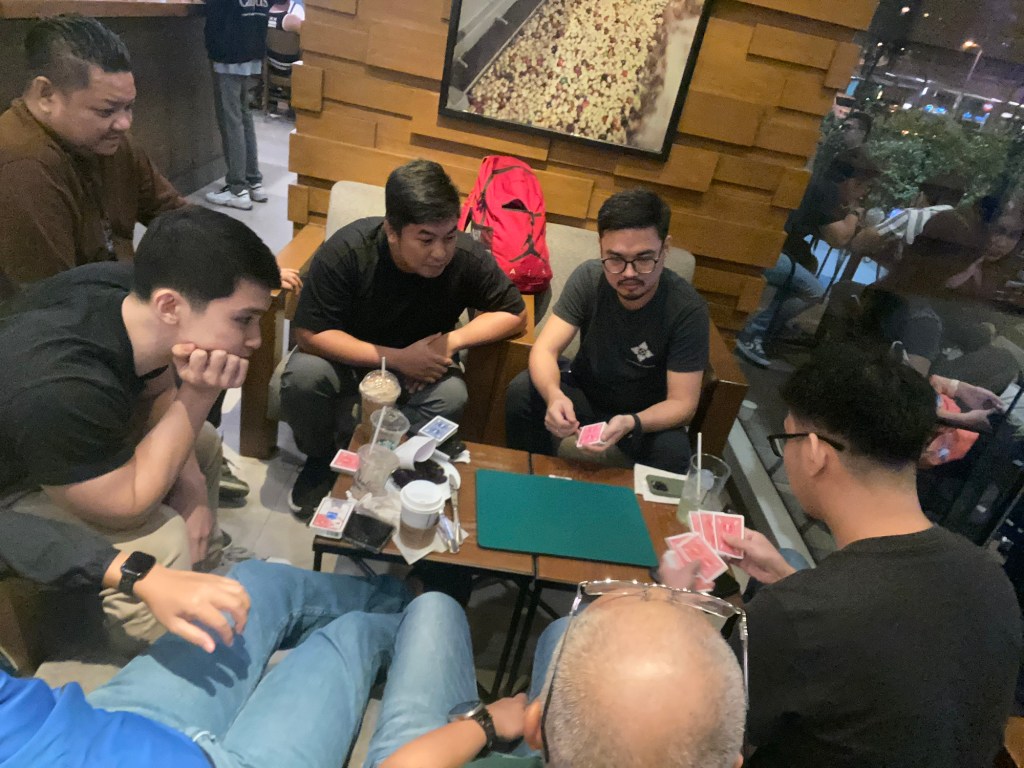
Last night, I was with the Story Circle group, a group for close-up magicians. I have known many of them even before the pandemic, though not as long as the International Magic Club, which I actively attended for almost a year back in 2001. My dad also attended IMC when they were still meeting at the Prince Albert in Makati.
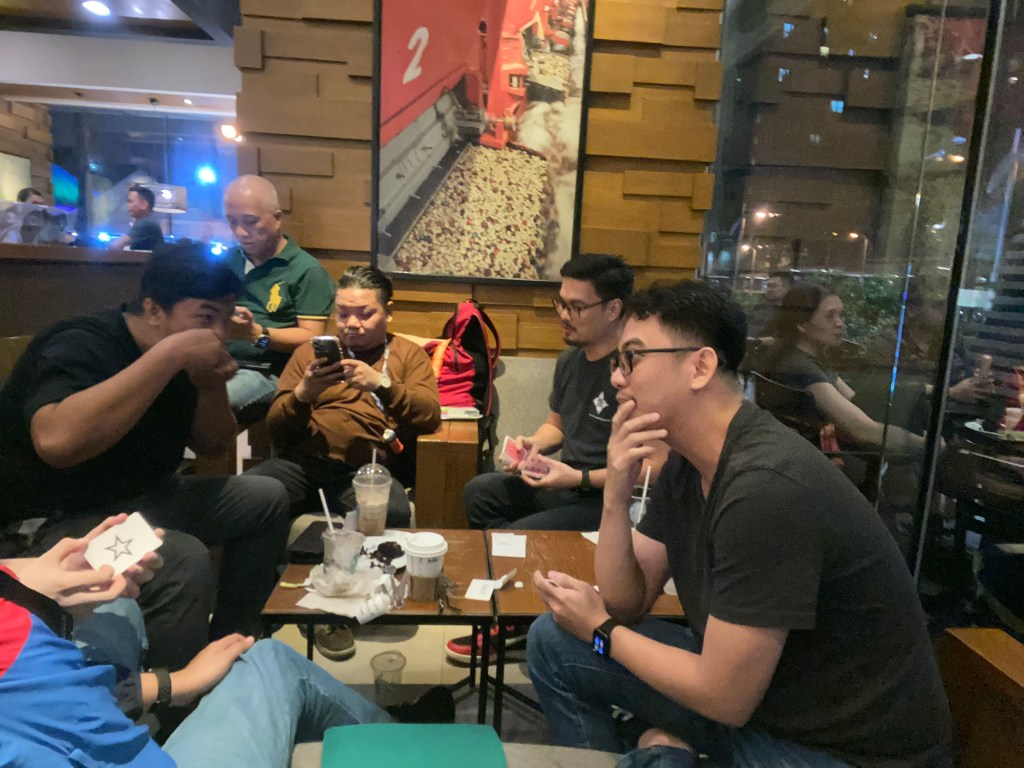
The Story Circle meets either in Starbucks Cubao or Greenfield. I have been to both just a couple of times. I feel like I prefer the one in greenfield because the area is more alive than Cubao. Parking is also not a problem. Last night the attendance did not hit 10 which is quite low for a gathering. Normally, attendees go beyond 10, but since it’s a long weekend, maybe people had other plans.
The number one rule in the magician’s code is to never reveal the secrets. However, since we are all magicians, we do help each other. We give each other chicken’s blood, hair of a virgin female, and some dust from Mount Banahaw. Books are also one of the topics we discussed about. Still at the back of my mind, I want to have the biggest library of magic books in the Philippines. I am still far from that goal.
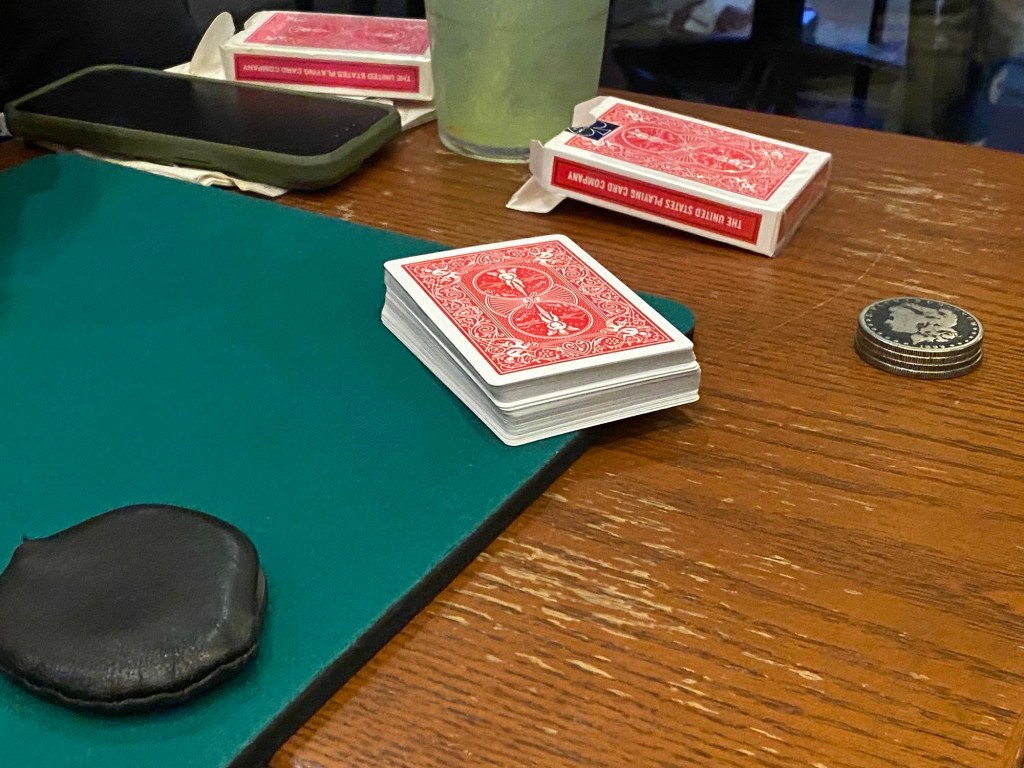
After sharing and discussing the latest magic, books and magicians, we do a round-robin. One by one, we show tricks. It can be cards, coins, or mentalism, depending on what the magician feels or what he has prepared. If my memory serves me right, there used to be a theme before, so it was harder for me to think of what to share last night. Though I ended up doing some Tito tricks you normally see during drinking sessions.
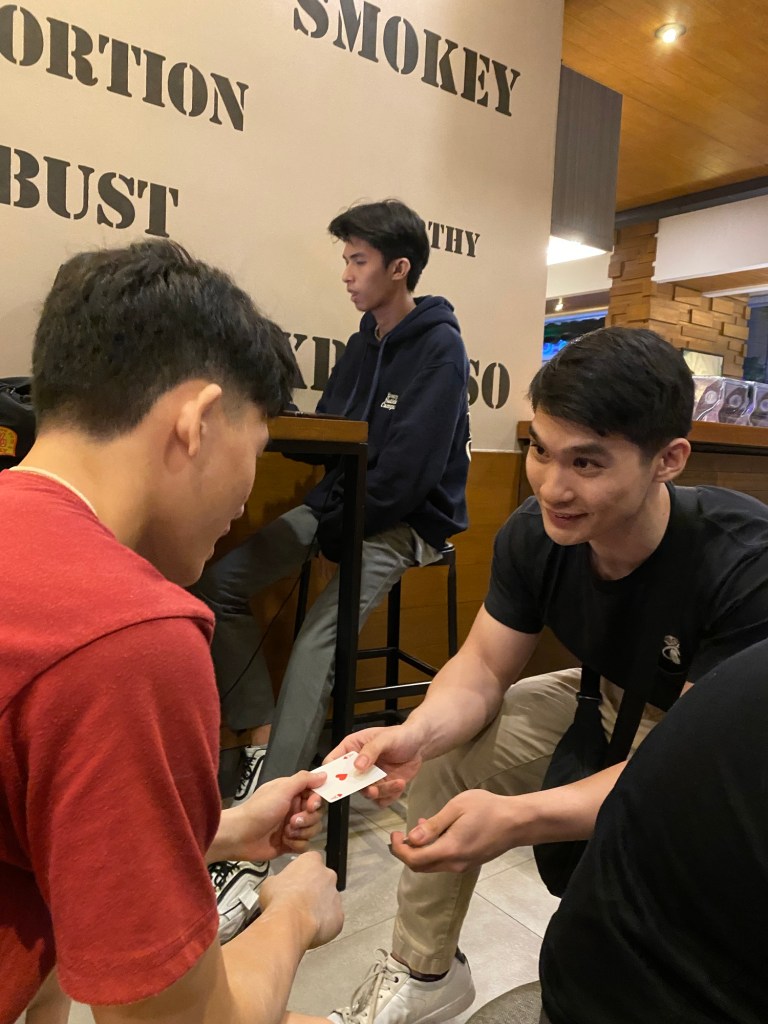
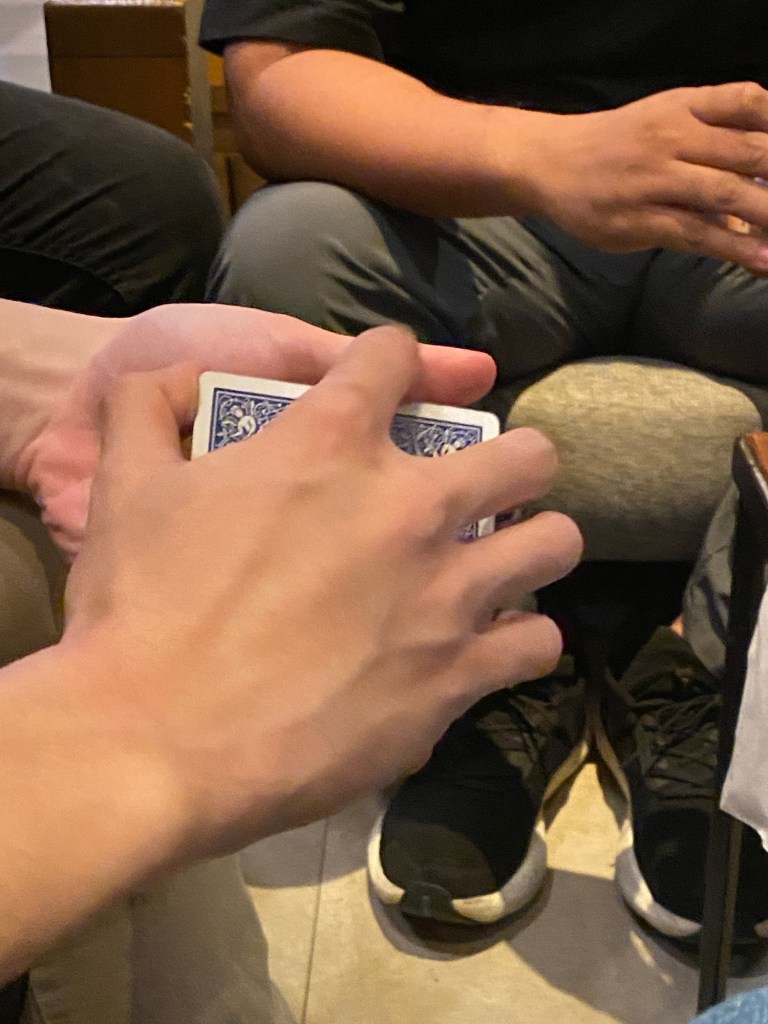
What I showed was a trick I learned from watching Daryl on VHS back in 2001. I made a spectator choose a card, which only he and the others know. Let’s say is the Ace of hearts. I then asked him to get 4 more random cards, put the rest of the deck down then shuffle the 5 cards now, which are the 4 cards and the chosen card (Ace of hearts). I got the cards and told him to pinch the cards by the edge. Once in between his thumb and pointer, I slapped the cards. Everything fell, except for one card, the chosen card, the ace of hearts.
One young, newbie magician, a fresh college graduate who took mechanical engineering, showed a mentalism trick where he wrote something ahead of time on his phone that matched what the volunteer chose. The supposed spectator volunteer was also a magician. Afterward, he was given pointers on how to improve. The young magician asked for my opinion, but I said just a few words about making his acting more believable because I haven’t been doing magic for a couple of years now.
Conjuring that uses new age and spiritism to explain the magic behind the trick is something I used to be attracted to. Not anymore now. I simply want straightforward sleights that play with the brain’s blind side. I think it’s more powerful that way, though both have its pros and cons.
The second rule is to never repeat the magic. Fortunately, no magician asks to repeat someone else’s routine. No one wants to admit they have been fooled, so no one asks to have the magic done again—it’s the magician’s pride. A fooling magic trick in the company of magicians ends with either a clap, a wow, or a “great.” The other reason might simply be out of respect for the code.
Practice before performance is the third code. In a casual meeting like what happened last night, making mistakes is forgivable, but not in a real show. It happens, and it has happened plenty of times in casual meetings, and we just laugh it off.
One magician told me that there are other hobbyists who seldom attend but have mastered difficult sleights. One is a doctor who can memorize the arrangement of a deck of cards; another is a musical performer who can do decent magic and presentation. The magic community in the Philippines is substantial. What’s lacking are shows that invest in great production. After all, magic is a kind of performing art.
Magicians’ meetings are always fun. The sharing of ideas, performing new tricks, even classics, and the laughter never ends.
Year 2023 was the year I ticked off Europe on my bucket list, not once but twice. I was there in January to accompany my friend and then again in May with my family. The countries I visited were the same: Italy, Spain, and Portugal, but I explored additional cities on the second trip. All of them were memorable, each with its own unique character. If I could choose a theme for the trips, it would be church hopping. Of course, it bored our kids to death, but at least they got a taste of magnificent art and saw what man can do if inspired by faith.
Italy was still recovering from a typhoon that killed at least 11 people by the time we arrived in Rome in late May of 2023. The Vatican’s security was still on alert because some psycho had rammed his car into the gates of the Vatican. Reading that news gave me anxiety, but we forgot everything once we got there.
Italy, at least my experience in Rome, taught me that you cannot go there without looking or wearing your best attire. Even our Filipino driver wore a suit daily. It’s easy to spot a tourist—just look at their shoes or color combinations. Italians are bolder when it comes to colors. Along Trevi, I saw a middle-aged Italian in a red long-sleeve shirt and blue pants. This is unlike the Japanese, who are more toned down in their colors.
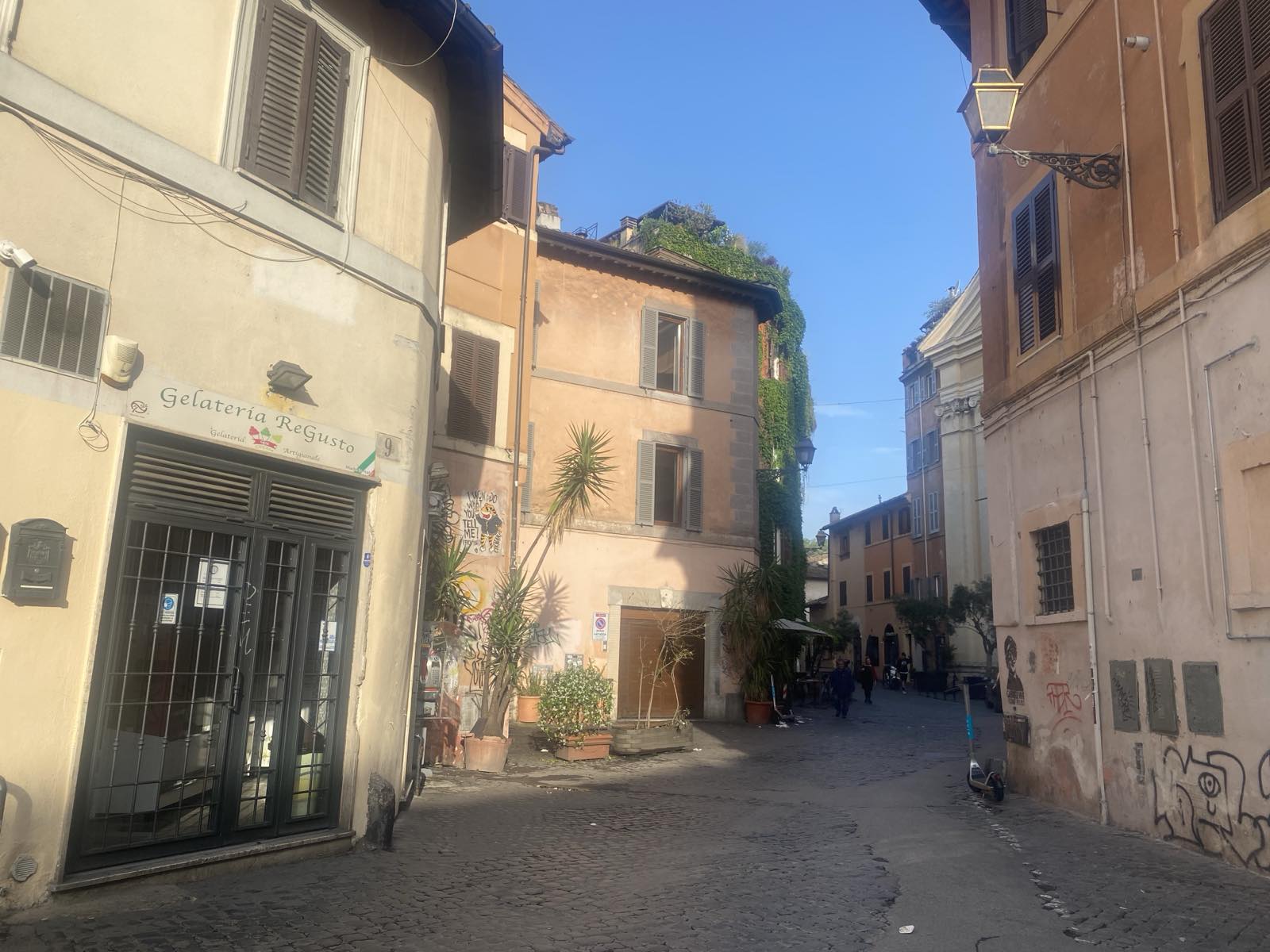
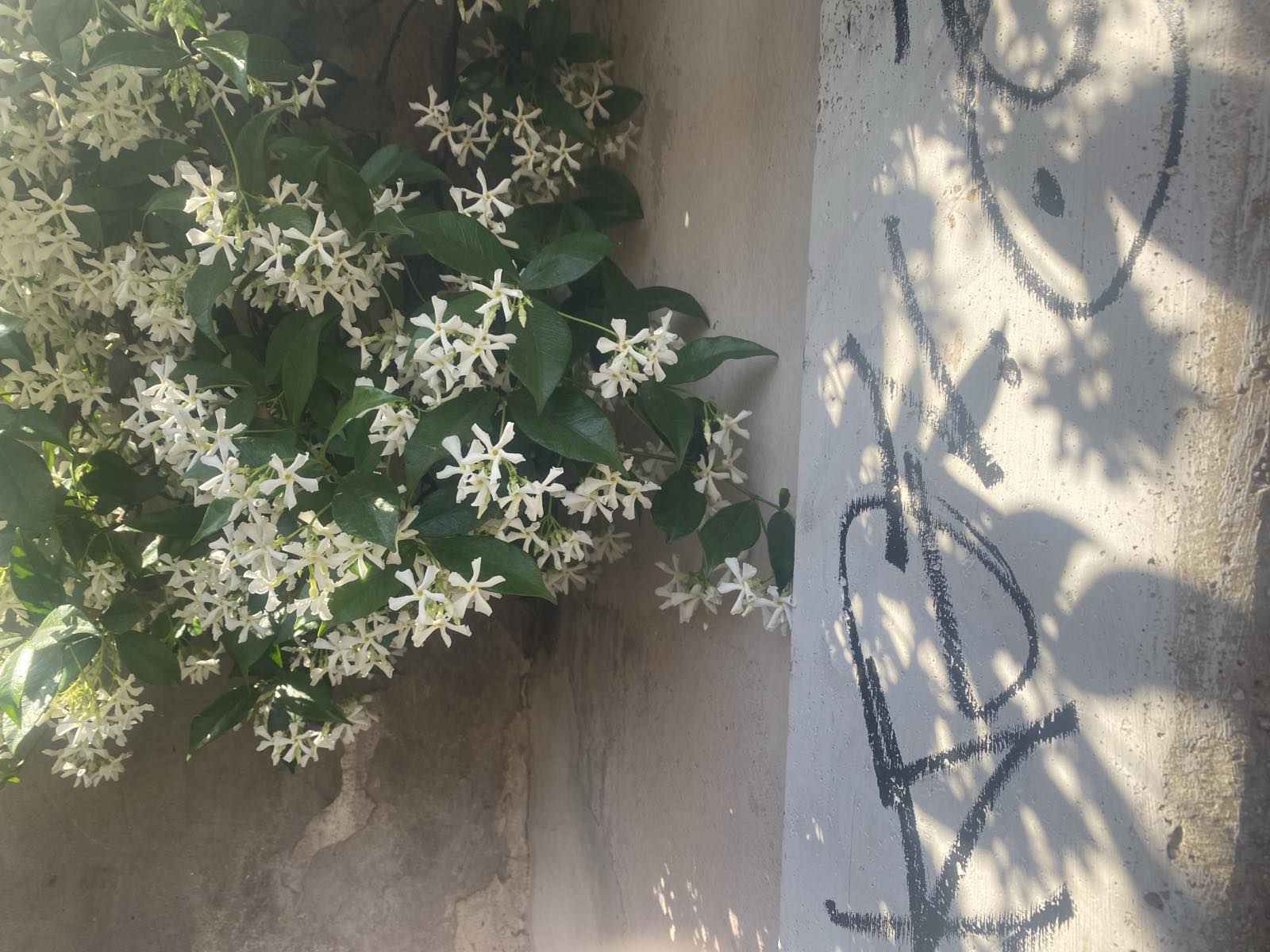
On my second visit, we stayed in Trastevere, located on the other side of the city center. To get there, you need to cross the Tiber River if you are coming from the area of Piazza Navona, but not if you are coming from the Vatican. Piazza Trilussa signifies that you have reached the area of Trastevere. Trilussa was named in honor of the famous Roman poet Carlo Alberto Salustri, who wrote under the pen name Trilussa, an anagram of his surname. The area has an artistic vibe frequented mostly by locals. The place looks dull in the morning, scary even with its vandalized walls, but during sunset, the place begins to wake up. Its bars, restaurants, locals, and tourists start to mingle until early morning. Those vandalized walls were not evident to me the first time I visited, so when I saw them, I thought my mother might not like the place and might even consider getting transferred to another hotel. But I was wrong. She loved the place and even wants to go back and stay there again. She loves the idea of leaving and entering the building with her key, like a true local.
It was my former student, Bermon, who now lives in Rome as a tailor, who introduced me to the area. He acted as a tour guide during my stay, bringing me to historical places, restaurants, and bars. He brought me to Tonarello last January, where I had the most delicious Italian meatball of my life, not to mention their other dishes like Cacio e Pepe and Carbonara. This is also the place I introduced to the Go family, whom we met up with during our visit in May. Just like I felt during my first time eating there, they were also delighted.
Church of Santa Dorotea which is right across where we are stayingVandalism. Rome would be so much beautiful without itHe looks like a writer to meI love how the sun falls on the table. This was taken after our breakfastPeople enjoying TrastevereDefinitely tourists
My meeting with Bermon was serendipitous. On the way to Rome via Qatar Airport, I saw a familiar face just before boarding the plane. I went to him, but I did not need to introduce myself because as soon as he saw me, he recognized me. Good thing he was still on vacation and did not need to go back to work for five days. During one of our dinners, we had a conversation about working in Italy as a tailor. He asked me how much I thought good suits cost. I guessed 100,000 pesos. He said the value is far from that; really good handmade suits cost around 300 to 500 thousand pesos. Then the conversation shifted to working as a non-citizen. He told me that there are fewer regular employees and more contractual ones, even for locals. It makes it look like there is high unemployment, but there really isn’t. He hopes to have his atelier soon. There is also a month when most establishments are closed and people are just at the beach because of the heat, he said while drinking his beer. Doesn’t that affect the economy? I asked. It does, he said, and so it is practiced less today than a few years back.
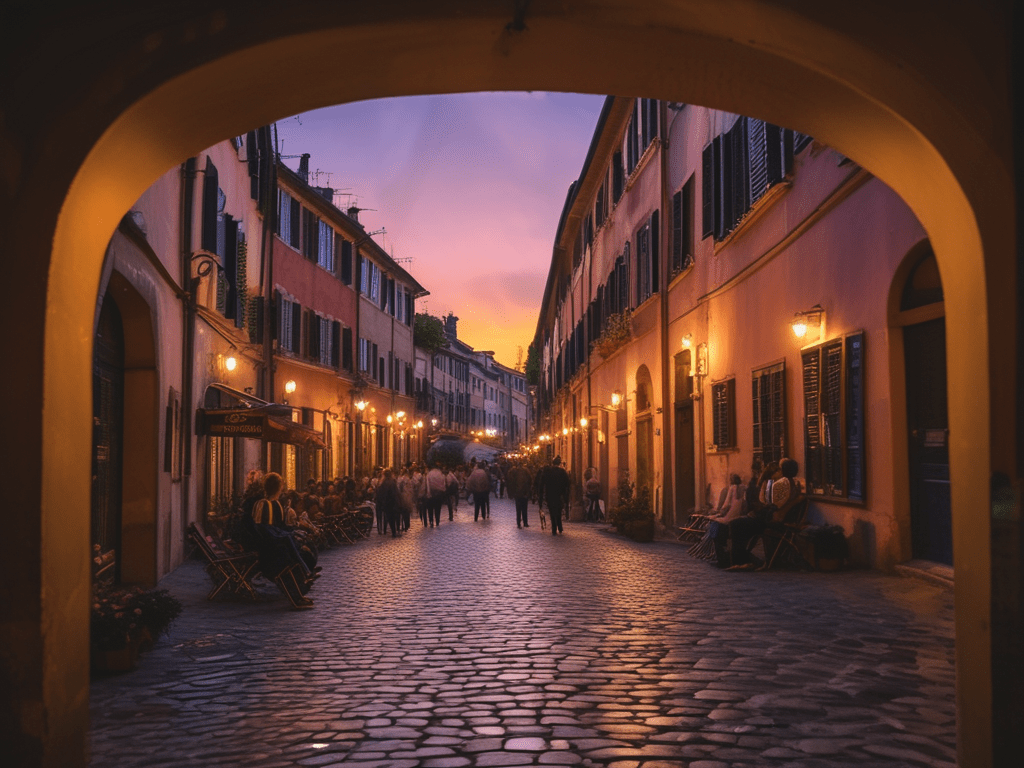
This is an AI image made by wordpress
Breakfast for us, when out of the country, is always about the most economical choice; it’s all about speed and efficiency, most of the time from 7/11 or whatever is the most convenient. We leave the more pleasurable meals for either lunch or dinner. The café beside our place is where I take my dose of espresso and a bite of cornetto or Italian croissant. The owner asked me where I was from, and I told him I am Filipino. The next day, I got my coffee when he introduced me to the Filipina server who seemed to want to remain unidentified. She went past me hurriedly with a quick smile. It made me wonder if she didn’t want to be identified as Filipina or maybe she was an illegal alien in Italy. This was different from what I experienced a few months back. Our server then was a Filipino from Bicol, Aileen. We had an engaging conversation with her. She told us that it was hard at first, like it is for anyone away from home. She and the other Filipino staff live above the café, which is common for many Filipino migrants in the service industry, she said. She was friendly, but what made her even more friendly was the extra focaccia she gave us for breakfast.
Our place was a one-bedroom unit with a problematic shower that sometimes ran out of hot water, depending on the number of users. This situation is normal for hundred-year-old establishments in Rome. Most of the older establishments are owned by the Vatican, my landlord told me. Understandably, preserving history is a priority over convenience. And that is exactly how I felt: being in touch with the past with how the façade looks, the interior, and the danger of stepping out of the unit directly to the narrow spiral steps or using a tiny elevator that can give anyone a panic attack. But somehow, I am grateful that the past isn’t eradicated by modern conveniences.
Friends have advised us to stay near the shopping streets of Via Condotti and Via del Corso. I refuse to stay in a touristy place. Aside from being a tourist trap, I don’t like artificial cities where locals are conditioned to behave around tourists. I want to see the more authentic character of the city. In a video I saw on Facebook Reels, there was a lady on her phone, walking on the sidewalk of New York and waving at the tourists inside the bus. Moments later, she raised both her hands, jumped, and started dancing. The person taking the video laughed and commented that those inside the bus were suckers because they were entertained by a paid actress.
There is this church just across our building, the church of Santa Dorotea, patron saint of brides, gardeners, and brewers, among others. A baroque church built in 1756, it was the very first church we visited as soon as we arrived in Trastevere. There is nothing really special about this church except the painting of two heads with their eyes looking up. The eyes must be rolling, I told my wife, and they must be her saints.
Also in Trastevere is the Fountain in Piazza di Santa Maria, considered the oldest fountain in Rome. The fountain is believed to have been in the square since the 8th century. It was where early Romans gathered their water for drinking and cooking. Today, it’s a place for tourists to rest and take photos.
There were a couple of nights when Ingrid and I would walk and feel the ambiance of the community. It was alive and vibrant both on weekdays and weekends, with all the music and laughter from people who know how to live the European way of life. We loved it and wanted to stay up late, but we were already tired from our morning activities.
The week we spent in Trastevere, having our own unit, enjoying small cafes and corner stores made me appreciate the place more and allowed me to see and experience a more local way of life,