Unknown's avatar

About Business Class Podcast

This podcast shares research insights and experience based information from the host's career as entrepreneur and educator.

It starts with pleasure and pain

Photo by Andru00e9 Ulyssesdesalis on Pexels.com

2 weeks ago, I wanted to buy some playing cards (as I use it for my hobby). I am used to the brand Bicycle but this time I want to test other brands. Since I did not know what to buy, I asked the store magician for suggestions. Thanks to technology, he gave me a virtual tour using his phone. He gave me some brands like Empire, Tally-Ho, Bee and others, and I asked him to show me how those cards look like so he presented them to me as he moved around the store. I ended up buying Bicycle  and Tally-Ho. 2 things drove me to choose the brand, Tally-Ho: one, because of his suggestion and the other because of the design. I would not have chosen it even if he suggested it, if I did not like the design.

Lately, I find myself taking interest in philosophy. I never really saw the value of this subject back in college but pandemic made me ask many questions relating to the nature of things, and even our purpose. I found a bunch of wisdom reading timeless and contemporary texts on philosophy, I can name many of them but that will take the focus away from what I want to share here. Here, I particularly want to share one thing that can help someone in business and that is: Pain and Pleasure is what drives a man to choose and avoid things. This is from Artistotle’s Nichomachean Ethics. Understanding what pain and pleasure is can help someone in the field of sales and marketing. In this article, I will define the factors under pain and pleasure, give examples and suggest how they can take advantage of this information.

According to the text there are 3 things that move us to choose and 3 things that move us to avoid them: Under pleasure are the beautiful, noble and advantageous. Under Pain are the ugly, hurtful and painful. In short, we choose what is appealing and avoid which is not. Take note though that I am using the word choose and not buy because price is another matter, but at least, the marketer has won half the battle if the product is appealing to his audience. Note also that each will have their own definition of beauty, noble, advantageous, ugly, hurtful and painful and their definition is based on personal and past experiences. In able to understand the definition, a further and deeper study of the market is vital. At least what we have here is a take off point for the fundamental understanding of what influences their choice.

As long as Mac and PC brands exist, there will always be a discussion on which is better. It seems that users do not want this settled because no one is accepting that each will have its own strengths and weaknesses. One thing is for sure, the market who follows each will have a different set of definition for what is pleasurable and painful.

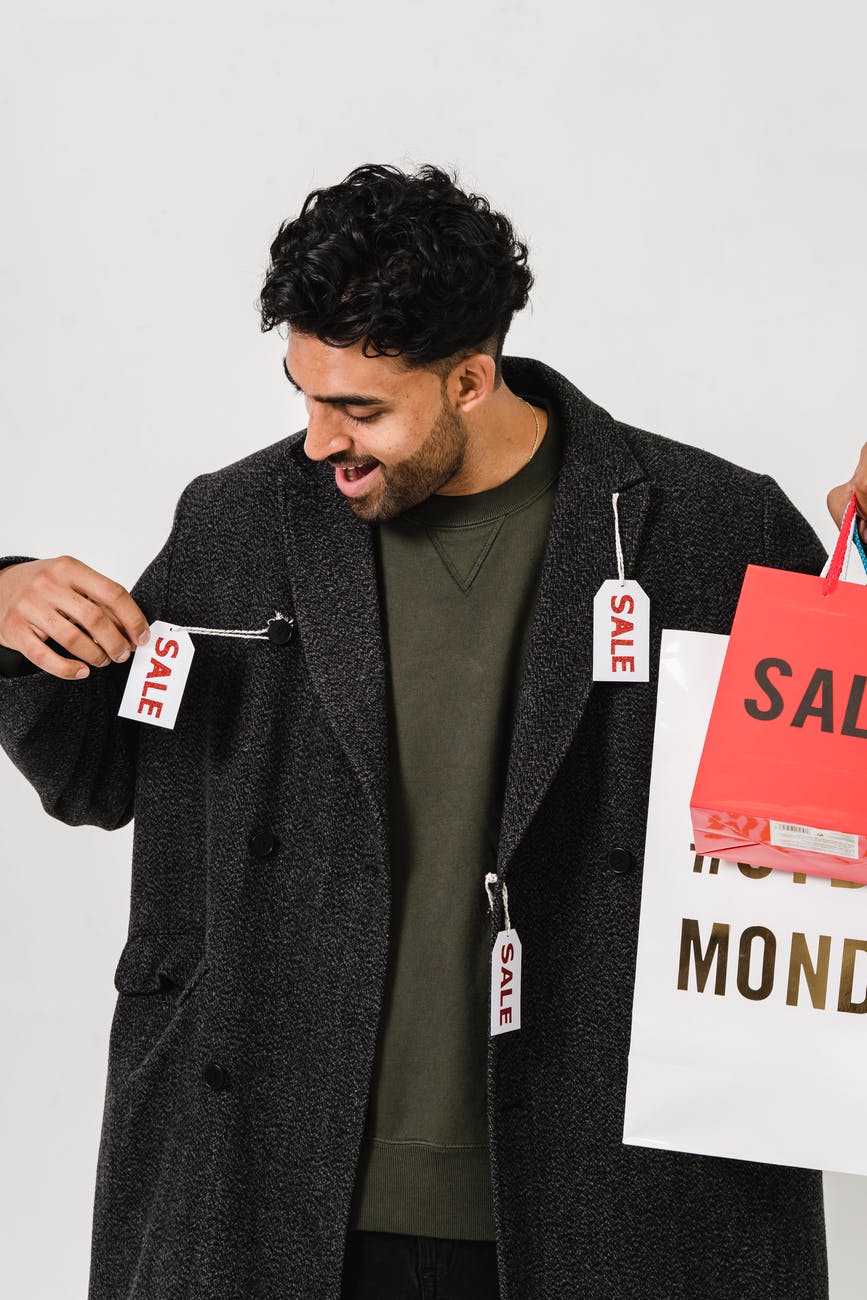
The use of pleasure and pain can be put to use in messaging, and packaging design (marketing has influence in both). It may seem elementary to suggest to make packaging pleasing as most we see in the market are beautifully packaged. However, there is still a segment where items can be packaged beautifully and I am talking of those pasalubong or homemade products that are only put in generic plastic containers. Yes, I see the value of saving cost but putting them in beautiful containers can entice buyers and also create a differentiation versus other products. Japan is a good example for this. In every region, they have a specialty (food) and their specialties are wrapped beautifully that makes the products more appealing and enticing. I think you will agree with me that one will choose a product that is more beautiful than the other given everything else is equal. There is also the other side of choosing, which is avoiding. We avoid anything we perceive as a source of pain. Even my cat knows this. One time he caught a lizard and continued to hit it with his paw. Out of pity for the lizard, I went beside Parker (my Persian Cat) and gave him a disapproving look. He knows that everytime he does something  I don’t like, I give him that look and if he continues, I bring him back to his room, so he stopped but when the lizard started moving, he did it again. You know what’s next. Going back, When in other places, most specially those we are not familiar we avoid those areas that warn us of possible danger. For example, when hiking, we avoid areas with warning sign “slippery”. We avoid because of any possible mishaps that will result to pain. One thing escapes me, Filipinos still ignore those signs that say, BAWAL TUMAWID, NAKAKAMATAY.

Pain & pleasure can be a jump off point for marketers in understanding how to entice their target audience. In buying the cards, based on the story I told, what drove me was the beauty of the design. Like I said, this is just part of the marketing process. To get deeper into the minds of the market, more study needs to be done and tests for validation but at least we have eliminated the question, where do we start?

On Common Sense

Photo by Dominika Roseclay on Pexels.com

Konosuke Matsushita, founder of Matsushita Electronics was once asked by a reporter about his secret to success. He did not answer, instead he asked the reporter, “what will you do if you’re caught in a rain?” The reporter said he would use an umbrella. That, Mastushita said, is the secret to my success. He was referring to common sense.

Common sense means sound judgment in practical matters. So how to we make use of our common sense?

First, we need to know the 2 types

“Good sense, can be described as the knack for seeing things as they are, and doing things as they ought to be done”.

“Folk wisdom, signifying unreflective knowledge not reliant on specialized training or deliberative thought.”

To develop common sense try the following:

  1. Observe more. Understand the cause and effect of things or see how people do things
  2. Read more and learn more. The more we read the bigger perspective we have on the world which helps us see better.
  3. Experience more. Be out there and practice what you have learned. The purpose of observing and reading is not more theories but better application.

Questions to make better decisions:

  1. What is happening?
  2. What is the impact on me?
  3. Do I like what is happening to me?
  4. If not, what should I do?
  5. Who can help me?

Of course, when standing in the rain, you do not stand there and ask yourself those questions.

Cyclical power of focus and distraction

Photo by Tatiana Syrikova on Pexels.com

I want to investigate, at least from its face value, success. No, this is not about steps on how to be successful because there are really no steps. Success is not linear and the thought that success is linear is something I want to change. As humans, with conscious and subconscious mind, with wants and suppressed wants living in an age full of things to do, success will be impossible to achieve in a linear fashion. Seeing success from a linear perspective makes failure frustrating.

Many people attribute success to will power. Gandhi notes, “Strength does not come from physical capacity. It comes from an indomitable will.” I agree, but it is not easy to find where that strength comes from.

What drives people to succeed? A little investigation points me that strength comes from motivation. At some point people will be motivated by something, it may be money, fear, love, and passion. It does not matter what motivates people because people are different have different sources of motivation. The point is, one is motivated at one point and that is a source of strength. Is motivation that brings about strength to fuel the will enough?

What is will? The dictionary defines will as the faculty by which a person decides on and initiates action. In other words, it is the ability to decide and bring action. Yes, but again, I think will is not enough. One may get started, even start achieving but then get distracted and stop. For Simone Weil, a 20th century philosopher thinks that “will only controls a few movements of a few muscles, and these movements are associated with the idea of the change of position of nearby objects.”

There are other things beside decision-making and taking action, though the 2 are important in starting, since in most cases, many people can’t even decide and start. Once one has made a decision and has started, the next key ingredient is focus and attention.

Beyond will, there is a need to look as focus and attention as the factor that will move one to its destination after moving a mile from the start. Focus and attention allows people to zero in on the goals or objectives. Yes, there will be distractions. In fact, one must be open to distractions from time to time to allow themselves rest and reset, and allow focus and attention to bring one back to their tasks. I remember reading an article on Oliver Sacks, the famous Doctor and Writer. In that article he said that it is normal as a writer to stop, then write again continuously.

Ultimately, success, beyond motivation and will, is a cycle between focus and distraction. Distraction allows a breather and focus to bring in fresh ideas for creativity.


#kaihusainiyo

A Big lesson from the Little Prince

Photo by R. Fera on Pexels.com

We have all been consumed by the thought that we are adults and that adults are expected to act in a certain way, so we act that way. We are so protective of our image that we are no longer authentic to inner self. We have added a layer to the person we really are and that is giving us a hard time to get in touch with our real selves. We play our role too seriously and that takes away the fun.

How we act is a matter of choice. Let’s remember the child in us and relearn how it is to have fun.

“All grown-ups were once children… but only few of them remember it.” – Little Prince Book

The first step to success

Photo by Lum3n on Pexels.com

A lot of people dream of success such as financial gain, power or fame. Wanting is normal and even necessary in the process towards success. But there is a key ingredient in the process and that is clarity of vision: do you know what you want?

The first thing people need to ask themselves is what do I want? This is the destination. This is important because you have to know if you are there or not. I want to be rich is not clear, it is vague. I want one billion dollars is clearer than I want to be rich.

Another key question is, what does success look like? You have to know your visual markers such as a car, house, or happy family to know that you are there or on the way there. To push it further you can name your car’s brand, subdivision or what a happy family looks like.

I remember back in college that we were asked to write down and draw our life’s goals. I still have the document somewhere in our stockroom. The last time I saw it was more than 10 years ago but so far I already have most of it.

Be clear on what you want. It will help you in attaining your goals. This is at least the first step, not the only step.