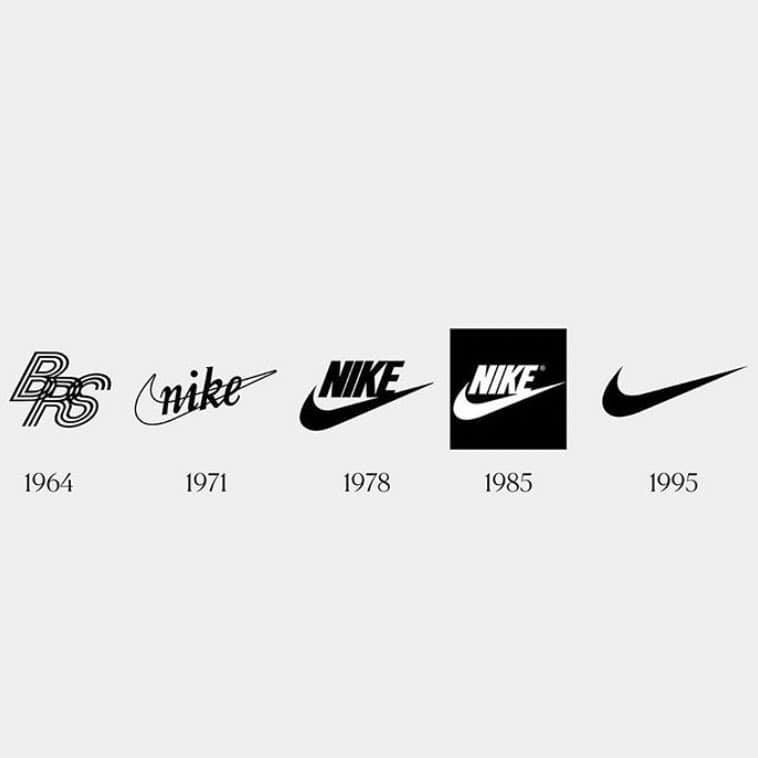
Looking at the business’ logo history, compressed in one photo, success may appear easy. What it doesn’t show is the decision to change, process of change and the effects of change. What we dread is change and the uncertainty of its results, or the moving away from what we are used to and the predictability of the outcome.
Many so-called gurus, coaches and mentors loosely evangelize leaving the comfort zone to succeed in life as if it can happen with a snap of fingers. Yes, in theory it may be easy but in practice it is not because when you change, everything connected to you changes as well.
Great expectations lead to disappointment. Every time we attend a seminar, workshop, webinar or read a book, our expectation to succeed goes up. Of course, we want to get our money’s worth but that is not how it goes. A 2-workshop is useless unless it is practiced the right way. Underscore right way.
In many of my classes, the question of how to succeed comes up. I give them this answer: there is no blue print to success except the commitment to action, no matter how slow. There are no short cuts but there are skills, virtues and people who will help you achieve your goals.
There is a big concern among employees who present proposals to their higher ups. Many if not all get disapproved. As a result, many employees feel they were not heard and the boss is labeled as narrow minded. In this narrative the boss unfairly becomes the antagonist.
How can you increase the chances of your proposal getting approved? You need to persuade better and yes, it can be done with the help of Aristotle.
I have been using this for a long time now, probably 20 years and so far it has been effective. Pre-pandemic I would visit companies to present and many times I am able to sell. It may not be instant but I close. One of the most memorable presentations is the one I did with a conglomerate 5 years ago. Known for being conservative, stable and strong, I decided not to use a deck to present my business. I decided to use index cards to convey my idea. I am not saying that the index cards were the key, but it helped me communicate that the presentation is not about high tech I am, but how I know and studied them by staying conservative with the use of paper. I also included stories at the start to hook them and facts to support my presentation.
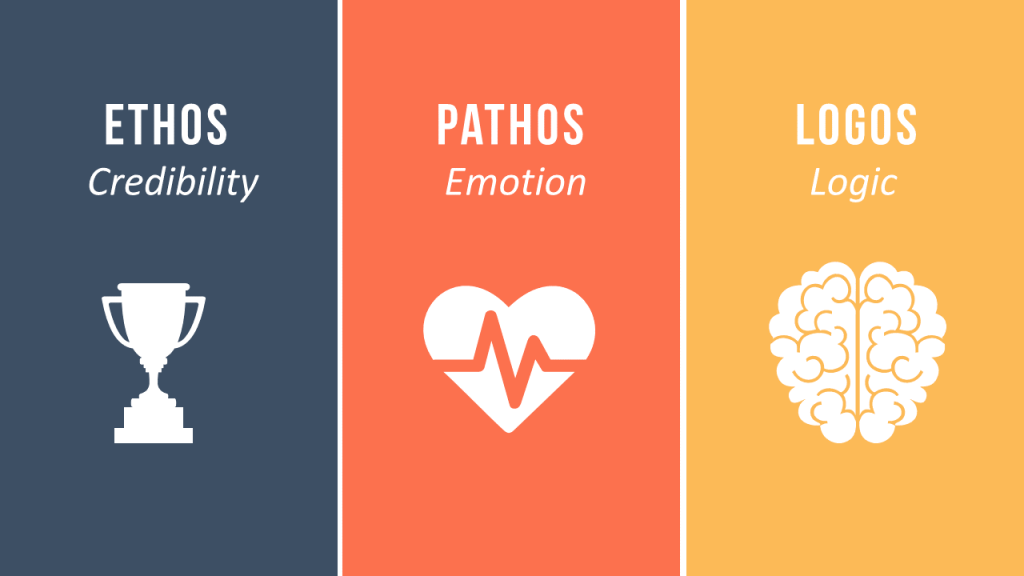
How was that influenced by Aristotle? I used Aristotle’s 3 rhetorical appeals. In the photo, you will see their definition.
(See photo)
Ethos is your credibility and trustworthiness. You have to look and speak professionally, and of course, good reputation helps.
Pathos is the appeal to emotions. You can do this by sharing a story listeners can related to or anecdote that helps them see their goals.
Logos is appeal to logic. This is done with facts and scientific studies.
Combine the 3 and you become persuasive. So, the next time you present, appeal to the 3.
Unemployment is on the rise and you maybe one of them who recently left work. If you are (even if not), stay for a while and read further because there is a nugget to learn from the story of Amy on how to cope during this time, as well as how to manage the struggles.
Amy is a single mother with a bright future. Though a single mom, she planned her life ahead and decided to straighten her path for her and her son’s future. She finished school and took courses that added strength to her skills. She landed a job and is working for a local retail company for the past 15 years. She was quite a success as she has been promoted several times since she started and is now a VP of operations. She also has a good relationship with here colleagues and they look up to her as a leader. In those years of working, she was able to send her son to a good school, get a loan to buy a car and decent house.
Everything was doing great until the pandemic. 3 months into the pandemic, she was having trouble paying her loans. This made her start digging into her savings. She even had to transfer her son to a different school where tuition is lower. She started to get anxious and became moody. Even her Facebook status has a bitter undertone.
More trouble came to her in the coming weeks. Sometime in morning of July, she got news that the company she is connected with is closing and that she will lose her job. For weeks, she got into deep anxiety. She could not eat. She could not sleep. She could not believe what happened. For her, it was too fast and too soon. She was unprepared. However, every night, before she goes to bed, she tells herself to be strong and get back up because she has a son that relies on her.
What she did after was something predictable. Nonetheless, it was what most people have done. She took free and paid webinars on skills that can help her start a business. For years she wanted to start a home-based business particularly selling food because she loves to cook. In a matter of 5 days, after taking online programs, she was able to start her bottled spread business. And as soon as she posted her new business on Facebook, friends started ordering. She started making money, but not as much as before. It did not really matter. For Amy, what’s important is that she was able to reset.
Amy represents everyone who lost their job but not hope in this pandemic. As seen in her character, she is a fighter and not the one who would easily give up. No, this is not a lesson in business though it shows a vague process on how she started. I put this together with the intention of showing what we are all going through now: change and navigating change using the story of Amy.
Like Amy, you and I are going through change. The change in Amy’s career is not just a change in designation, it also includes changes in habits, behavior and mindset. Yes, change can be depressing but it is what it is, a process, and the process is not unique to one, it applies to all; hope the last sentence is a bit of consolation.
How did she manage change? She faced job loss with faith, hope and courage. Yes, you know these, we know these, however, facing change is easier said than done. As creatures it takes energy, a great deal of it, to create or change a habit. Then again, what is the choice? None. Adapt or die. Right now, we don’t even have to dig deep to look for faith, hope and courage in us, believed me, once you make a decision to do it, it will appear because that’s the way humans are. If there is one lesson about change we can get from this, then let it be that change is a hard process but getting through is possible especially with faith, hope and courage.
Change is not something new to us, we face change everyday, some are hard and some are easy. Even the great Roman Emperor Marcus Aurelius faced change and he has amazing words about change that says, loss is nothing else but change and change is nature’s delight. So remember, as I need to remind myself, too, that every time change happens, it must be faced with faith, hope and courage.
2 weeks ago, I wanted to buy some playing cards (as I use it for my hobby). I am used to the brand Bicycle but this time I want to test other brands. Since I did not know what to buy, I asked the store magician for suggestions. Thanks to technology, he gave me a virtual tour using his phone. He gave me some brands like Empire, Tally-Ho, Bee and others, and I asked him to show me how those cards look like so he presented them to me as he moved around the store. I ended up buying Bicycle and Tally-Ho. 2 things drove me to choose the brand, Tally-Ho: one, because of his suggestion and the other because of the design. I would not have chosen it even if he suggested it, if I did not like the design.
Lately, I find myself taking interest in philosophy. I never really saw the value of this subject back in college but pandemic made me ask many questions relating to the nature of things, and even our purpose. I found a bunch of wisdom reading timeless and contemporary texts on philosophy, I can name many of them but that will take the focus away from what I want to share here. Here, I particularly want to share one thing that can help someone in business and that is: Pain and Pleasure is what drives a man to choose and avoid things. This is from Artistotle’s Nichomachean Ethics. Understanding what pain and pleasure is can help someone in the field of sales and marketing. In this article, I will define the factors under pain and pleasure, give examples and suggest how they can take advantage of this information.
According to the text there are 3 things that move us to choose and 3 things that move us to avoid them: Under pleasure are the beautiful, noble and advantageous. Under Pain are the ugly, hurtful and painful. In short, we choose what is appealing and avoid which is not. Take note though that I am using the word choose and not buy because price is another matter, but at least, the marketer has won half the battle if the product is appealing to his audience. Note also that each will have their own definition of beauty, noble, advantageous, ugly, hurtful and painful and their definition is based on personal and past experiences. In able to understand the definition, a further and deeper study of the market is vital. At least what we have here is a take off point for the fundamental understanding of what influences their choice.
As long as Mac and PC brands exist, there will always be a discussion on which is better. It seems that users do not want this settled because no one is accepting that each will have its own strengths and weaknesses. One thing is for sure, the market who follows each will have a different set of definition for what is pleasurable and painful.
The use of pleasure and pain can be put to use in messaging, and packaging design (marketing has influence in both). It may seem elementary to suggest to make packaging pleasing as most we see in the market are beautifully packaged. However, there is still a segment where items can be packaged beautifully and I am talking of those pasalubong or homemade products that are only put in generic plastic containers. Yes, I see the value of saving cost but putting them in beautiful containers can entice buyers and also create a differentiation versus other products. Japan is a good example for this. In every region, they have a specialty (food) and their specialties are wrapped beautifully that makes the products more appealing and enticing. I think you will agree with me that one will choose a product that is more beautiful than the other given everything else is equal. There is also the other side of choosing, which is avoiding. We avoid anything we perceive as a source of pain. Even my cat knows this. One time he caught a lizard and continued to hit it with his paw. Out of pity for the lizard, I went beside Parker (my Persian Cat) and gave him a disapproving look. He knows that everytime he does something I don’t like, I give him that look and if he continues, I bring him back to his room, so he stopped but when the lizard started moving, he did it again. You know what’s next. Going back, When in other places, most specially those we are not familiar we avoid those areas that warn us of possible danger. For example, when hiking, we avoid areas with warning sign “slippery”. We avoid because of any possible mishaps that will result to pain. One thing escapes me, Filipinos still ignore those signs that say, BAWAL TUMAWID, NAKAKAMATAY.
Pain & pleasure can be a jump off point for marketers in understanding how to entice their target audience. In buying the cards, based on the story I told, what drove me was the beauty of the design. Like I said, this is just part of the marketing process. To get deeper into the minds of the market, more study needs to be done and tests for validation but at least we have eliminated the question, where do we start?
Konosuke Matsushita, founder of Matsushita Electronics was once asked by a reporter about his secret to success. He did not answer, instead he asked the reporter, “what will you do if you’re caught in a rain?” The reporter said he would use an umbrella. That, Mastushita said, is the secret to my success. He was referring to common sense.
Common sense means sound judgment in practical matters. So how to we make use of our common sense?
First, we need to know the 2 types
“Good sense, can be described as the knack for seeing things as they are, and doing things as they ought to be done”.
“Folk wisdom, signifying unreflective knowledge not reliant on specialized training or deliberative thought.”
To develop common sense try the following:
Observe more. Understand the cause and effect of things or see how people do things
Read more and learn more. The more we read the bigger perspective we have on the world which helps us see better.
Experience more. Be out there and practice what you have learned. The purpose of observing and reading is not more theories but better application.
Questions to make better decisions:
What is happening?
What is the impact on me?
Do I like what is happening to me?
If not, what should I do?
Who can help me?
Of course, when standing in the rain, you do not stand there and ask yourself those questions.



 Panorama