Last February 2023, I was in Porto with two of my college friends. It was an unplanned trip for 12 days that resulted in plenty of beautiful photos and memories. My friend, Mac, who has a unit in Porto, asked me and another friend, CJ, to accompany him. Mac and I first entered Rome, stayed for several days in a unit near Piazza Navona, then flew to Madrid to meet up with CJ before heading to Lisbon, Portugal by plane, and then traveled to Porto by land. If I had more time, I would have taken every transfer either by train or by bus. This would have allowed me to experience the cities better.
Knowing that I would be in a place with rich history, vibrant culture and well-preserved medieval structures, I decided to get myself a good street camera. I wanted something light and discreet. A compact point-and-shoot would not do, and a DSLR is too bulky. After my research, I finally decided to go with a Fujifilm because of its sensor size, handiness and interchangeable lens capability. I carried with me a Fuji XE4 with a TTArtisan lens 25mm which is around 38mm full frame equivalent. I wanted to bring a manual lens to stay faithful to the tradition of street photography culture. At least for a few days, I wanted to feel like Bresson and Eisenstadt. Just to share with you, my settings were as follows: aperture f/11, shutter speed 1/250, Auto ISO (max 3200), and manual focus which I kept within the focusing range of the aperture so that I could just shoot away. I also had three extra batteries and two 128GB memory cards. I stored them in my Domke Camera Bag.

There is something about street photography that I like. It is the abstraction, gut feel, spontaneity, and being “in the moment.” It reminds me of jazz improvisation, where the musician plays not just with notes and beats, but also with rules, which he breaks, resulting in magnificent music.
Click one of the photos below.


One of the challenges I face when doing street photography again, after a while of not doing it, is the fear of getting apprehended or scolded for pointing my camera at people in public, especially in a foreign country. However, if I let my fear take over, I would not have any decent photos to bring home. So, I took courage and decided not to hide and just raise my camera, point it at a stranger, and shoot. Another technique that helped me is to pretend that I was taking a video instead of a photo. This is something I learned by watching tips on YouTube. I would raise my camera and start panning, pretending to be doing a video, and then capture the right moment. No one ever complained because they probably got confused by hearing the shutter sound when all the while they thought I was taking a video.

Having around five days in Porto, I was able to walk around and scout the places I wanted to go back to. I did not do much research on where to do my street photography but instead just let my feet take me wherever. I thought of joining walking tours but then decided that doing street photography by myself would be more fun. There is the freedom to do whatever I want, wherever I want, and whenever I want.
I would wake up early in the morning, at 6 or 7 am, while CJ and Mac were still asleep, either book a car or walk. One day, I went to the Douro riverbank on the Gaia side overlooking Porto to take photos of the area and capture the magic of the early morning sun on its subjects. The place was still empty, the wind was blowing cold, and establishments were all closed and would not open until late morning. It was the perfect time to feel and understand the place and observe how light carves its subjects to create the perfect painting. Then suddenly, I felt the call of nature. I struggled between wanting to stay to wait for the perfect moment or leaving to answer the call. The latter won the battle. I called a taxi and rushed back to our flat.
Click photos to see.
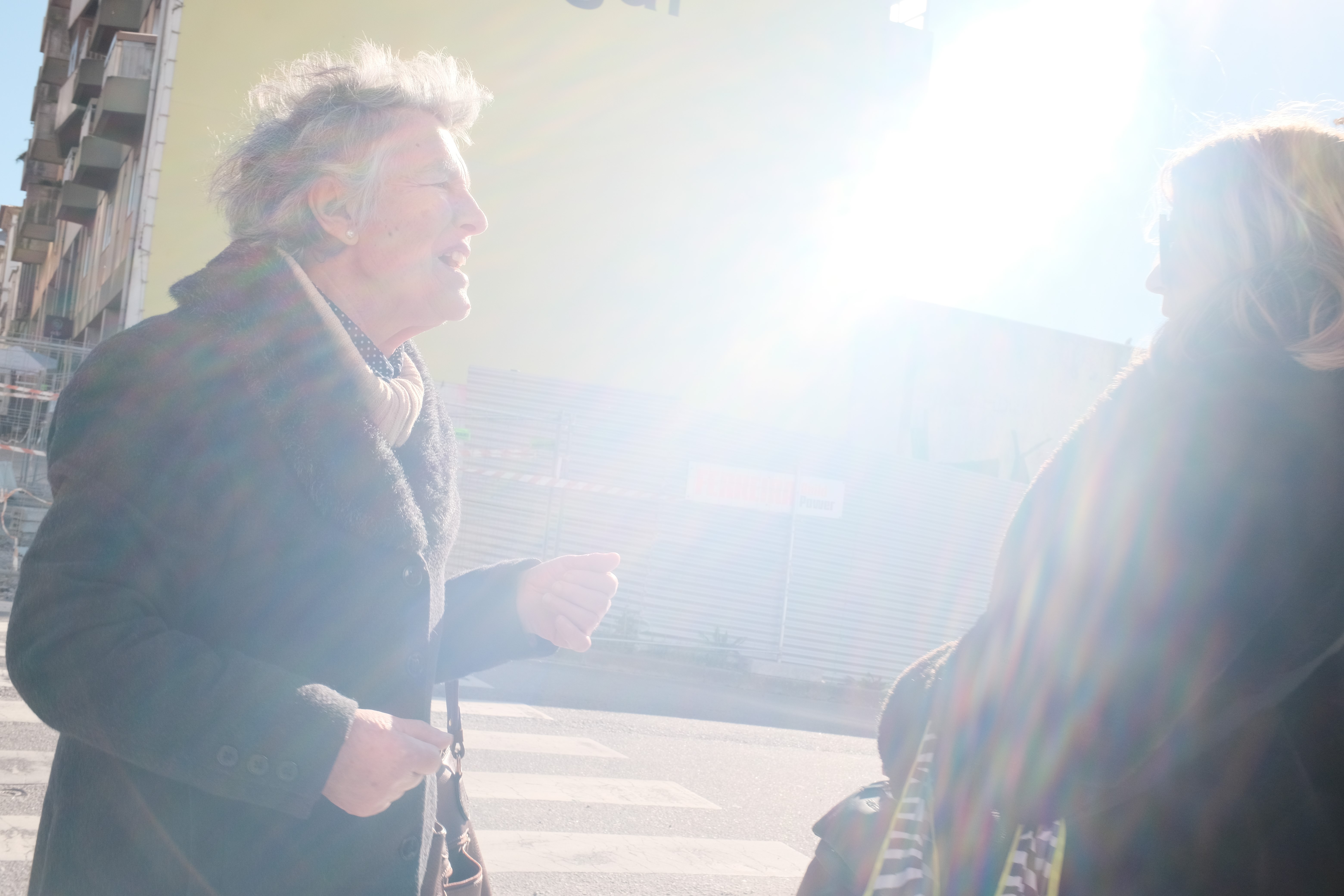
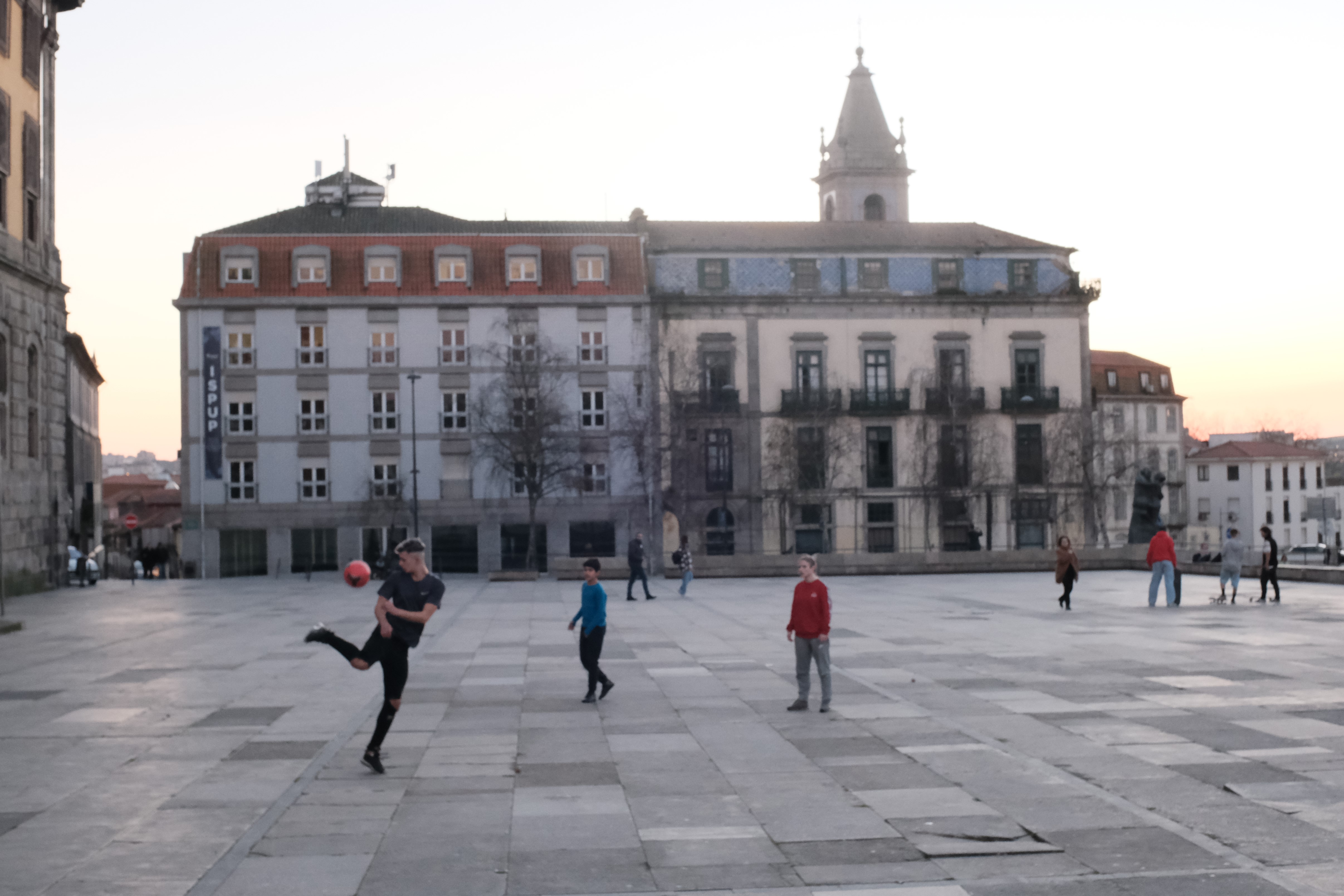



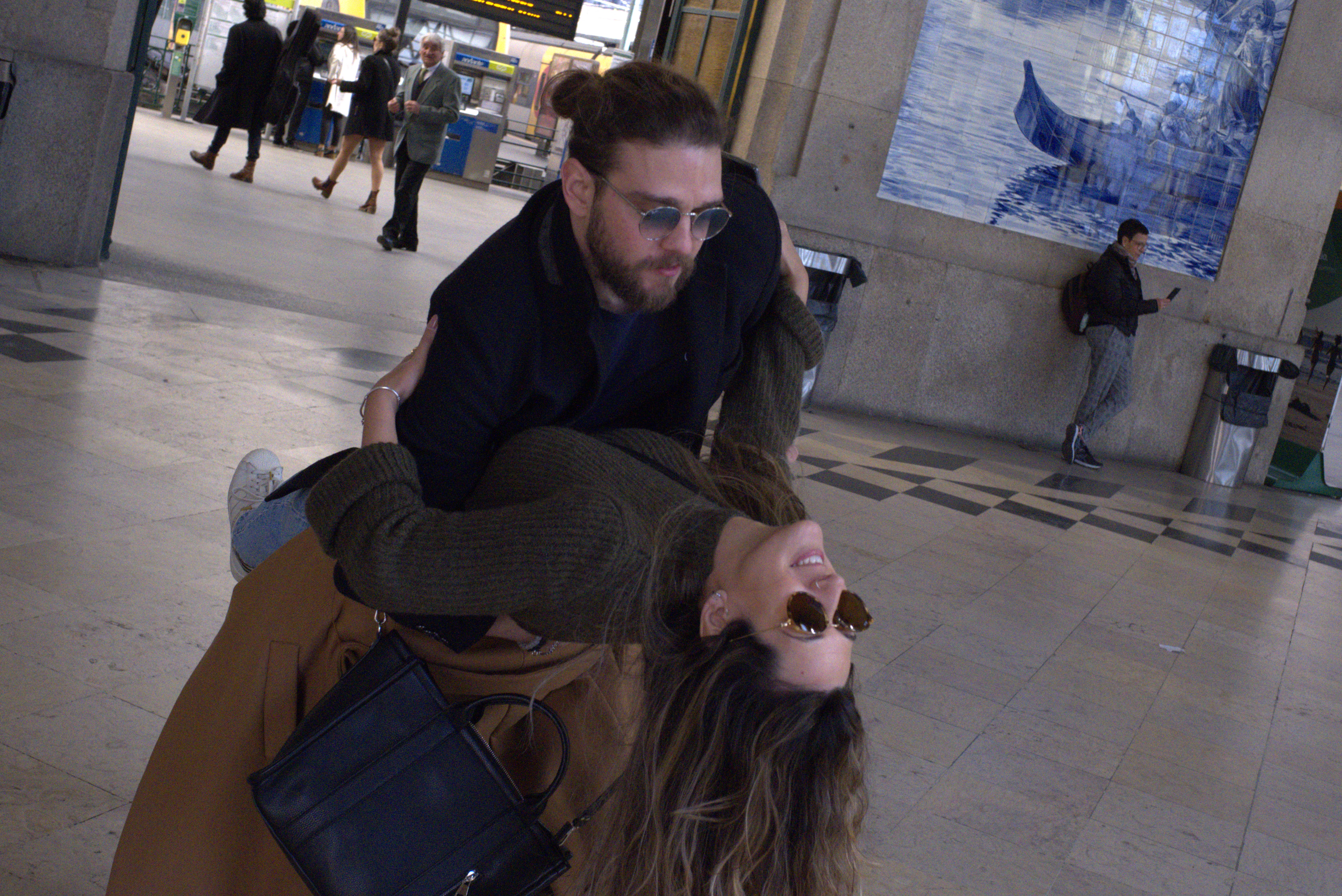
The place I suggest as your starting point would be the Church of Saint Ildefonso, a Baroque-style church with a tiled facade. The week I was there, stalls were selling leather items and there were plenty of interesting subjects around the plaza, good for warming up the gear and imagination. Then head down towards São Bento train station, which is one of the inspirations for J.K. Rowling. Do not miss going inside the station for some action. Luckily, when I was there, I found a couple dancing and saying their goodbyes. I stood near them and took photos without hesitation. After the station, cross the street and follow the road of Rua das Flores where you will see houses clad with Azulejos, people dining, artists selling their art, until you reach the bottom of Ribeira where you will see the Douro River, Ponte de Luís Bridge, and the colorful houses which used to be warehouses and now repurposed as restaurants.
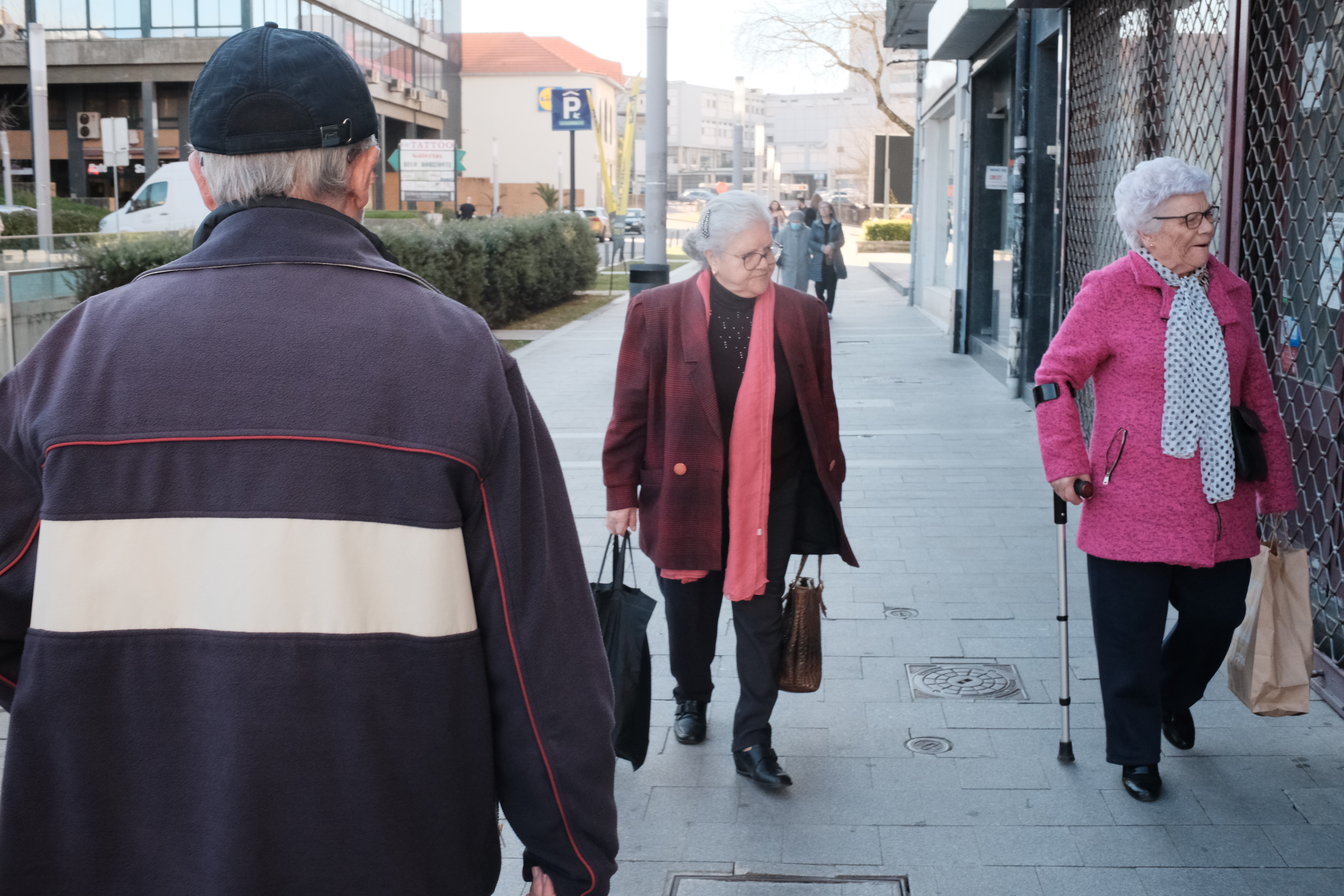
You will not run out of subjects. There are crowds of people especially in Santa Catarina street, historical establishments are worth your memory space, individuals in action, and a variety of details in the environment. You will not miss them as long as you keep your eyes open and intentionally look for subjects.
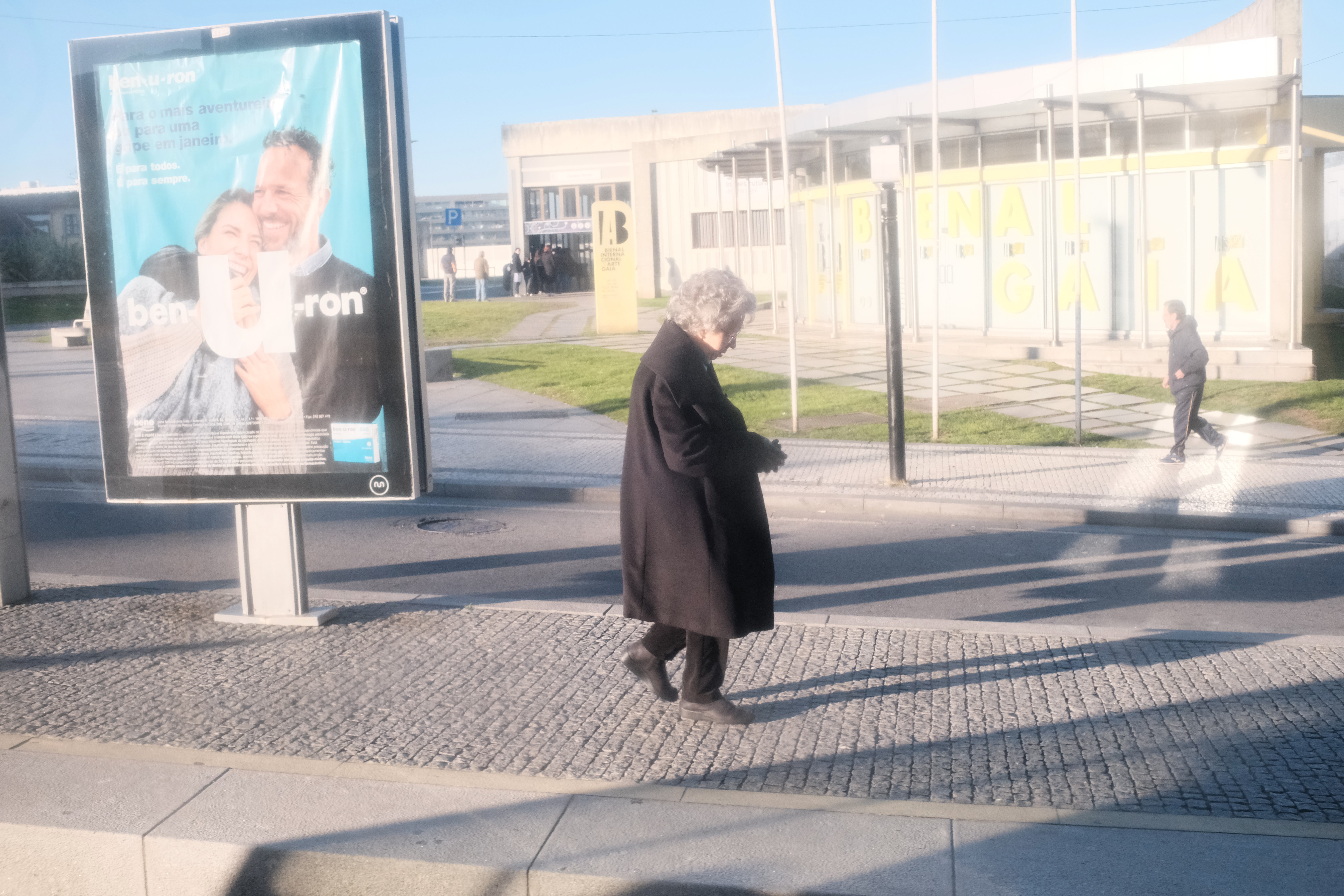

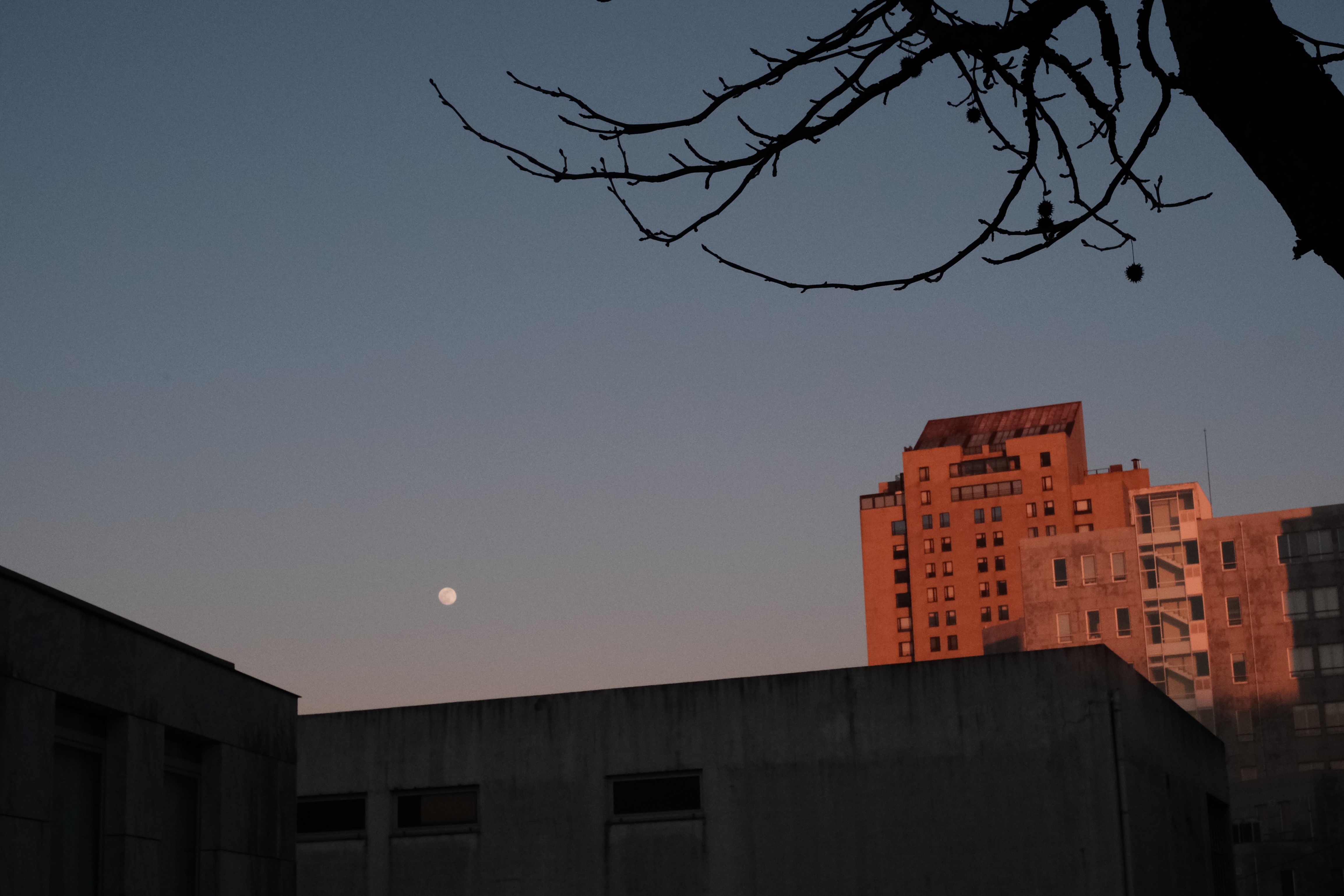


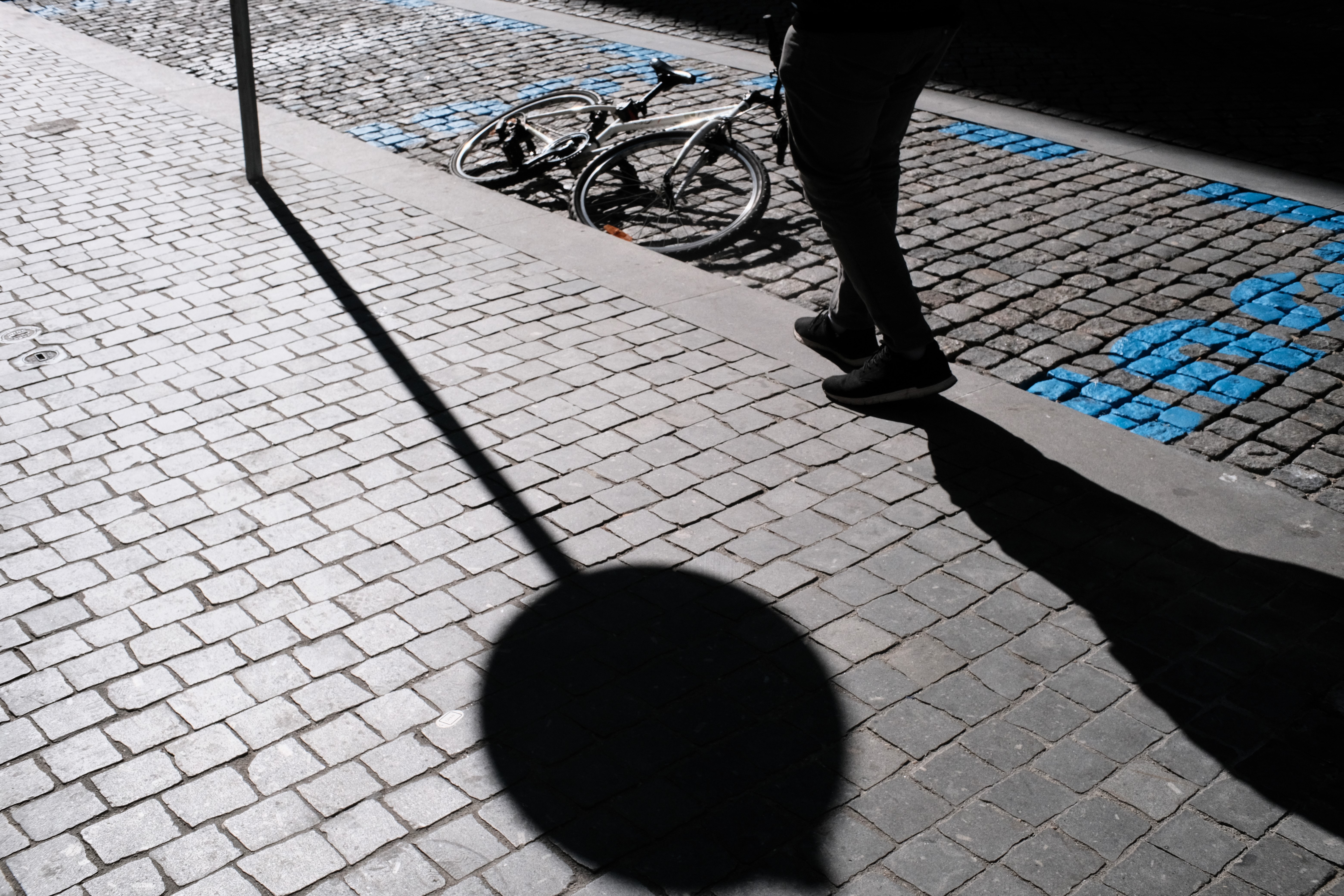

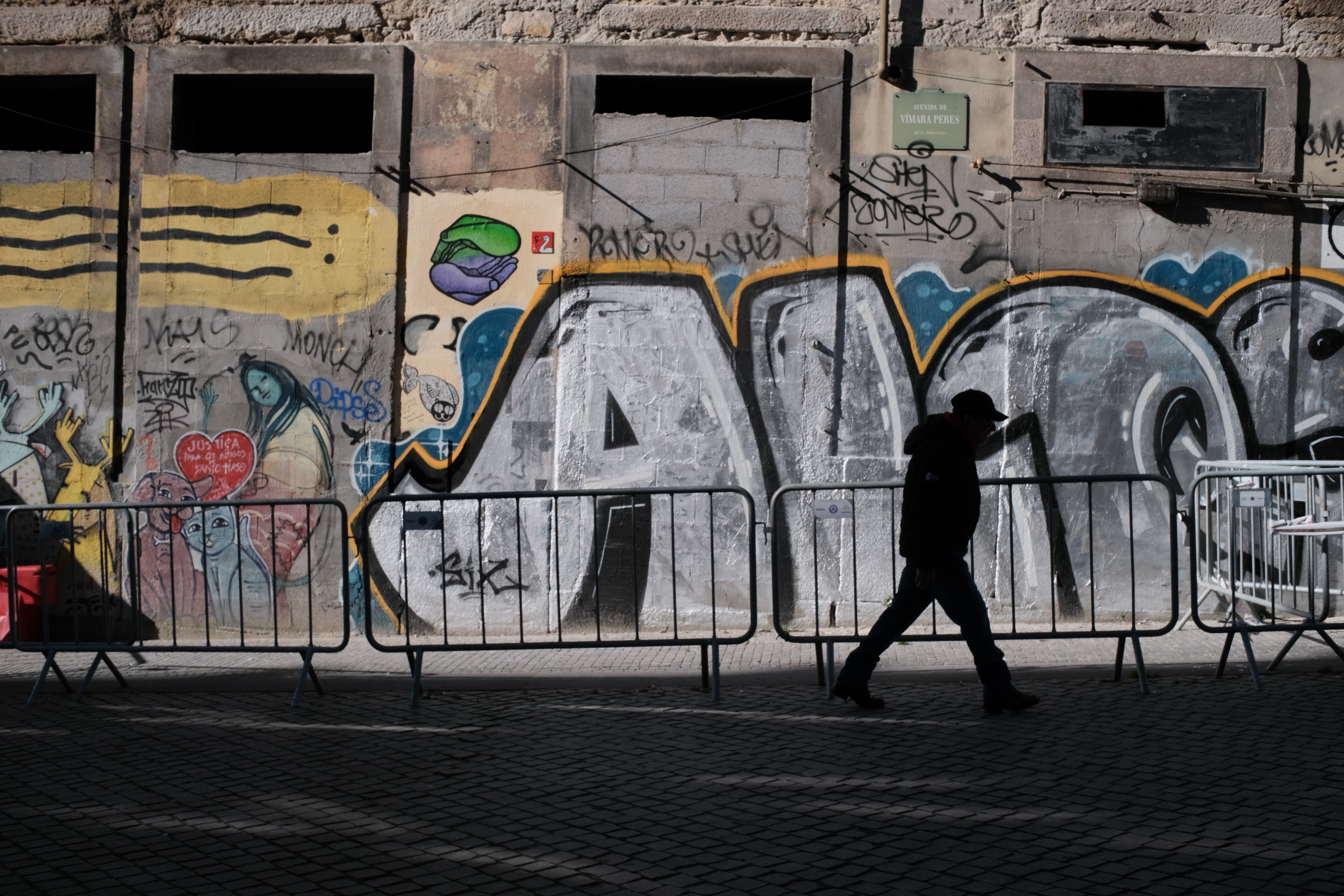
The best time to do street photography is when the sun is high when there is great contrast between light and shadow as it creates drama and tension in the photo. And in crowded places too, modern people juxtaposed against medieval structures. I stay for a while, stick around, observe the people, their activities, their faces, their mannerisms, the environment, the light, the birds, and the cars and try to find what interests me the most.

An instance I will never forget is when I got lost in a ghetto one afternoon. It was a short alley, not more than 800 meters, but the dwellers were looking at me. I was not sure if it was a menacing look or if I just looked different and they were curious about me. I walked normally but consciously and alertly. I did not shoot much and just walked straight until I got to a big road and saw the Museu do Vitral.
I was happy with the images I brought home. I finished almost two 128GB memory cards in RAW files. But I found myself facing another challenge: choosing which photos should go on my social media. I just based it on what I felt like sharing at the moment on my @jefflimcua IG account, any random place, and a random moment.

The trip to Porto with friends was a memorable one, albeit tiring. It gave me so much time to immerse myself in street photography, see a new place, and realize that our most artistic moments come when we are most relaxed, or what they call “flow,” and courage.