I examine ideas, challenge assumptions, and connect experience with principles to uncover insights that help people and organizations grow. #Business #Leadership #Human Formation
I was 10 or 11, fat and tall, when I first saw this commercial, and boy, I envied how he, Louie, dribbled that ball. I would make sure to watch that commercial every time it shows. I would have recorded it if only I could. I was already playing basketball but knew that I could still be better by learning how to dribble, so I asked to be enrolled in MILO Best E. Rodriguez, where Waltermart is now, with my cousin. When I got there on the first day, I was intimidated by the big coach who welcomed everyone, Mr. Jorge. He was huge, and his voice boomed when he spoke. He scared me to death. Nonetheless, I went through the drills and practiced at home. What I did not know was that we will be judged on how we do with the drills. On the day of the exam, I did not go out of fear. He personally called our house to look for me. I got scared and did not return. What does a 10 year old fat kid know, anyway?
I chickened out. I did not know any better at 10. No one told me to go back and show up. Later in life, I realized that the most basic thing in any endeavor is showing up no matter what. And it is more than just trying; it is committing and persevering. This is where I think the role of sports parenting comes in. But first, I have no bad feelings toward my parents because, to them, sports were more of leisure than character development. In my case, I see it as a path to learning discipline and fortitude while liking what we do. In other words, whether you like what you do or not, nothing is easy, so keep on doing.
This realization helped me apply such lessons to my children. I just encourage them to join competitions and be there no matter what the results are as long as they put forth their best effort. But of course, every best should be better than the previous best, and this is achieved through practice and perseverance. I sign them up and make them go through the struggle, with us on the sidelines as cheerleaders. Because the lesson is not about winning or losing; the lesson is in the process, the struggle, the people who are there to support, and the opponents who are also friends outside the arena. The winning comes later.
Forty years later, the lessons brought by this commercial still live: show up, and never give up.
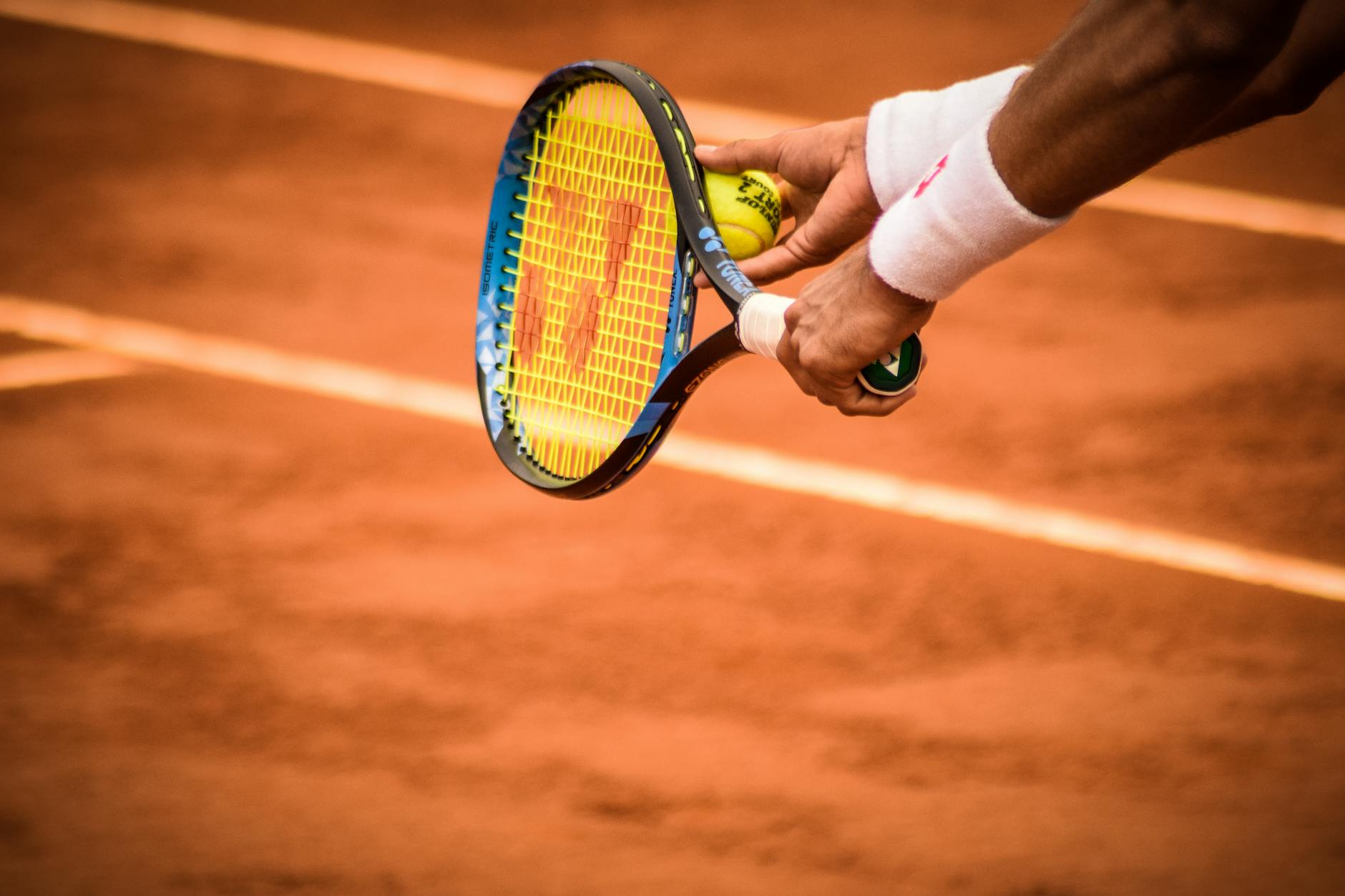
It is that time of the year again, Iuri’s tennis tryouts. This is causing me so much anxiety, but I am sure it is causing Iuri even more.
After not making it 2017 and 2018, Iuri finally became part of the school elementary varsity team in 2019. Since there were no tryouts for two years because of the pandemic, tryouts resumed in 2022. That year was such a nail-biting tryout season. Iuri had little practice that year, was just getting back into playing tennis, and had just recovered from COVID-19 two weeks before the tryouts. He was still weak and had only played twice before the tryouts, so his confidence was low.
The night before the tryout, he woke up in the middle of the night crying and having a nightmare. It was hard for us to see him that way, but we couldn’t let him avoid trying and let fear take over. On the day of the tryout, he lost all his matches and afterward complained that he had poor eyesight. I told him not to make excuses and to play better the following day. The next day, he won a match against a senior student yet still complained about his eyesight. I then took him to an optometrist. To our surprise, his prescription was above 300. My bad.
On the second day of tryouts, I went to Starbucks in Missouri to get myself a coffee. As soon as I parked the car, I got out, still thinking of the tryouts. I walked maybe 7 to 10 steps, about to go up the stairs, when I noticed my car was moving. I looked again, and yes, it was moving. I rushed back, clicked the unlock button on my remote, opened the passenger side door, jumped in, and stepped over my left leg to hit the brakes. Good thing I did not get into an accident. At least, he got in Team A of junior high school team.
The following year, 2023, it was the same case but under different circumstances. We came from a three-week trip and Iuri was only able to play once during the trip. He only had two weeks to prepare and get his groove back, but it was not enough because classes were about to start in three days by the time we arrived in Manila. So he was only able to train five times before the tryouts. During the tryouts, he almost won the first match, except that at match point, his opponent returned a backhand that hit the net and fell in the service box, which Iuri was not able to reach. He won the second match, lost the third, and zeroed a senior high school player in the last match, earning him a slot in Team A.
This year, 2024, Iuri prepared better. He played more match plays, joined more tournaments, and did more strengthening. A player confidently told him that he will barely get in, but it did not crush his confidence. On the first day of tryouts, he did well. He beat an older opponent who played decent tennis. He told me that he was stiff during the first few games of the tiebreaker but was able to recover in the 5th game. There are 13 players left and only 8 will be selected. To prepare for the second day of tryouts, he played several tiebreakers, practiced his serve, and worked on his strategy. He entered the tryouts confidently. He won 2 matches with a convincing lead, making it into the team with ease this year.
Every parent navigates stress while their child is in a match differently. Some pray, others coach their child, and others do not watch. In my case, I avoid watching and just send someone with Iuri unless there is no choice. I do pray, too, a lot while he is playing.
Handling defeat is another case. I used to process his game as soon as it ended. I learned that I should first allow him to understand everything that happened in the game. For him to personally assess and analyze his game, but it would be tricky for someone who is still developing his game sense.
It was a relief for me and Ingrid knowing that he got into the team this year with no drama. For me, the biggest takeaway from this experience is that hard work, perseverance, and persistence yield positive results, but there’s always more to strive for and no room for complacency.
Jaime, my eldest, is also into sports, specifically bouldering. He recently got into it and has already competed. The results were not bad, considering it was his first time joining. Since I have gained some experience as a parent of an athlete, I am now able to apply lessons learned to him. One example is allowing him to process his performance so that he can be more open to talk about it, and also asking him about his goals and areas where he wants to improve.
Every parent wants to see their young athlete successfully make it in their match, but that is impossible in sports or in any serious activity; sometimes you win, sometimes you lose. But it is the journey through the ups and downs of victory and defeat that make the sports journey meaningful.
I love listening to podcasts before going to sleep. It is a habit I developed during the lockdown, which was also when I started my own podcast called Business Class, where I talked about business and entrepreneurship. I listen to podcasts mainly to get information and to help me fall asleep. Podcasts are my alternative to watching YouTube videos and reading books.
Getting myself hooked on listening to podcasts was an accident. I was trying to learn about philosophy during the pandemic to use as part of my patter in my conjuring hobby. I started reading more books on philosophy and even enrolled in online courses to get better in the topic. Then one time, around 9 PM, I was already tired from reading but still eager to learn. The idea of listening to podcasts popped into my head. I searched “philosophy” on my podcast app and started scrolling to check which was the most interesting to me. Then I accidentally found an episode that looked interesting and started listening. Since then, I got hooked. This was in 2020.
Listening to a podcast is like tuning into your AM radio, except that you can pause and continue at another time. Compared to videos, podcasts require more focus and concentration, which I think makes them superior to TV or video as a tool for improving one’s listening and learning skills.
The podcasts I listen to most are those related to liberal arts and the Catholic religion. I think it’s the result of the training I got from my university.
My top podcast choice is Word on Fire, a podcast by Bishop Barron that has been on air for several years. They had an interesting start-up phase, with Bishop Barron creating long-format content despite the conventional wisdom that content needs to be short because of people’s limited attention spans. However, Bishop Barron did not want to oversimplify or dumb down faith, so he continued with his erudite and intelligent content. Today, he has millions of subscribers, and I am one of them.
My favorite podcast episodes are those that discuss philosophy, especially his series called “Ideas Have Consequences” and “Understanding the Present Moment.” In this series, he talks about different philosophers like Marx, Russell, and Nietzsche, and how their ideas have affected our society and people today.
The next podcast I listen to mostly is calledThe Art of Manliness. It covers topics such as style, fitness, parenting, and humanities, with episodes that are relevant to the modern gentleman. I’ve bookmarked several episodes, including “7 Journaling Techniques that Can Change Your Life,” which discusses how daily writing can provide solutions to problems, create clarity of thought, and ease anxiety. Another notable episode is “Tiny Habits that Change Everything.” In this episode, Dr. BJ Fogg suggests breaking down habits into smaller chunks to avoid being overwhelmed by impossible goals. I appreciated the discussion on the relationship between habits and motivation and the importance of celebrating small successes.
Finally, there’s a local podcast, The Jay Aruga Show, the first conservative podcast in the Philippines. I discovered it during the pandemic. This podcast reminds me of The Ben Shapiro Show and Trent Horn’s podcast for its anti-woke content. I enjoy listening to his episodes because Jay tackles challenging topics like gender ideology, religion, and other issues often ignored by mainstream media. I also listen to his debates on different podcasts where he discusses the SOGIE Bill.
As a bonus, I am adding the podcast of Dr. Jordan Peterson. Dr. Peterson is a controversial figure because of the video where he has a heated argument with some woke student activists that became viral. An episode of his podcast lasts beyond an hour and sometimes reaches almost three hours. This is the type of podcast that you cannot finish in a day. His podcasts are more of a dialogue between him and his guests on different topics ranging from psychology to religion. If you are into deep and meaningful conversations, I suggest you listen to his podcast.
If you want to build a habit of listening to podcasts, I suggest you choose a time that works best for you or simply commit to a specific time of day. In my case, it is before going to sleep. Other good times to listen to a podcast are during commutes or office break time. You can also try catching yourself when you mostly do your doom scrolling, and I suggest you use that time.
By listening to these types of podcasts, gentlemen can expose themselves to relevant social issues, religion, and humanities. Immersing themselves in liberal arts and culture has an impact on a man’s perspective, which can positively influence the people around him by fostering deeper empathy, critical thinking, and a broader understanding of societal and ethical issues. This enriched perspective often leads to more meaningful discussions, stronger values, and a shared appreciation for diverse perspectives within his circle.
These podcasts not only entertain but also educate, making them an invaluable part of my routine.
Today, Ingrid and I went to Mass to celebrate the feast day of St. Escriva. The priest, Father Bong, delivered a compelling homily. He connected today’s gospel to the philosophy of Opus Dei, which is the sanctification of work or making work holy.
My Journey with Opus Dei
I am familiar with Opus Dei because I graduated from the University of Asia and the Pacific, an Opus Dei school. There, I learned and understood how work, our tasks, and our jobs are to be viewed, but it was only ten years ago that I became active in joining Opus Dei prayer circles, where we meet once a month. Recently, I became a cooperator, and our task is to pray for the “work” of Opus Dei or share some financial blessings.
Transforming Work Through Opus Dei Philosophy
Trying to live the philosophy helped change my perspective toward my work. I used to always avoid seemingly unnecessary tasks and long processes, such as filing documents and thorough preparation, which require attention to detail. While I have not perfected the grace of doing these tasks, I am now more patient and virtuous when it comes to little tasks and “useless matters.”
From Opus Dei Facebook Page
The Long Journey to Sanctification of Work
The transformation towards the sanctification of work did not happen overnight. It was a long process of application, trial and error, and the constant reminder to offer every work as a service to others. This effort is never perfected. I realized that these works, big and small, can be a venue to show our love for others and be holy. Yes, holiness is what we aim for, and it is not a dirty word, nor is it about being self-righteous. Trying to be holy means admitting that we have struggles and need God to conquer our weaknesses.
Connecting Father Bong’s Homily to Luke 5:1-11
Father Bong’s homily and today’s gospel, Luke 5:1-11, best explain how we can make our work a way to show our love to others. The gospel is the story of the call of Simon the Fisherman. In Luke 5:1-11, Jesus is teaching by the Lake of Gennesaret when He sees two boats at the water’s edge. He gets into Simon Peter’s boat and teaches the crowd from there. After speaking, Jesus instructs Simon to let down his nets for a catch, resulting in an overwhelming haul of fish that fills two boats to the point of sinking. Amazed, Simon Peter falls at Jesus’ knees, expressing his unworthiness, but Jesus tells him not to be afraid and that he will now catch people instead of fish. Simon Peter, along with James and John, leaves everything behind to follow Jesus.
Jesus used the boat of Simon Peter as a platform to teach, the same way we can use our work and our jobs as a way to bring people closer to Christ. How? By doing it with care and by making sure that it is close to perfection.
Jesus asked Simon to cast the net to catch fish, but Simon said that they had been doing it the night before and failed to catch fish. However, when they followed Jesus’ instructions, they caught loads of fish. Father Bong said that when Jesus tells us to do something, have faith; it means that it is the right time. In other words, if it is God’s will, it’s on God’s bill so we need to learn to listen to God’s voice and have faith.
Finally, Jesus told Simon that moving forward, he would no longer just catch fish; he would now catch men. This is the same way Jesus calls us to use us for His glory. This one takes the acceptance of God’s will and not our will.
Final Thoughts
I will end this with a quote from St. Escriva: “You must realize now, more clearly than ever, that God is calling you to serve Him in and from the ordinary, secular, and civil activities of human life. He waits for us every day in the laboratory, in the operating theatre, in the army barracks, in the university chair, in the factory, in the workshop, in the fields, in the home, and in all the immense panorama of work.”
I still clearly remember some of the junk food brands I ate as a kid back in the 80s. There are three in particular that I miss: Wonderboy, Chickadees, and Barbeque Curls. All three are no longer available on the market.
Wonderboy were thin garlic chips that could give you garlic breath for hours. The pack contained, I think, two or three round chips. I clearly remember eating two to three packs for my afternoon snack, the crunch they made when you bit into them, and the garlic taste that lingered in your mouth.
Chickadees were another favorite. I’m not entirely sure if they were round in shape and yellow in color, but what I loved most about them were the freebies that came with each pack. There was the little plastic dome that would pop up with a satisfying click, and the tiny grasshopper toy that hopped when you pushed its butt. Opening a new pack of Chickadees felt like unwrapping a little surprise each time, with the toys adding an extra layer of excitement to snack time.
Barbeque Curls were the sibling of Chiz Curls, but with a smoky barbeque flavor that was simply irresistible. Each curl was perfectly seasoned, and I can still taste the sweet, tangy barbeque coating that made them so addictive. They were the kind of snack that you could never have just one of – before you knew it, the whole pack would be gone, leaving your fingers covered in that delicious seasoning.
Eating the snacks was not just the fun part. It was also choosing from the many snacks my two pesos could buy from the sari-sari store. It was not just a battle among the three, but you also had Clover Bits, Starkist, Pee Wee, and even sweets like Tira-Tira, Bazooka, Tarzan, and Big Boy.
I wonder if it is as simple for kids today to buy chips as it was back in the 80s, with all the health concerns, environmental considerations, and activism involved in brands today. While they won’t have the same simplicity, it saves them from health concerns in the future, at least from the health aspect.
I can’t help but feel nostalgic thinking about these snacks. They were just snacks then, but they are a part of my childhood today. Maybe not just mine, but also yours. Each bite was a taste of joy, a moment of carefree simplicity.