

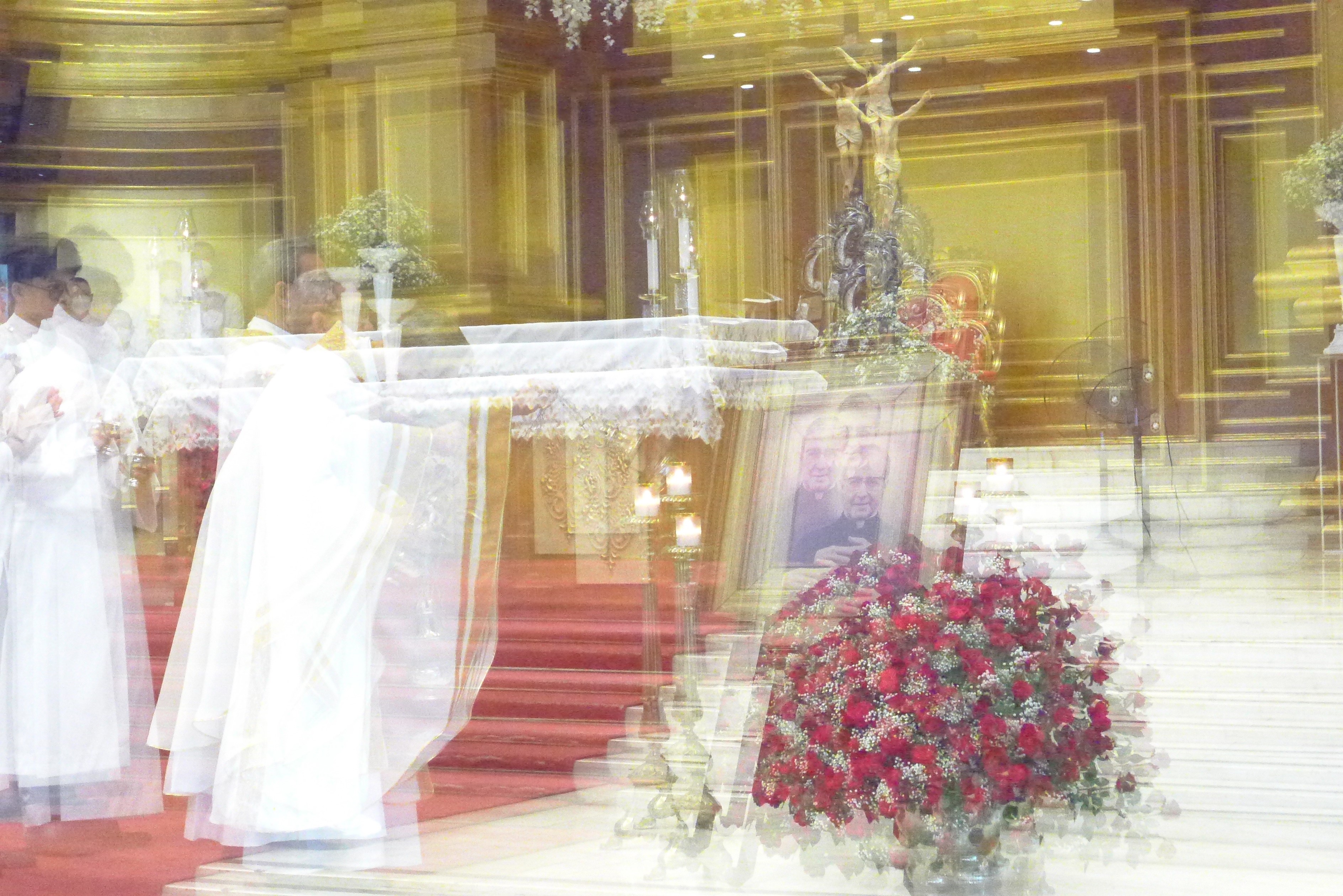
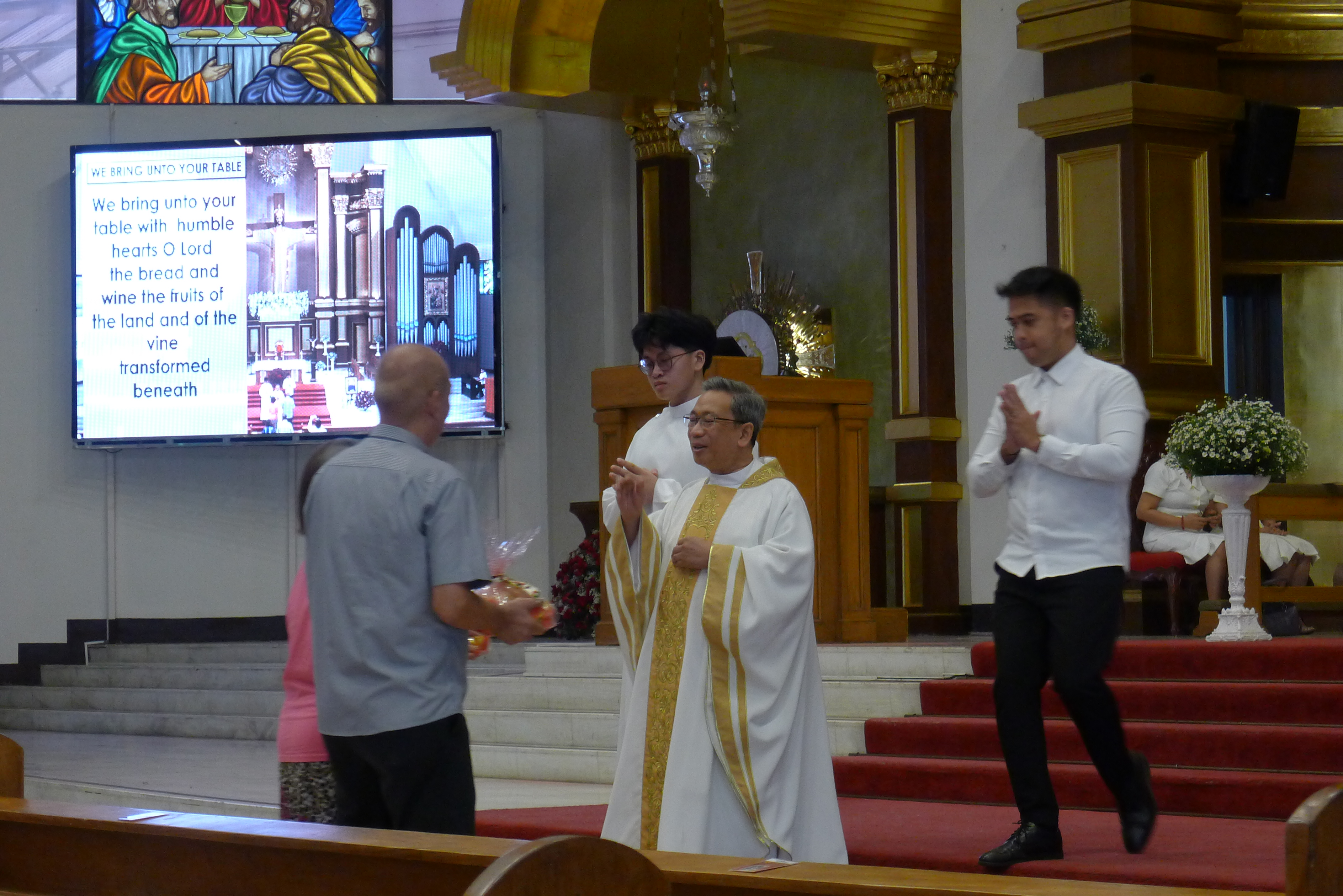
Today, Ingrid and I went to Mass to celebrate the feast day of St. Escriva. The priest, Father Bong, delivered a compelling homily. He connected today’s gospel to the philosophy of Opus Dei, which is the sanctification of work or making work holy.
My Journey with Opus Dei
I am familiar with Opus Dei because I graduated from the University of Asia and the Pacific, an Opus Dei school. There, I learned and understood how work, our tasks, and our jobs are to be viewed, but it was only ten years ago that I became active in joining Opus Dei prayer circles, where we meet once a month. Recently, I became a cooperator, and our task is to pray for the “work” of Opus Dei or share some financial blessings.
Transforming Work Through Opus Dei Philosophy
Trying to live the philosophy helped change my perspective toward my work. I used to always avoid seemingly unnecessary tasks and long processes, such as filing documents and thorough preparation, which require attention to detail. While I have not perfected the grace of doing these tasks, I am now more patient and virtuous when it comes to little tasks and “useless matters.”

The Long Journey to Sanctification of Work
The transformation towards the sanctification of work did not happen overnight. It was a long process of application, trial and error, and the constant reminder to offer every work as a service to others. This effort is never perfected. I realized that these works, big and small, can be a venue to show our love for others and be holy. Yes, holiness is what we aim for, and it is not a dirty word, nor is it about being self-righteous. Trying to be holy means admitting that we have struggles and need God to conquer our weaknesses.


Connecting Father Bong’s Homily to Luke 5:1-11
Father Bong’s homily and today’s gospel, Luke 5:1-11, best explain how we can make our work a way to show our love to others. The gospel is the story of the call of Simon the Fisherman. In Luke 5:1-11, Jesus is teaching by the Lake of Gennesaret when He sees two boats at the water’s edge. He gets into Simon Peter’s boat and teaches the crowd from there. After speaking, Jesus instructs Simon to let down his nets for a catch, resulting in an overwhelming haul of fish that fills two boats to the point of sinking. Amazed, Simon Peter falls at Jesus’ knees, expressing his unworthiness, but Jesus tells him not to be afraid and that he will now catch people instead of fish. Simon Peter, along with James and John, leaves everything behind to follow Jesus.
Move to time stamp 29:30 to see homily: Homily
Key Points from Father Bong’s Homily
- Jesus used the boat of Simon Peter as a platform to teach, the same way we can use our work and our jobs as a way to bring people closer to Christ. How? By doing it with care and by making sure that it is close to perfection.
- Jesus asked Simon to cast the net to catch fish, but Simon said that they had been doing it the night before and failed to catch fish. However, when they followed Jesus’ instructions, they caught loads of fish. Father Bong said that when Jesus tells us to do something, have faith; it means that it is the right time. In other words, if it is God’s will, it’s on God’s bill so we need to learn to listen to God’s voice and have faith.
- Finally, Jesus told Simon that moving forward, he would no longer just catch fish; he would now catch men. This is the same way Jesus calls us to use us for His glory. This one takes the acceptance of God’s will and not our will.
Final Thoughts
I will end this with a quote from St. Escriva: “You must realize now, more clearly than ever, that God is calling you to serve Him in and from the ordinary, secular, and civil activities of human life. He waits for us every day in the laboratory, in the operating theatre, in the army barracks, in the university chair, in the factory, in the workshop, in the fields, in the home, and in all the immense panorama of work.”
Happy Feast Day!
 Panorama