A day in the life of a Tennis Parent

I thought the weather was good the whole day

A day in the life of a parent athlete can be overwhelming. There are so many things happening that by the end of the day, there is little energy left.

Our day started at 6:30 a.m., waking Iuri up for his 7 a.m. warm-up in the subdivision court, and Ingrid making breakfast. I did not realize it was a Muslim holiday, so traffic was light. I could have moved the warm-up a bit later, giving him some more time to sleep. On the way to Rizal Memorial, we traversed Buendia, currently named Gil Puyat Avenue, a major thoroughfare that connects Makati to Manila. Along the stretch are numerous imposing Brutalist buildings that give Buendia a vintage vibe, with jeepneys transporting commuters from one place to another.

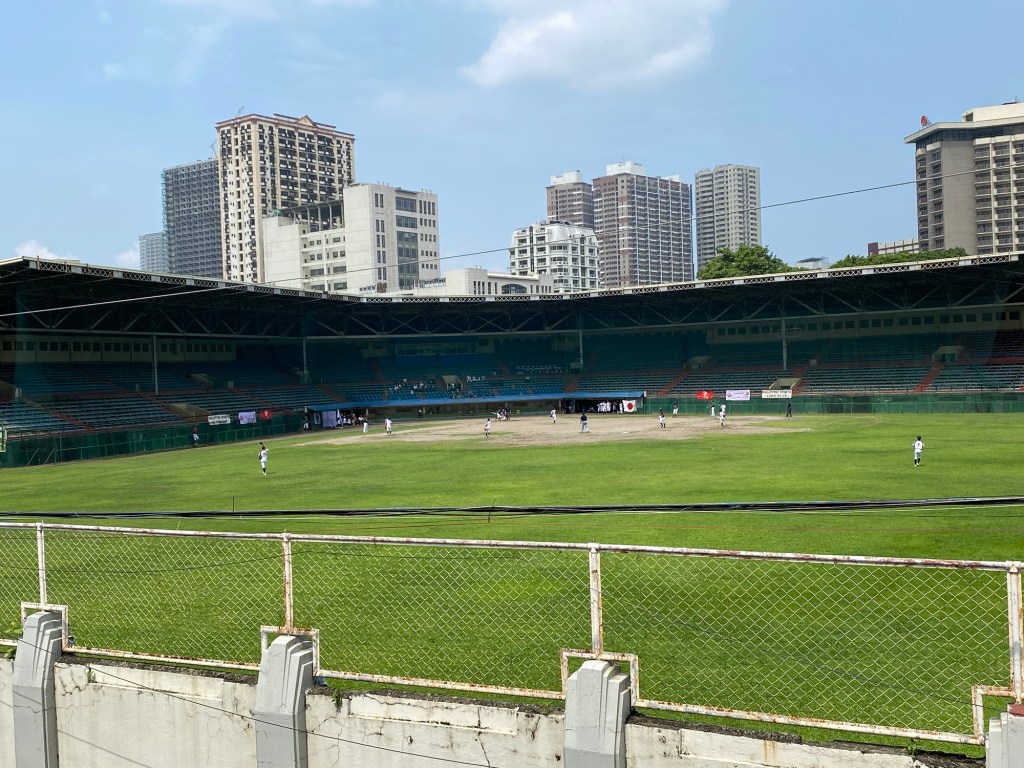
We arrived at Rizal Memorial Stadium at 8 a.m. for Iuri’s 10 a.m. match, but because of last night’s rain, the surface was still wet, so he got to play at 11 a.m. The delay was a blessing in disguise for me since I had a scheduled meeting from 9 am to 10 am even if it’s a holiday. If there was no delay, I would be rushing my meeting to make sure he is well prepared mentally, physically and spiritually since we pray before we start his matches.

11am came and it’s time for him to play. He played a thrilling three-setter against a more veteran opponent, the son of a tennis trainer at a well-known club in Quezon City. Iuri lost 6-0 in the first set, then won the second set 6-0. In the third set, the opponent took an early lead, gaining 6 points to 1, but Iuri fought back, finding himself at 8-9, match point for the opponent. On the last serve, the opponent confidently tossed the ball, bent his knees, and threw all his body weight forward, finishing the match with an ace.

If such a nerve-racking match had happened a year ago, Iuri would have been throwing tantrums and crying on the court. This time, he was composed, loving how he played, knowing that he, too, gave his all and zeroed a more veteran opponent. In fact, they met last year around the same time, and Iuri only scored 2 points.

After the match, they shook hands, had some small talk, and left the court. I was waiting for them at the bottom of the bleachers, smiling and congratulating both of them as soon as they got out of the gate. As a habit, which I learned from great tennis parents, win or lose, we go to the parents or guardians to either congratulate or console.

Believe it or not, there are parents who are sore losers and sore winners who do not congratulate the winners if they lose. Some even heckle their kid’s opponents while playing. One family was even given a warning for their behavior, and once at a school tournament, two parents had a fistfight in the parking lot. These are the types of players and parents many people avoid.

Iuri’s next scheduled match was at 7 p.m. We had 7 hours to spare, so we decided to have lunch at Robinson’s Malate. It was a 10-minute drive, and on the way, I couldn’t help but notice the mix of old and new establishments, creating a strong tension between modern and timeless, which gives Malate its soul. The white males walking with their Filipina escorts, the Chinese in their highest fashion sense, the Indians, and all other nationalities gather in Malate, making the place a melting pot of Manila.

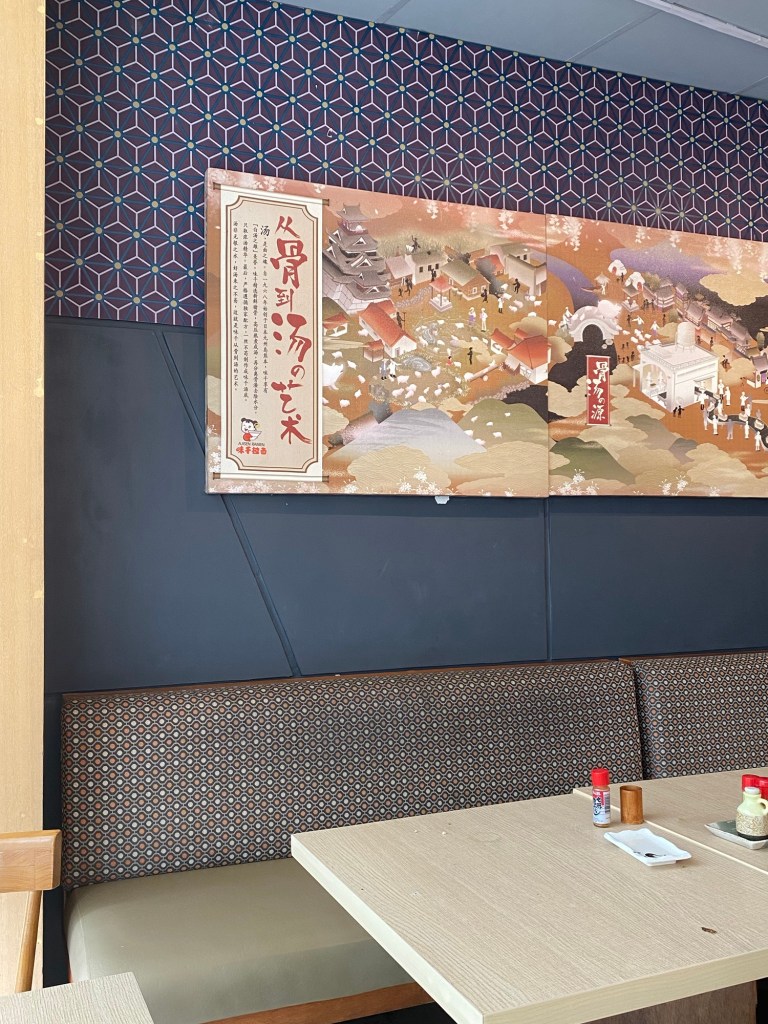
While still enjoying our food at Ajisen, rain started pouring, a sign of another delay and long wait. Having nothing to do in the mall, Iuri and I decided to go back to Rizal and nap in the car. It was 3 p.m. when the rain stopped, the sun came back out, and court takers started mopping the water away from the six hard courts, all world-class. The games resumed before 4:30 p.m., and now the games were delayed by 2 hours. From our scheduled 7 p.m. match, we were now at 9 or 10 p.m. Not long after several matches ended, the rain started pouring again at 7:30 p.m., causing a postponement of all games.

We returned the next day. Iuri missed school, but it was still orientation, so he did not miss anything. This time, he was in the under-18 division, playing against someone 3 years older than him, bulkier and more developed. Iuri lost, not because of his skills but because his mind was too noisy, and he has yet to learn how to direct his thoughts. The rallies lasted long, and the 2 sets took 50 minutes to finish. But a loss is a loss, so back to the drawing board.

He came out beaten but did not show it. He walked straight and poker-faced, but deep inside, I am sure tears were flowing. He did not talk; all I said was, “Good game.” We were both quiet in the car. I learned my lesson. It used to be that I would process the game right after, but it did not work as he was still confused about what he was feeling. Now, he can better process himself, think through what happened, and wait for him to ask me for my opinion. I told him to simply go back, continue to practice, and build his confidence more.

Iuri, like other athletes, has invested so much time in tennis, even putting it over playdates with friends. As a result, he won some games but also lost more matches. There is a lesson he knows: sometimes you win, sometimes you lose. Losing is hard, but before one learns how to win, they must know what it is like to lose so they know what to avoid and how to get themselves out of that situation.

At this age, it is not just the physical ability that is developing but the mental aspect too. I also reminded him how much improvement has happened in the last few months in terms of his ability. This constant reminder helps him build his confidence and also gives him evidence that his hard work is paying off.

As a parent of a junior athlete, it is fun to see your child perform inside the arena. I take pride in it, but there is a price to pay. Aside from the monetary aspect, time, relationships, and emotions are all involved, and all this in just a day.
What magicians meet about

Do you know what magicians do at magicians’ gatherings?

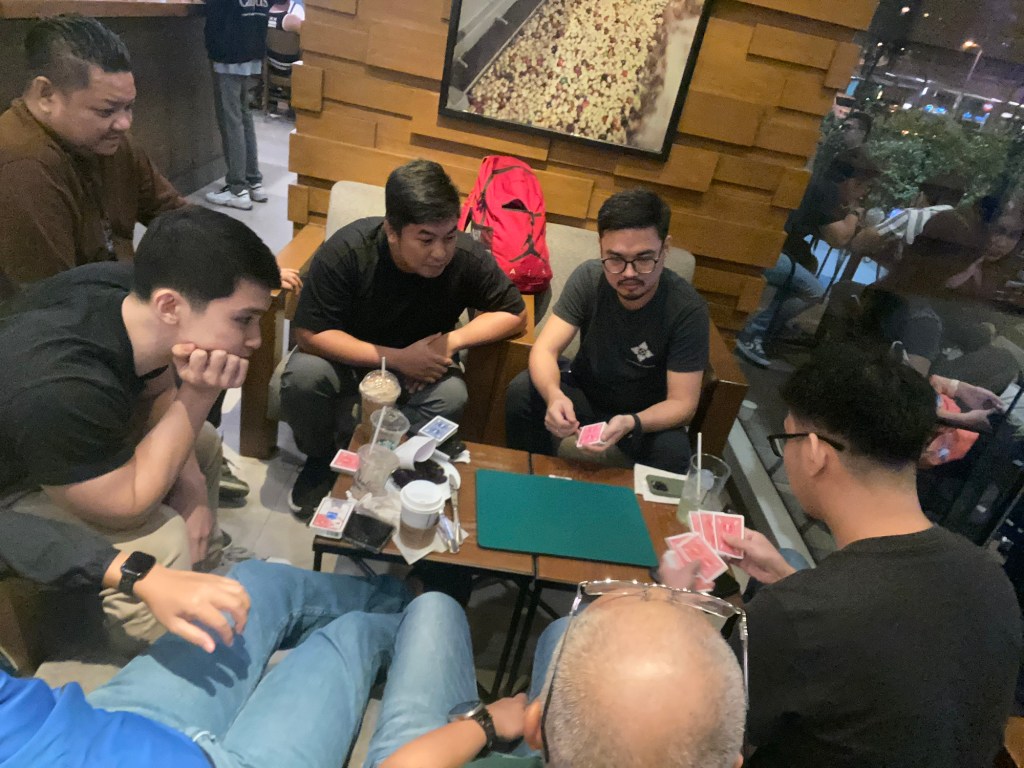
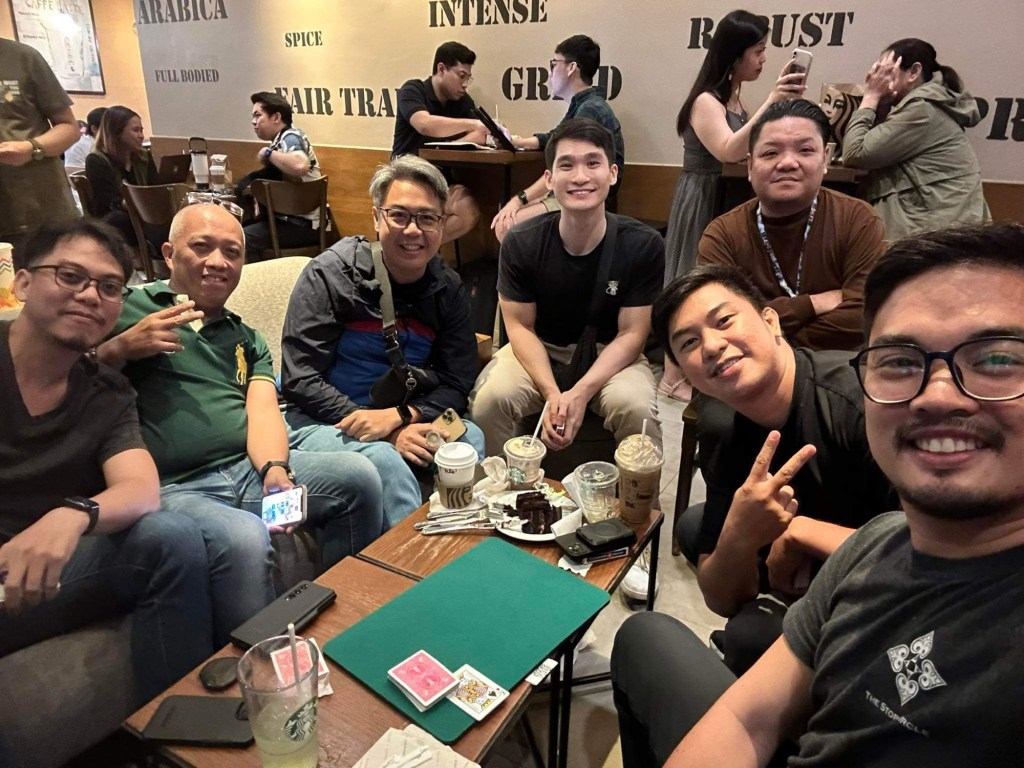
Last night, I was with the Story Circle group, a group for close-up magicians. I have known many of them even before the pandemic, though not as long as the International Magic Club, which I actively attended for almost a year back in 2001. My dad also attended IMC when they were still meeting at the Prince Albert in Makati.

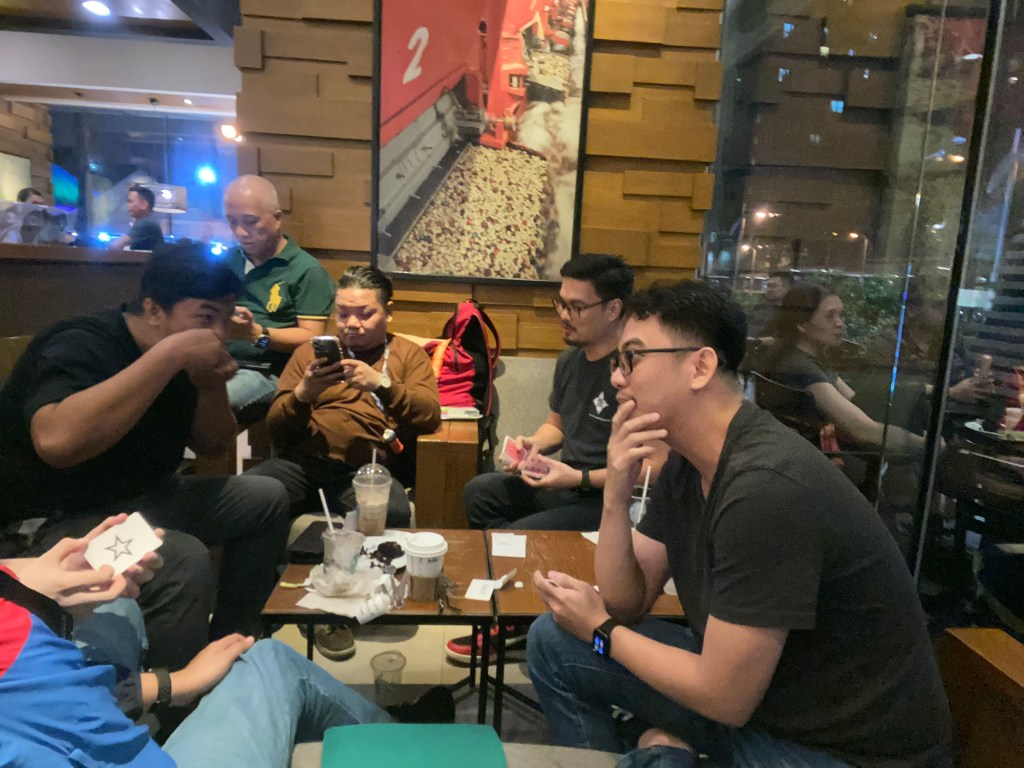
The Story Circle meets either in Starbucks Cubao or Greenfield. I have been to both just a couple of times. I feel like I prefer the one in greenfield because the area is more alive than Cubao. Parking is also not a problem. Last night the attendance did not hit 10 which is quite low for a gathering. Normally, attendees go beyond 10, but since it’s a long weekend, maybe people had other plans.

The number one rule in the magician’s code is to never reveal the secrets. However, since we are all magicians, we do help each other. We give each other chicken’s blood, hair of a virgin female, and some dust from Mount Banahaw. Books are also one of the topics we discussed about. Still at the back of my mind, I want to have the biggest library of magic books in the Philippines. I am still far from that goal.

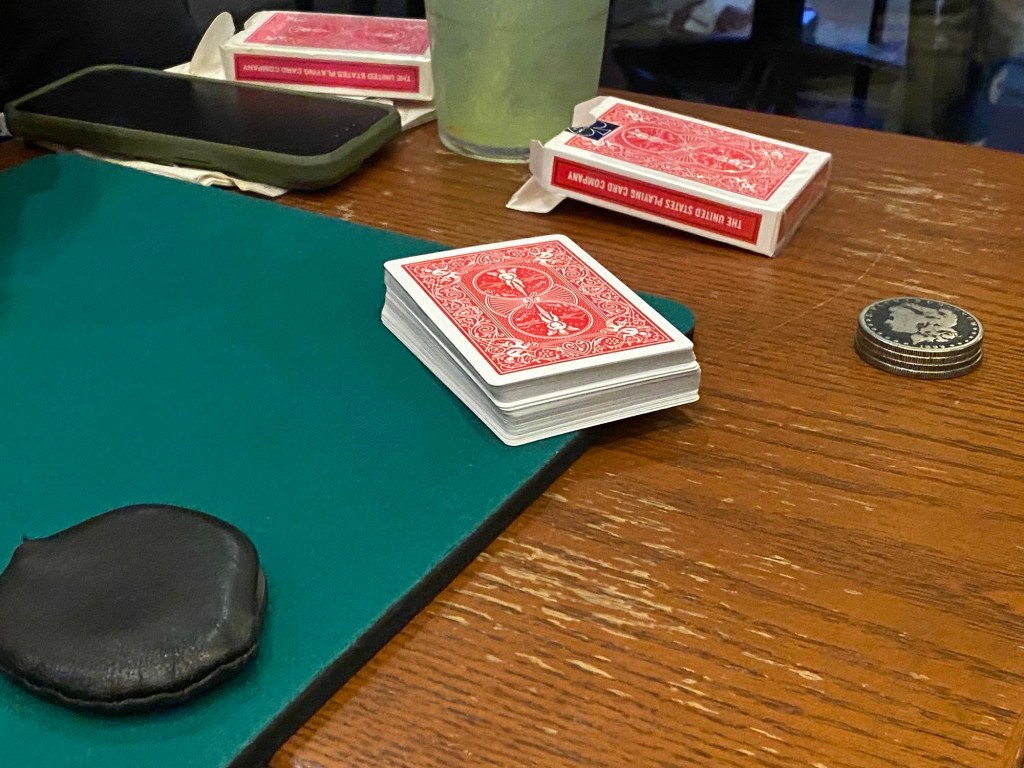
After sharing and discussing the latest magic, books and magicians, we do a round-robin. One by one, we show tricks. It can be cards, coins, or mentalism, depending on what the magician feels or what he has prepared. If my memory serves me right, there used to be a theme before, so it was harder for me to think of what to share last night. Though I ended up doing some Tito tricks you normally see during drinking sessions.

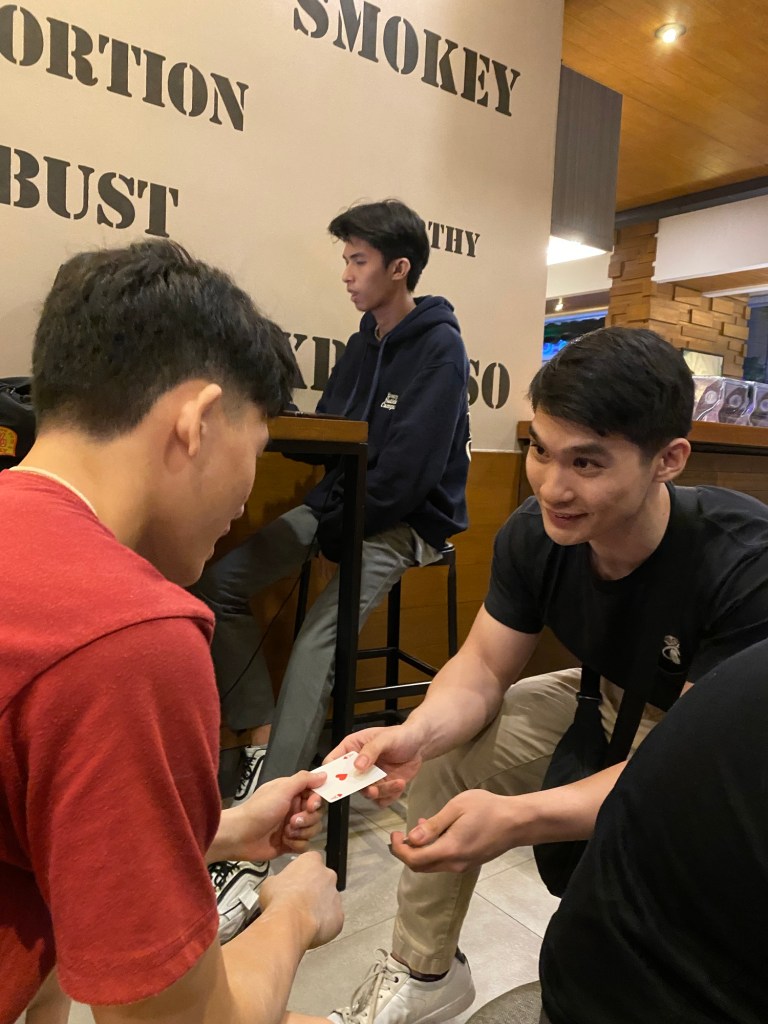
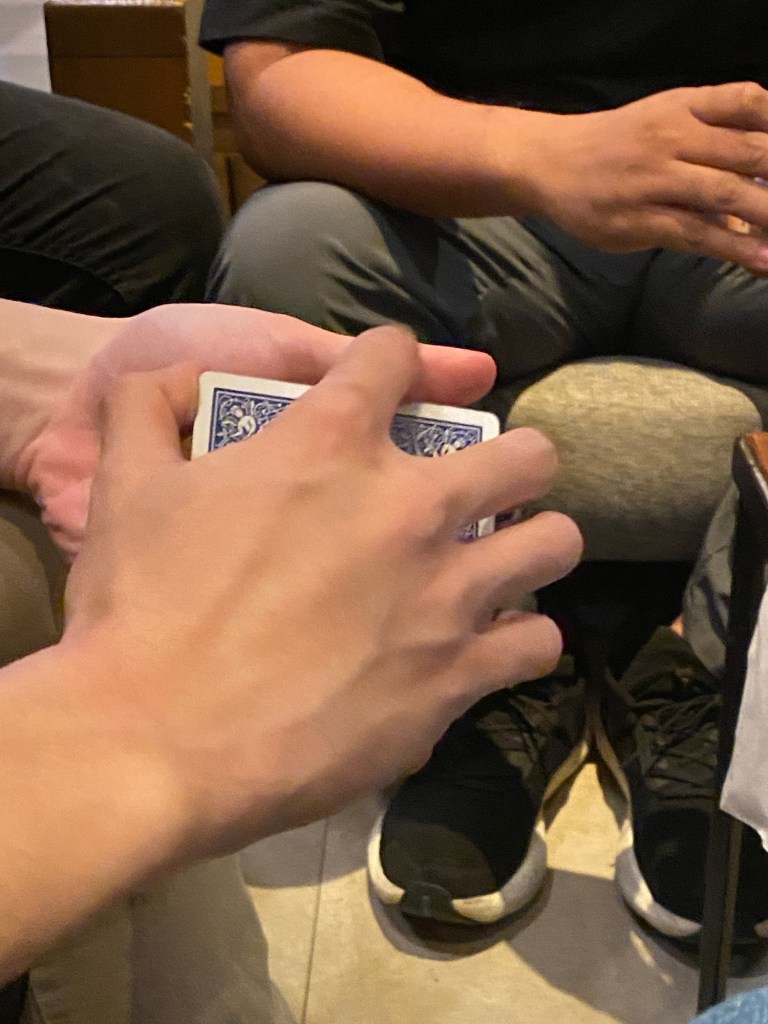
What I showed was a trick I learned from watching Daryl on VHS back in 2001. I made a spectator choose a card, which only he and the others know. Let’s say is the Ace of hearts. I then asked him to get 4 more random cards, put the rest of the deck down then shuffle the 5 cards now, which are the 4 cards and the chosen card (Ace of hearts). I got the cards and told him to pinch the cards by the edge. Once in between his thumb and pointer, I slapped the cards. Everything fell, except for one card, the chosen card, the ace of hearts.

One young, newbie magician, a fresh college graduate who took mechanical engineering, showed a mentalism trick where he wrote something ahead of time on his phone that matched what the volunteer chose. The supposed spectator volunteer was also a magician. Afterward, he was given pointers on how to improve. The young magician asked for my opinion, but I said just a few words about making his acting more believable because I haven’t been doing magic for a couple of years now.

Conjuring that uses new age and spiritism to explain the magic behind the trick is something I used to be attracted to. Not anymore now. I simply want straightforward sleights that play with the brain’s blind side. I think it’s more powerful that way, though both have its pros and cons.

The second rule is to never repeat the magic. Fortunately, no magician asks to repeat someone else’s routine. No one wants to admit they have been fooled, so no one asks to have the magic done again—it’s the magician’s pride. A fooling magic trick in the company of magicians ends with either a clap, a wow, or a “great.” The other reason might simply be out of respect for the code.

Practice before performance is the third code. In a casual meeting like what happened last night, making mistakes is forgivable, but not in a real show. It happens, and it has happened plenty of times in casual meetings, and we just laugh it off.

One magician told me that there are other hobbyists who seldom attend but have mastered difficult sleights. One is a doctor who can memorize the arrangement of a deck of cards; another is a musical performer who can do decent magic and presentation. The magic community in the Philippines is substantial. What’s lacking are shows that invest in great production. After all, magic is a kind of performing art.

Magicians’ meetings are always fun. The sharing of ideas, performing new tricks, even classics, and the laughter never ends.

Million Miles Entry – Trastevere, Rome: Unveiling the Charming Character and Local Life

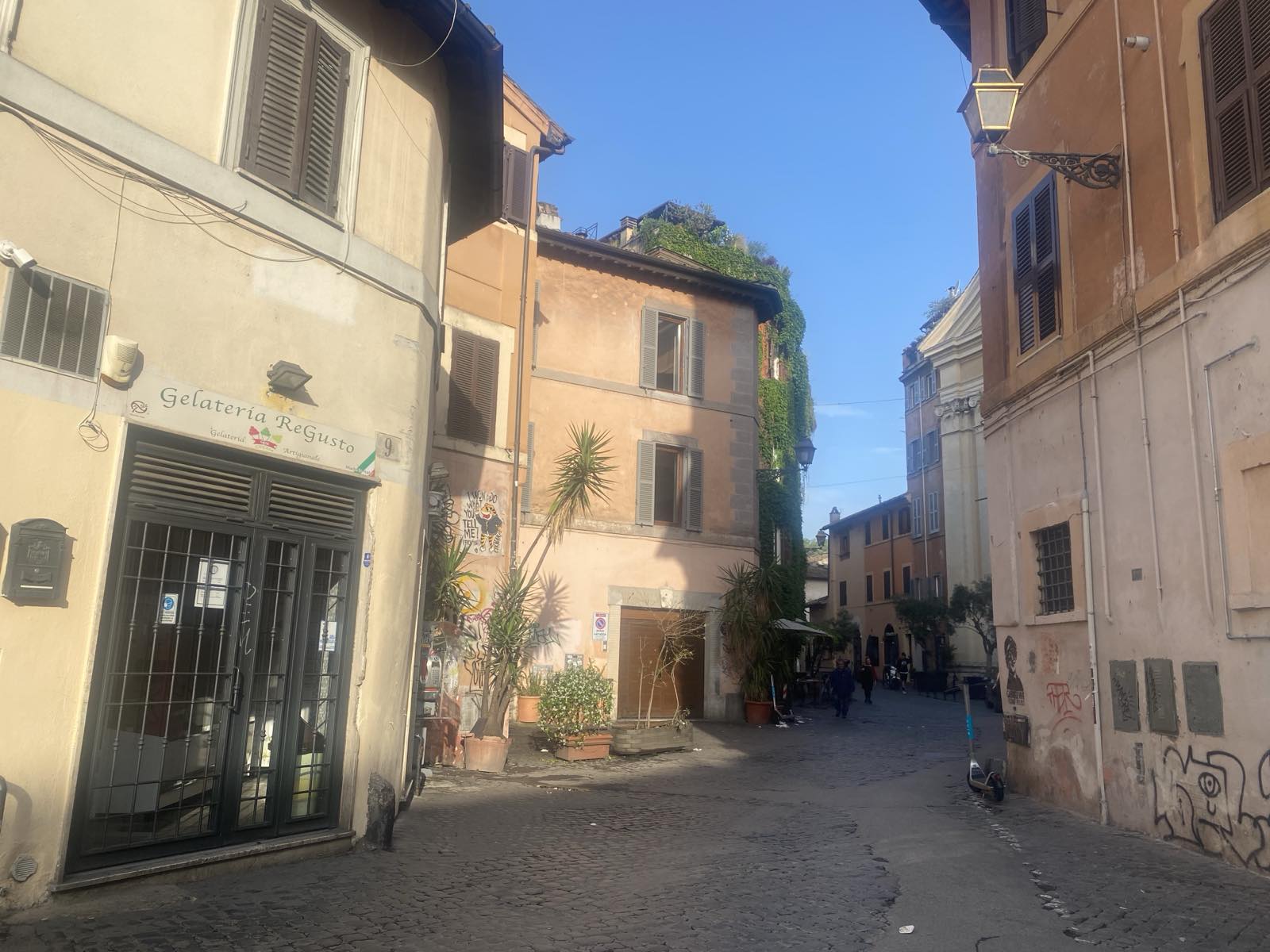
Trastevere is totally unappealing in the morning.

Year 2023 was the year I ticked off Europe on my bucket list, not once but twice. I was there in January to accompany my friend and then again in May with my family. The countries I visited were the same: Italy, Spain, and Portugal, but I explored additional cities on the second trip. All of them were memorable, each with its own unique character. If I could choose a theme for the trips, it would be church hopping. Of course, it bored our kids to death, but at least they got a taste of magnificent art and saw what man can do if inspired by faith.

Italy was still recovering from a typhoon that killed at least 11 people by the time we arrived in Rome in late May of 2023. The Vatican’s security was still on alert because some psycho had rammed his car into the gates of the Vatican. Reading that news gave me anxiety, but we forgot everything once we got there.

Italy, at least my experience in Rome, taught me that you cannot go there without looking or wearing your best attire. Even our Filipino driver wore a suit daily. It’s easy to spot a tourist—just look at their shoes or color combinations. Italians are bolder when it comes to colors. Along Trevi, I saw a middle-aged Italian in a red long-sleeve shirt and blue pants. This is unlike the Japanese, who are more toned down in their colors.

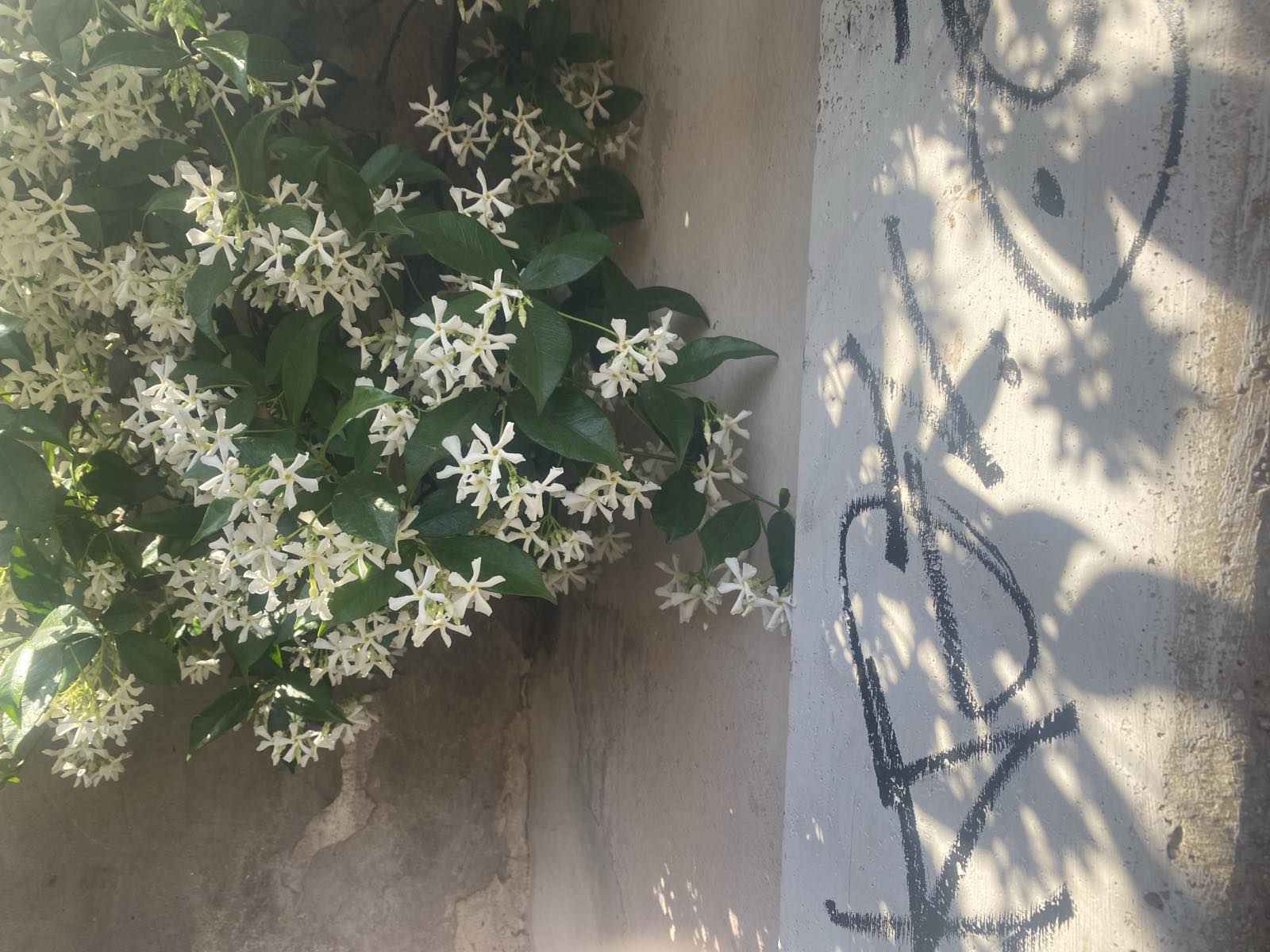
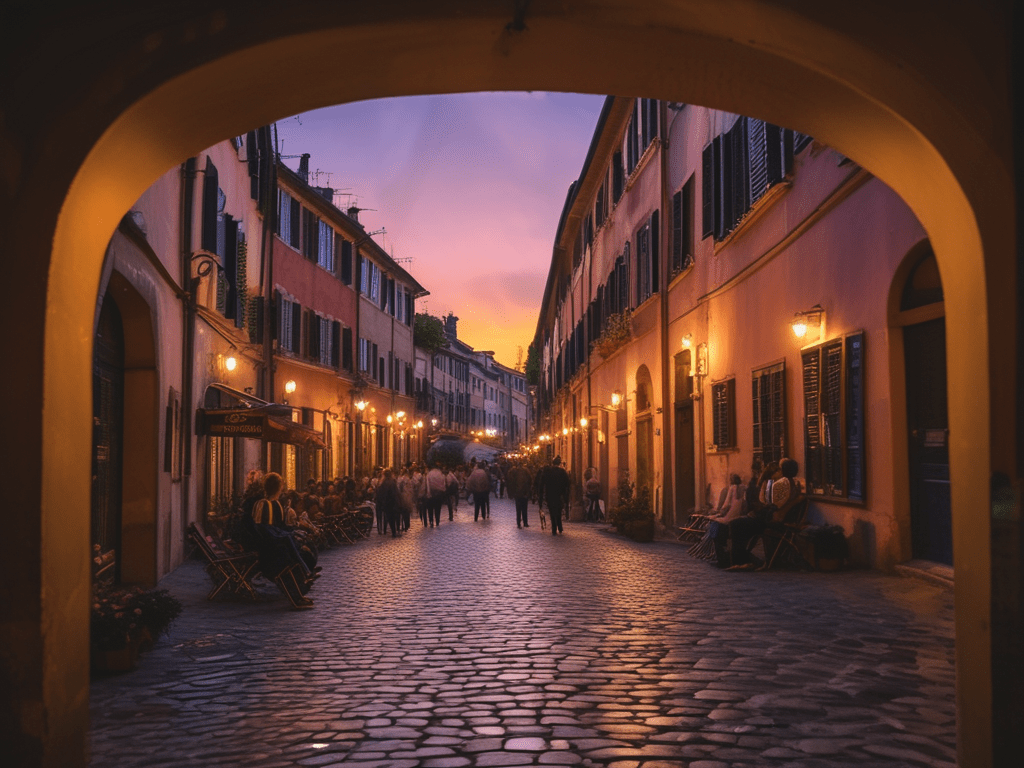
On my second visit, we stayed in Trastevere, located on the other side of the city center. To get there, you need to cross the Tiber River if you are coming from the area of Piazza Navona, but not if you are coming from the Vatican. Piazza Trilussa signifies that you have reached the area of Trastevere. Trilussa was named in honor of the famous Roman poet Carlo Alberto Salustri, who wrote under the pen name Trilussa, an anagram of his surname. The area has an artistic vibe frequented mostly by locals. The place looks dull in the morning, scary even with its vandalized walls, but during sunset, the place begins to wake up. Its bars, restaurants, locals, and tourists start to mingle until early morning. Those vandalized walls were not evident to me the first time I visited, so when I saw them, I thought my mother might not like the place and might even consider getting transferred to another hotel. But I was wrong. She loved the place and even wants to go back and stay there again. She loves the idea of leaving and entering the building with her key, like a true local.

It was my former student, Bermon, who now lives in Rome as a tailor, who introduced me to the area. He acted as a tour guide during my stay, bringing me to historical places, restaurants, and bars. He brought me to Tonarello last January, where I had the most delicious Italian meatball of my life, not to mention their other dishes like Cacio e Pepe and Carbonara. This is also the place I introduced to the Go family, whom we met up with during our visit in May. Just like I felt during my first time eating there, they were also delighted.

My meeting with Bermon was serendipitous. On the way to Rome via Qatar Airport, I saw a familiar face just before boarding the plane. I went to him, but I did not need to introduce myself because as soon as he saw me, he recognized me. Good thing he was still on vacation and did not need to go back to work for five days. During one of our dinners, we had a conversation about working in Italy as a tailor. He asked me how much I thought good suits cost. I guessed 100,000 pesos. He said the value is far from that; really good handmade suits cost around 300 to 500 thousand pesos. Then the conversation shifted to working as a non-citizen. He told me that there are fewer regular employees and more contractual ones, even for locals. It makes it look like there is high unemployment, but there really isn’t. He hopes to have his atelier soon. There is also a month when most establishments are closed and people are just at the beach because of the heat, he said while drinking his beer. Doesn’t that affect the economy? I asked. It does, he said, and so it is practiced less today than a few years back.

This is an AI image made by wordpress

Breakfast for us, when out of the country, is always about the most economical choice; it’s all about speed and efficiency, most of the time from 7/11 or whatever is the most convenient. We leave the more pleasurable meals for either lunch or dinner. The café beside our place is where I take my dose of espresso and a bite of cornetto or Italian croissant. The owner asked me where I was from, and I told him I am Filipino. The next day, I got my coffee when he introduced me to the Filipina server who seemed to want to remain unidentified. She went past me hurriedly with a quick smile. It made me wonder if she didn’t want to be identified as Filipina or maybe she was an illegal alien in Italy. This was different from what I experienced a few months back. Our server then was a Filipino from Bicol, Aileen. We had an engaging conversation with her. She told us that it was hard at first, like it is for anyone away from home. She and the other Filipino staff live above the café, which is common for many Filipino migrants in the service industry, she said. She was friendly, but what made her even more friendly was the extra focaccia she gave us for breakfast.

Our place was a one-bedroom unit with a problematic shower that sometimes ran out of hot water, depending on the number of users. This situation is normal for hundred-year-old establishments in Rome. Most of the older establishments are owned by the Vatican, my landlord told me. Understandably, preserving history is a priority over convenience. And that is exactly how I felt: being in touch with the past with how the façade looks, the interior, and the danger of stepping out of the unit directly to the narrow spiral steps or using a tiny elevator that can give anyone a panic attack. But somehow, I am grateful that the past isn’t eradicated by modern conveniences.

Friends have advised us to stay near the shopping streets of Via Condotti and Via del Corso. I refuse to stay in a touristy place. Aside from being a tourist trap, I don’t like artificial cities where locals are conditioned to behave around tourists. I want to see the more authentic character of the city. In a video I saw on Facebook Reels, there was a lady on her phone, walking on the sidewalk of New York and waving at the tourists inside the bus. Moments later, she raised both her hands, jumped, and started dancing. The person taking the video laughed and commented that those inside the bus were suckers because they were entertained by a paid actress.

There is this church just across our building, the church of Santa Dorotea, patron saint of brides, gardeners, and brewers, among others. A baroque church built in 1756, it was the very first church we visited as soon as we arrived in Trastevere. There is nothing really special about this church except the painting of two heads with their eyes looking up. The eyes must be rolling, I told my wife, and they must be her saints.

Also in Trastevere is the Fountain in Piazza di Santa Maria, considered the oldest fountain in Rome. The fountain is believed to have been in the square since the 8th century. It was where early Romans gathered their water for drinking and cooking. Today, it’s a place for tourists to rest and take photos.

There were a couple of nights when Ingrid and I would walk and feel the ambiance of the community. It was alive and vibrant both on weekdays and weekends, with all the music and laughter from people who know how to live the European way of life. We loved it and wanted to stay up late, but we were already tired from our morning activities.

The week we spent in Trastevere, having our own unit, enjoying small cafes and corner stores made me appreciate the place more and allowed me to see and experience a more local way of life,

Million Miles Entry#4: Yanaka Ginza-Tokyo’s Retro Heart

Taken from Sunset Srairs

Before going back to Tokyo this year, I reviewed our 2014 travel plan and realized I had missed a few places, including Yanaka Ginza, a shotengai (commercial district) established around 1892, the Meiji period, with small local shops catering to nearby residents. Determined not to overlook it again, I made sure to visit this time capsule.

A month before heading to Tokyo, a long-time family friend who had known me since I was a toddler and my mom’s college friend, Tita Ditas, visited Manila and had lunch with us. She has been in Tokyo for decades and currently teaches English to her senior Japanese neighbors in her condominium in, drumroll please, Yanaka! She promised to spend the day with us, showing us her community, treating us to authentic Japanese food, and introducing us to her friends.

After dropping Iuri off at DisneySea, Ingrid and I took the train to Nippori Station. What should have been a 40-minute journey took more than an hour because Google Maps wasn’t working well. However, getting lost in an unfamiliar city like Tokyo is always a welcome adventure for us. This reminded me of something I read from Paul Theroux: “Getting lost is the essence of travel”. It is in getting lost that you find yourself. You discover what captures your attention, learn to handle unexpected situations, and become more aware and mindful of your new surroundings.

We reached Nippori Station just before noon, where Tita Ditas was waiting under the North Exit sign, wearing a hat and a leopard print dress, on her phone trying to call me. The weather outside the station was sunny yet cool, quite pleasant for someone from the Philippines. She carried a thin Victorian umbrella adorned with lace, protecting herself and Ingrid from UV rays. As we walked toward Yanaka Street, she told us that aside from the shopping street, which is famous for its retro vibe and small shops, Yanaka is also known for its seven temples, which are just a few meters apart. I mused that if these were churches, Visita Iglesia would be so much easier.

Tita Ditas resides just a short five-minute walk from Yanaka Sunset Stairs, which descend to the bustling shops below. Much like an Ajuma from a Korean drama, she frequents the bazaar to catch up with her shop owner friends and while away the afternoon. On each visit, she crosses a bridge offering views of several train tracks, where Tokyo Shinkansen trains speed by, though the sight is hindered by a tall chicken wire fence erected to prevent any potential jumpers.

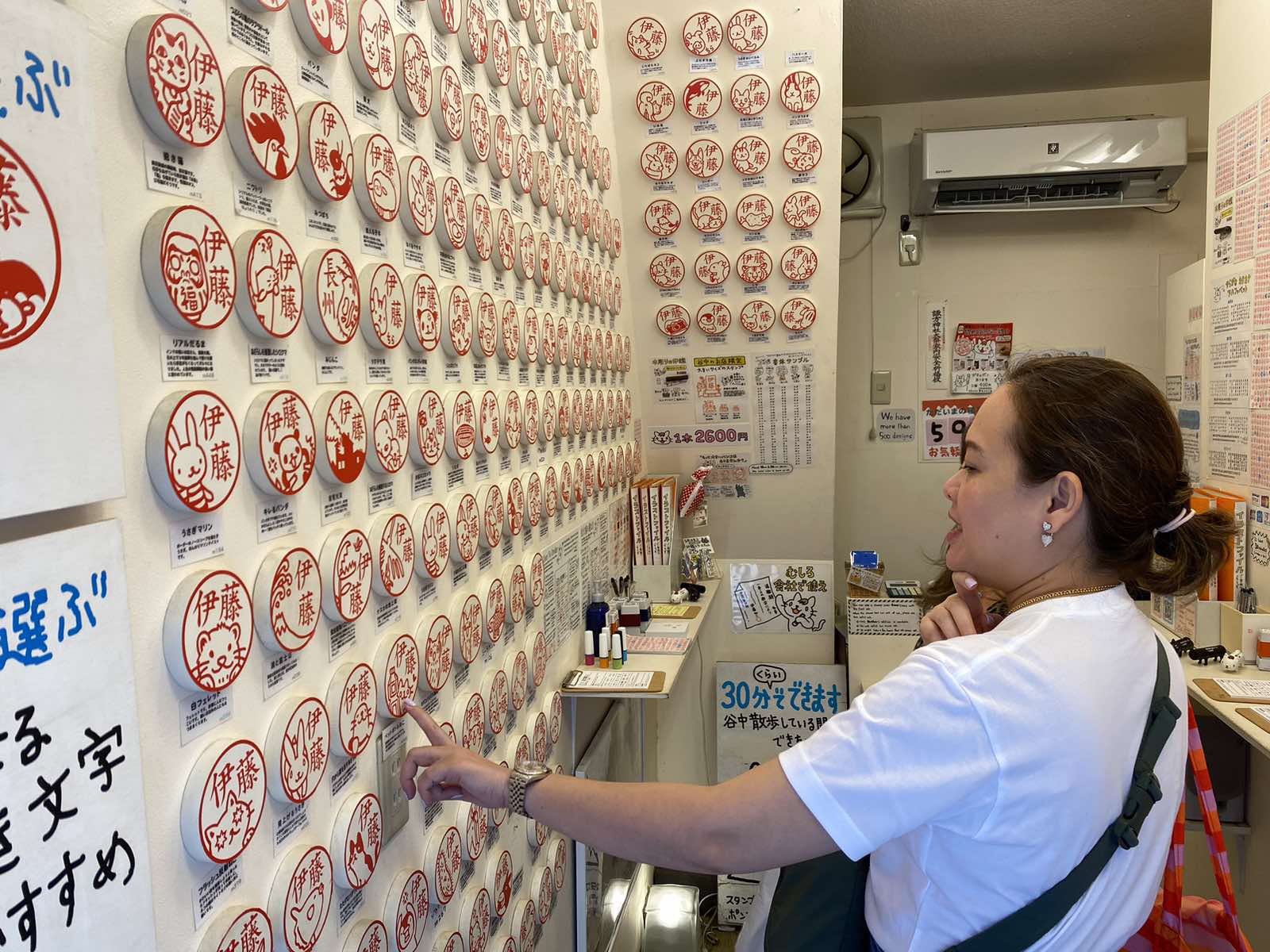
The first store we visited was the cat shop, or neko shop, a small store selling only cat-related items: cat magnets, cat shirts, cat pens, cat papers, cat playing cards—cat everything. But we didn’t stay long because it was time for lunch. We promised the shopkeeper we would return before leaving, and we did.

There is a reason for the cat-themed shops in the area. Tita Ditas explained that Yanaka is also known as Cat Town because of the many stray cats, though their numbers have sadly diminished over time.

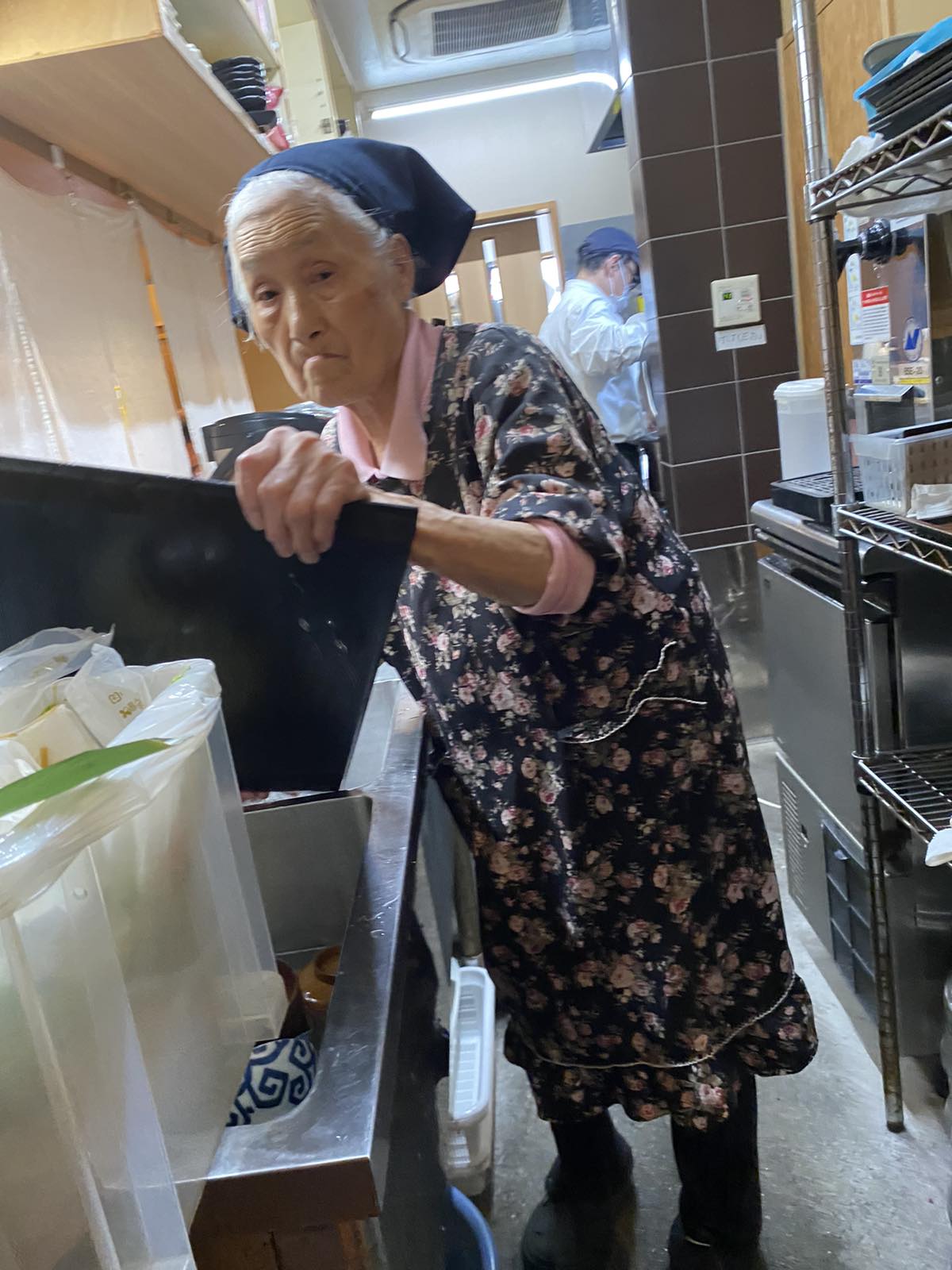
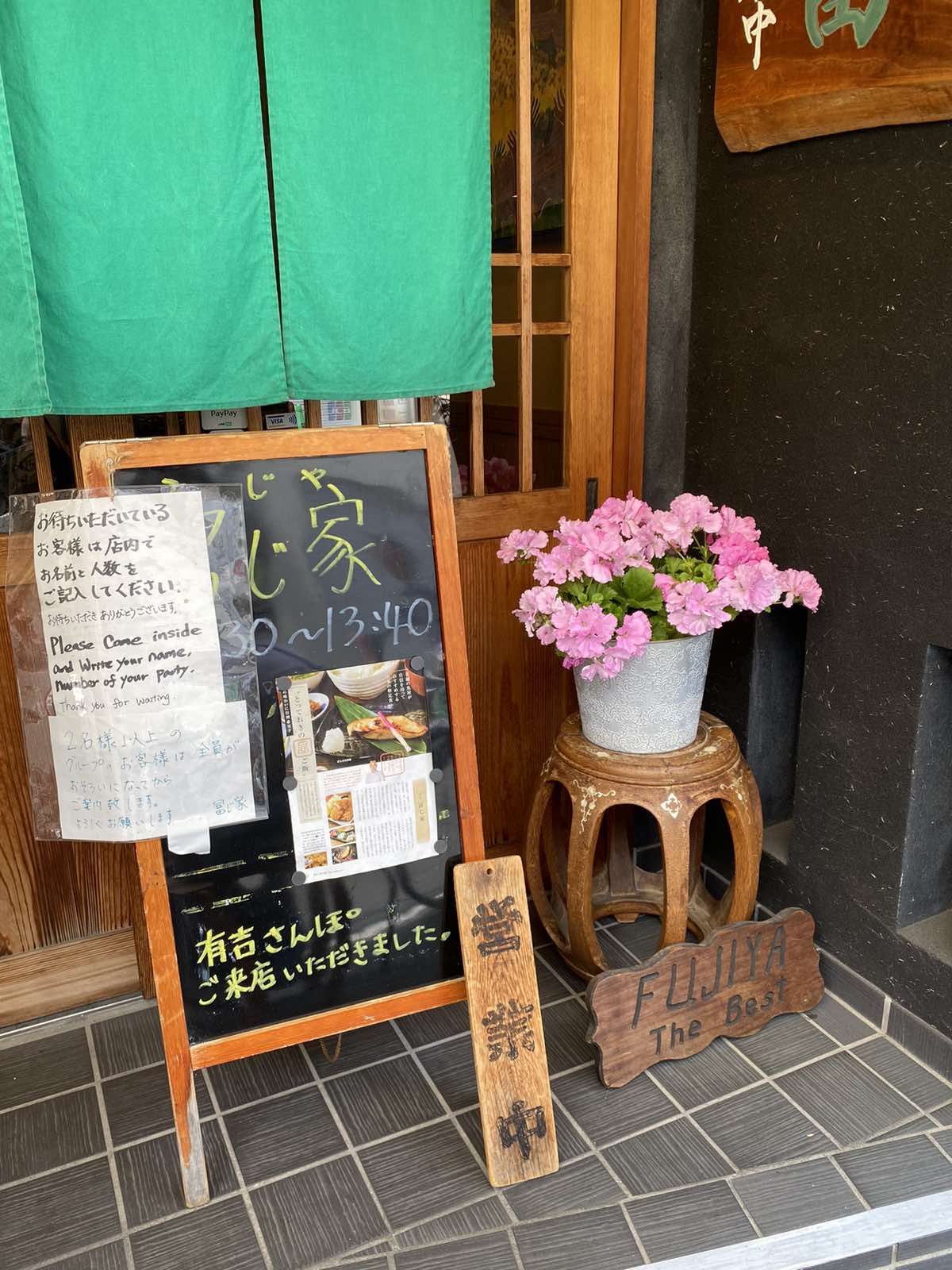
Lunch was at Fujiya, a small restaurant that can house a maximum of 14 people. It is operated by a husband who is the chef, his wife as the waitress, and his centenarian mother as the dishwasher. Along the bar were local tourists taking photos of their food, clearly enjoying it as much as we did. The Gindara was perfect—soft like butter when poked with chopsticks, silky smooth in texture, and not overly fishy. Ingrid enjoyed it immensely as it was her order. I had raw fish served in a bento box which I enjoyed too but wished I ordered the Gindara.

Over lunch, our conversation turned to how the Japanese men are when it comes to relationships. I mentioned that Japan’s population is aging, with many young people not wanting to marry, and many dying alone, which is sad. Tita Ditas opined that many Japanese are independent and fine being by themselves, they also find contentment in being alone. That is the frame of mind they learned from Shintoism and Buddhism. So, if I thought they were sad, they were actually not. The shoe shopkeeper shared the same perspective. Later that day, while in the shoe store, I offered to carry Tita Ditas’s bag, but she declined. She and the shopkeeper conversed in Japanese, and Tita Ditas explained to her what I was trying to do. The shopkeeper remarked that such gestures are uncommon in Japan. I was grateful not only for the lunch but also for this new insight into Japanese culture.

After a short stop at a small trinket shop, we had dessert at Waguriya. I was told that on weekends, the lines can be long, and waiting can last up to an hour or more. Fortunately, we got a seat immediately. They are famous for their Mont Blanc dessert, which I find hard to describe. On top is a sweet chestnut cream sitting on melon-flavored shaved ice. Skeptical about the combination, I was pleasantly surprised—it was just what I needed on a sunny day. Others around us, including the group across and the couple beside us, also seemed to enjoy it.

While Ingrid and Tita Ditas were shopping or window shopping, I went for coffee at Career Cafe, just beside the shop where they were. Soon they joined me. I had initially targeted another place, but it was not due to open for another 40 minutes. The ground floor seated up to six people, with more seating upstairs. Around the small shop were display shelves. Yoshimi, the female owner, in her thirties, is entrepreneurial; she rents out the shelves for businesses to display their products and runs an agency that provides waitstaff to restaurants in Tokyo.

Yanaka’s magic comes from its locals buying in small stores and chatting with shop owners, creating a nostalgic small-town charm. Before leaving, we explored a little more, checked out some temples, found Himitsudo, a Kakigori place that makes their ice from Mount Fuji water, and admired more cat merchandise. I couldn’t help but notice open lots and ongoing renovations. What used to be a small traditional market is transforming into larger, modern businesses. Yanaka is slowly losing its old-world charm as it gentrifies. I wondered if Kazuo Ishiguro had Yanaka in mind when he wrote: “I saw a new world coming rapidly. More scientific, efficient, yes. More cures for the old sicknesses. Very good. But a harsh, cruel world. And I saw a little girl, her eyes tightly closed, holding to her breast the old kind world, one that she knew in her heart could not remain, and she was holding it and pleading, never to let her go.” He may not be referring to Yanaka when he wrote those words but I am sure this sentiment resonates with those who have lived in the area for decades.

On the way back, Ingrid and I changed trains at Yurakucho. Yet again, we found ourselves disoriented while trying to locate the entrance to the other line, in another intriguing area characterized by towering modern malls, lively pachinko bars, and cozy hole-in-the-wall diners. This time, however, we realized we had moved from the old world to the new.